
Roasted Chickpea Pesto Pasta Salad
Ingredients
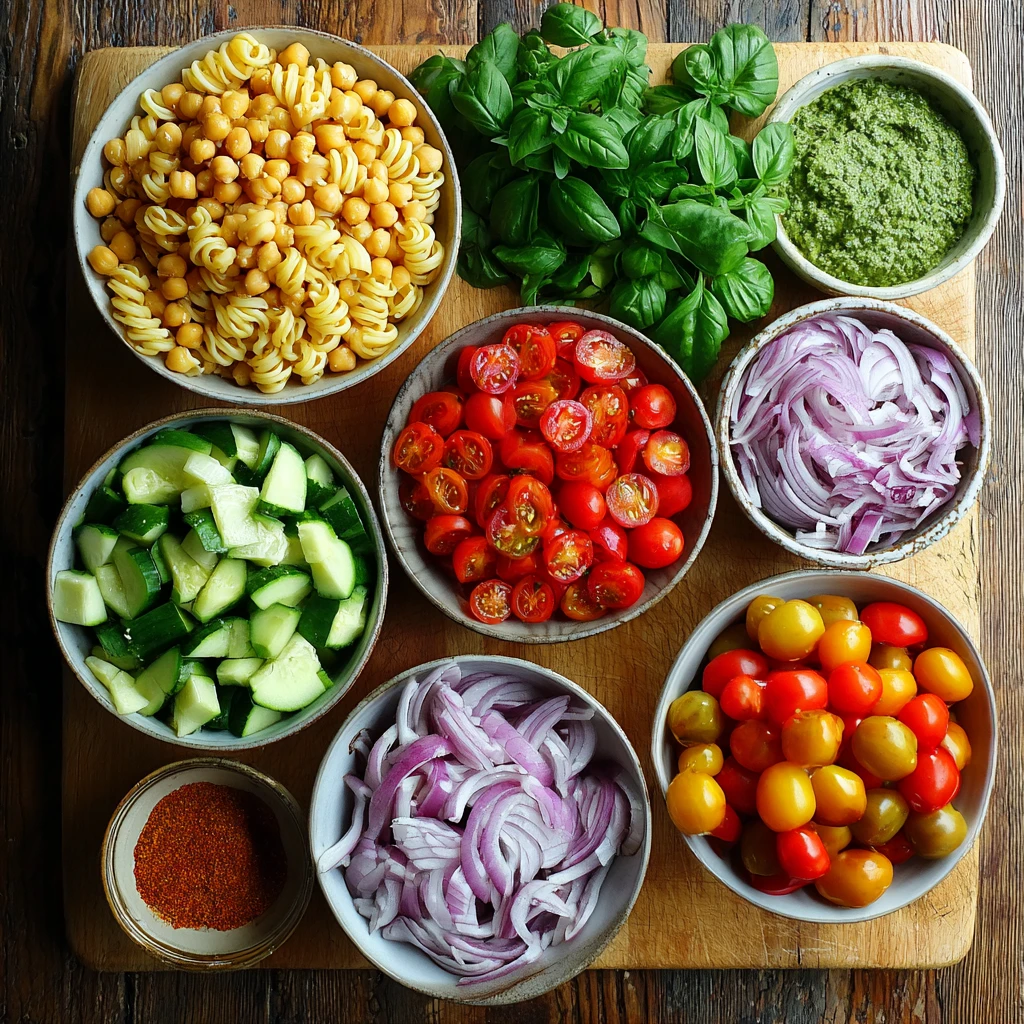
- 1 pound (450g) short pasta (e.g., penne, fusilli, rotini)
- 2 cans (15-ounce or 425g each) chickpeas, drained, rinsed, and thoroughly dried
- 2 tablespoons olive oil (for chickpeas)
- 1 teaspoon smoked paprika
- ½ teaspoon garlic powder
- ½ teaspoon onion powder
- ¼ teaspoon salt (for chickpeas)
- ⅛ teaspoon black pepper (for chickpeas)
- ½ cup prepared basil pesto (vegan if preferred)
- 1 pint (about 2 cups) cherry tomatoes, halved
- 1 large cucumber, diced
- ¼ red onion, thinly sliced or finely diced
- ¼ cup fresh basil leaves, chopped, plus more for garnish
- Optional additions: toasted pine nuts, a squeeze of fresh lemon juice, vegan Parmesan cheese, or nutritional yeast
Step-by-Step
1. Prepare Oven and Chickpeas: Preheat your oven to 400°F (200°C). Line a large baking sheet with parchment paper for easy cleanup. Thoroughly drain and rinse the canned chickpeas under cold water. Pat them completely dry with paper towels; this crucial step ensures maximum crispiness.
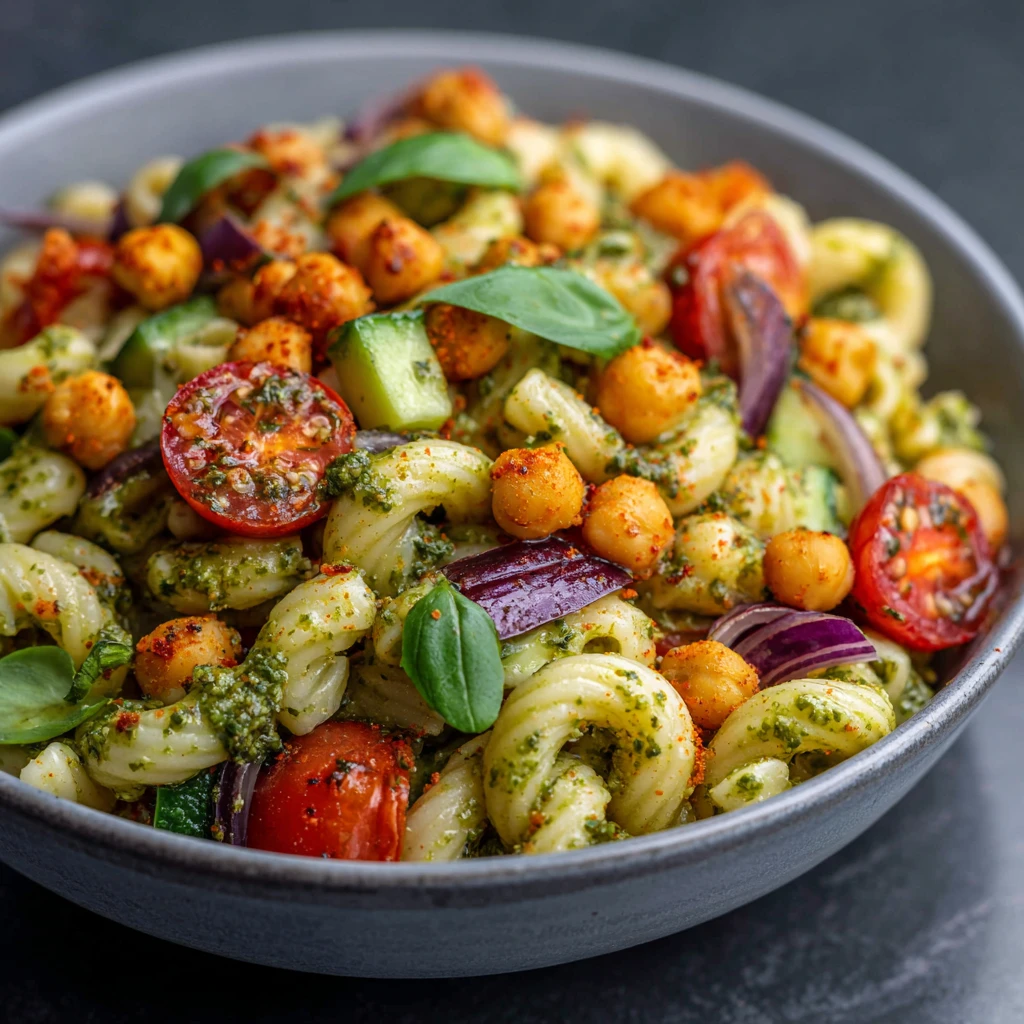
2. Season and Roast Chickpeas: In a medium bowl, combine the dried chickpeas with 2 tablespoons of olive oil, smoked paprika, garlic powder, onion powder, ¼ teaspoon salt, and ⅛ teaspoon black pepper. Toss well until the chickpeas are evenly coated with the oil and spices. Spread the seasoned chickpeas in a single layer on the prepared baking sheet.
3. Roast to Perfection: Roast the chickpeas for 20-30 minutes, stirring gently halfway through, until they are golden brown, firm, and wonderfully crispy. Keep a close eye on them during the last few minutes to prevent burning. Remove from the oven and set aside to cool slightly. They will become even crispier as they cool.
4. Cook Pasta: While the chickpeas are roasting, bring a large pot of generously salted water to a rolling boil. Add the pasta and cook according to package directions until it is al dente. Once cooked, drain the pasta thoroughly and rinse it with cold water to stop the cooking process and cool it down. This prevents the pasta salad from becoming gummy.
5. Chop Vegetables: While the pasta cooks and cools, prepare your fresh vegetables. Halve the cherry tomatoes, dice the cucumber into bite-sized pieces, and thinly slice or finely dice the red onion. Chop the fresh basil leaves.
6. Combine Ingredients: In a large mixing bowl, combine the cooled pasta, the roasted crispy chickpeas, the halved cherry tomatoes, diced cucumber, and sliced red onion.
7. Add Pesto and Seasonings: Pour the ½ cup of prepared pesto over the pasta and vegetable mixture. Add the chopped fresh basil. If using, now is the time to add optional toasted pine nuts, a squeeze of fresh lemon juice for brightness, or vegan Parmesan/nutritional yeast for an extra layer of flavor.
8. Toss and Chill: Gently toss all the ingredients together until everything is evenly coated with the vibrant pesto. Ensure the chickpeas are distributed throughout the salad. Taste and adjust seasonings if necessary, adding more salt, pepper, or lemon juice to your preference.
9. Serve: For best flavor, cover the bowl and refrigerate the pasta salad for at least 30 minutes to allow the flavors to meld. Serve chilled or at room temperature. Garnish with extra fresh basil or a sprinkle of vegan Parmesan before serving.
—
The Perfect Pairing: Why Roasted Chickpeas and Pesto Shine
Roasted Chickpea Pesto Pasta Salad is more than just a dish; it’s a delightful culinary experience that perfectly marries contrasting textures and vibrant flavors. This recipe brings together simple, wholesome ingredients to create a meal that is both satisfying and refreshing. Its popularity stems from this harmonious blend, making it a go-to for countless occasions.
The beauty of this pasta salad lies in its ability to deliver complex tastes with minimal effort. It’s a testament to how humble ingredients can be transformed into something extraordinary. From busy weeknights to celebratory gatherings, this dish consistently impresses with its unique character.
The Irresistible Crunch of Roasted Chickpeas
At the heart of this pasta salad’s appeal is the inclusion of roasted chickpeas. They are a game-changer, offering a textural dimension that elevates the entire dish. While pasta salads often feature soft ingredients, the chickpeas introduce a much-needed crispness.
This crunch provides a delightful contrast to the tender pasta and crisp vegetables. It prevents the salad from becoming monotonous, ensuring every bite is exciting. Roasting also coaxes out a deeper, nuttier flavor from the chickpeas, which complements the other components beautifully.
Furthermore, roasted chickpeas are fantastic flavor sponges. When tossed with olive oil and spices like paprika, garlic powder, and onion powder, they absorb these aromatics, infusing the salad with warm, savory notes. They contribute significantly to the dish’s overall profile.
Beyond flavor and texture, chickpeas are a nutritional powerhouse. They add a substantial plant-based protein boost, making the salad incredibly filling and satisfying. This makes the dish an excellent choice for those seeking wholesome, protein-rich meals.
The Aromatic Embrace of Pesto
Pesto is the soul of this pasta salad, binding all the elements together with its rich, herbaceous aroma and flavor. Originating from Genoa, Italy, traditional pesto genovese is a vibrant green sauce made from fresh basil, pine nuts, garlic, Parmesan cheese, and olive oil. Its distinct profile is unmistakable.
The fresh, garlicky, and slightly nutty notes of pesto awaken the palate. It coats each strand of pasta and every vegetable piece, ensuring a consistent burst of flavor throughout the salad. The quality of your pesto significantly influences the final taste, whether homemade or store-bought.
Pesto’s robust flavor profile means it doesn’t need many other elaborate ingredients to shine. It acts as a natural seasoning, infusing the dish with its characteristic warmth and zest. This makes the pasta salad incredibly flavorful without being overly complex.
For those adhering to dietary restrictions, vegan pesto options are widely available or easily made at home. These versions often substitute nutritional yeast or omit cheese entirely, ensuring everyone can enjoy the aromatic embrace of this iconic sauce. Pesto truly transforms a simple pasta salad into a gourmet experience.
A Symphony of Textures and Flavors
The ultimate appeal of Roasted Chickpea Pesto Pasta Salad lies in its harmonious “symphony” of textures and flavors. Each ingredient plays a crucial role, contributing to a balanced and exciting culinary composition. The result is a dish that is far greater than the sum of its parts.
You have the tender chewiness of the pasta, providing a comforting foundation. This is beautifully contrasted by the crisp, golden-brown roasted chickpeas, which deliver a satisfying pop and crunch. The fresh vegetables, like cherry tomatoes and cucumber, add juicy coolness and a delicate snap.
Flavor-wise, the dish offers a delightful interplay. The bright, herbaceous, and garlicky notes of the pesto are prominent, tying everything together. The smoky, savory depth from the roasted chickpeas adds complexity, while the fresh basil offers an additional aromatic lift.
This combination makes the pasta salad incredibly versatile and universally appealing. It’s hearty enough to be a main meal yet light enough to be a refreshing side. The intricate balance ensures that every spoonful is a journey through diverse and pleasing sensations, making it a true crowd-pleaser.
—
Mastering the Roast: Tips for Crispy Chickpeas Every Time
Achieving perfectly crispy roasted chickpeas is the secret to elevating this pasta salad from good to unforgettable. While it might seem straightforward, there are a few critical techniques that ensure a consistently crunchy result. Overlooking these steps can lead to soft or mushy chickpeas, which diminishes their impact on the dish.
Mastering the roast ensures that each chickpea boasts a golden exterior and a firm, satisfying bite. This textural contrast is essential for the overall experience of the pasta salad. With these tips, you’ll be roasting perfectly crispy chickpeas every single time.
The Dry Secret: Maximizing Crispiness
The single most crucial step for crispy roasted chickpeas is to ensure they are absolutely dry before roasting. Any residual moisture will steam the chickpeas in the oven instead of allowing them to crisp up. This is a common pitfall that often results in chewy or soft chickpeas.
After draining and rinsing your canned chickpeas, spread them out on a clean kitchen towel or several layers of paper towels. Gently pat them dry, rolling them around until no moisture remains. You can even let them air dry for 10-15 minutes after patting for extra assurance.
Some experts suggest gently rubbing the chickpeas between your palms or towels to remove their thin outer skins. While not strictly necessary for crispiness, removing these skins can contribute to an even crunchier texture and help seasonings adhere better. However, it’s a time-consuming step that many skip without detriment to the final result.
The drier your chickpeas, the crispier they will become. This simple yet vital step makes all the difference in achieving that irresistible crunch that perfectly complements the soft pasta and creamy pesto. Do not skip or rush this part of the process.
Flavor Boosters: Seasoning Your Chickpeas
While plain roasted chickpeas are tasty, infusing them with a thoughtful blend of spices takes their flavor to the next level. Seasoning them before roasting allows the flavors to bake in, creating a more robust and integrated taste. This step adds depth and complexity to the entire pasta salad.
Beyond the basic salt and pepper, consider a variety of spices to enhance the chickpeas. Smoked paprika not only adds a beautiful color but also a wonderful smoky depth. Garlic powder and onion powder are staples for savory flavor, providing a pungent, aromatic base.
Experiment with other spices like cumin, chili powder, curry powder, or a Mediterranean blend like za’atar for different flavor profiles. A pinch of cayenne pepper can add a subtle kick. Ensure the chickpeas are evenly coated with a light drizzle of olive oil before tossing them with the seasonings. The oil helps the spices adhere and promotes even browning.
Don’t be shy with your seasoning choices; the chickpeas are a canvas for flavor. A well-seasoned chickpea will provide a burst of savory goodness in every bite, making the pasta salad more exciting and dynamic. Adjust the spice levels to suit your personal preference.
Oven Dynamics: Temperature and Time
The right oven temperature and cooking duration are essential for achieving optimal crispiness. High heat is generally preferred for roasting chickpeas, as it helps to quickly evaporate moisture and encourages browning and crisping. A temperature of 400°F (200°C) is ideal for this purpose.
Arrange your seasoned chickpeas in a single layer on a baking sheet. Overcrowding the pan will cause the chickpeas to steam instead of roast, hindering crispiness. Use two baking sheets if necessary to give them enough space. Ensuring good air circulation around each chickpea is key.
Roast the chickpeas for approximately 20-30 minutes, stirring or shaking the pan halfway through. This promotes even cooking and browning on all sides. The exact time will vary based on your oven and how thoroughly you dried the chickpeas. Keep a close eye on them during the last 5-10 minutes.
You’ll know they’re done when they are deeply golden brown, feel firm to the touch, and have a noticeably crispy texture. They should have shriveled slightly and developed a beautiful crunchy shell. Don’t be afraid to let them get quite dark, as this is where the best crispiness develops.
Post-Roast Perfection
Even after coming out of the oven, a few post-roast steps can further enhance the crispiness and flavor of your chickpeas. How you handle them immediately after roasting can significantly impact their final texture and deliciousness. These final touches ensure they maintain their desired crunch.
Once the chickpeas are roasted to perfection, resist the urge to immediately transfer them to a closed container. Leaving them on the hot baking sheet for a few minutes allows them to cool down gradually, which helps them firm up and become even crispier. The residual heat from the pan will continue to dry them out slightly.
However, avoid leaving them on the hot pan for too long after cooling, as this can sometimes lead to them becoming too hard. Transfer them to a wire rack or a bowl to cool completely before adding them to the pasta salad. This allows for air circulation, preventing any trapped moisture from making them soggy.
For an extra burst of freshness, consider adding fresh herbs like chopped parsley or cilantro to the chickpeas after they have cooled. These delicate herbs can burn if roasted with the chickpeas. A squeeze of lemon juice or a sprinkle of flaky sea salt can also brighten their flavor just before combining with the pasta salad ingredients.
—
Elevating Your Pasta Salad: Beyond the Basics
While the foundational Roasted Chickpea Pesto Pasta Salad recipe is delicious on its own, there’s immense potential for customization and enhancement. Transforming a good dish into a great one often involves thoughtful consideration of ingredients, textures, and flavor profiles. Elevating your pasta salad means exploring creative additions and strategic choices.
This section delves into how you can personalize your pasta salad, making it truly your own. From selecting the perfect pasta shape to experimenting with different pesto varieties and adding imaginative mix-ins, these tips will inspire you to create a pasta salad that stands out.
Pasta Power: Choosing the Right Shape
The type of pasta you choose for your salad is more important than you might think. It’s not just about aesthetics; the shape directly impacts how well the pesto and other ingredients cling to the pasta. This affects the overall texture and flavor distribution in every bite.
Short, sturdy pasta shapes with ridges, twists, or holes are ideal for pasta salads. Shapes like fusilli (spirals), rotini (corkscrews), penne (tubes with ridges), cavatappi (corkscrews with a hollow center), and farfalle (bowties) are excellent choices. Their intricate designs act like little traps, holding onto the rich pesto sauce, diced vegetables, and even the smaller chickpeas.
Avoid very long, thin pastas like spaghetti or linguine, as these can be cumbersome to eat in a cold salad and don’t hold sauce as effectively. Very small pastas like orzo can also work but might get lost among the other ingredients. The goal is a shape that provides substance and captures flavor.
For those with dietary restrictions, gluten-free pasta varieties are readily available. Many brands now offer excellent gluten-free versions of popular pasta shapes made from corn, rice, or legumes, ensuring everyone can enjoy this delicious pasta salad without compromise. Always cook pasta al dente to prevent it from becoming mushy when chilled.
Pesto Perfection: Homemade vs. Store-Bought
The pesto is a star player in this pasta salad, and choosing the right one can make a significant difference. You have the option of using convenient store-bought pesto or crafting a fresh batch at home. Each approach has its merits, offering different levels of control and convenience.
Homemade pesto offers unparalleled freshness and the ability to customize ingredients to your exact preference. You can control the quality of the olive oil, use specific nuts (like walnuts or almonds instead of pine nuts), adjust the garlic intensity, and ensure it’s dairy-free if needed. Making your own pesto allows you to avoid preservatives and artificial ingredients often found in store-bought versions.
On the other hand, store-bought pesto provides incredible convenience, especially when time is short. Many high-quality brands are available, offering a great flavor profile. When choosing store-bought, look for brands with minimal ingredients and a good olive oil base. Checking the ingredient list for unnecessary additives or high sodium content is always a good idea.
To enhance store-bought pesto, consider stirring in a squeeze of fresh lemon juice, a tablespoon of extra virgin olive oil, a few extra fresh basil leaves, or a sprinkle of nutritional yeast (for a cheesy, dairy-free flavor). These small additions can significantly brighten and deepen its taste, making it taste closer to homemade.
Mix-Ins and Add-Ins: Creative Combinations
Once you have your base of pasta, roasted chickpeas, and pesto, the real fun begins with creative mix-ins and add-ins. This is where you can truly personalize your pasta salad, adding layers of flavor, texture, and nutritional value. The possibilities are virtually endless, catering to various tastes and dietary needs.
Consider incorporating a wider array of vegetables beyond the standard tomatoes and cucumbers. Diced bell peppers (red, yellow, or orange) add sweetness and crunch. Thinly sliced sun-dried tomatoes (oil-packed for extra flavor) contribute a rich, concentrated tomato essence. Artichoke hearts, either marinated or plain, offer a delightful tangy bite. Kalamata olives provide a briny, salty punch that pairs wonderfully with pesto. Fresh spinach or arugula can be tossed in at the end for an extra boost of greens.
For added texture and richness, toasted nuts like pine nuts, walnuts, or even sliced almonds can be a fantastic addition. If you’re not keeping the dish strictly vegan, small mozzarella balls (bocconcini) or crumbled feta cheese would be delicious. For a heartier meal, cooked and cooled vegetables like roasted broccoli florets or asparagus spears integrate well.
Don’t forget the power of citrus zest! A little lemon zest grated over the top before serving adds a bright, aromatic finish. You can also add other fresh herbs like chopped parsley or oregano. The key is to choose additions that complement the pesto and chickpeas, enhancing the overall experience without overpowering the main flavors.
—
Serving Suggestions and Meal Prep Mastery
Roasted Chickpea Pesto Pasta Salad is not only incredibly delicious but also remarkably versatile, making it perfect for a multitude of occasions. Its adaptable nature means it can effortlessly transition from a quick weeknight dinner to a star attraction at a gathering. Understanding how to best serve it and prepare it in advance can save you time and ensure maximum enjoyment.
This section provides practical advice on pairing the salad with other dishes, mastering meal prep techniques for optimal freshness, and ensuring proper storage. These insights will help you enjoy this delightful dish whenever the craving strikes, making your culinary life easier and more flavorful.
Versatile Serving Ideas
One of the greatest strengths of Roasted Chickpea Pesto Pasta Salad is its incredible versatility in serving. It can truly shine in various roles, adapting to different meal types and social settings. This flexibility makes it a valuable addition to any cook’s repertoire.
As a stand-alone meal, it’s hearty and satisfying, packed with protein, fiber, and fresh vegetables. It makes an excellent light lunch or a fulfilling dinner, especially when you’re looking for something refreshing yet substantial. Its balanced nature means you don’t necessarily need anything else to feel completely nourished.
The pasta salad also excels as a vibrant side dish. It’s a perfect companion for summer barbecues, potlucks, and picnics, where its fresh flavors provide a welcome contrast to grilled meats or heavier fare. It pairs wonderfully with grilled chicken, fish, or plant-based proteins like grilled tofu or tempeh. A simple green salad with a light vinaigrette would also complement it beautifully.
Furthermore, its portability makes it an ideal lunchbox staple. It holds up well for several days in the refrigerator, ensuring you have a delicious and healthy meal ready to go. Pack it for work, school, or a day out, and enjoy a flavorful alternative to more traditional sandwiches.
The Art of Meal Prepping
For busy individuals or those who love to plan, this Roasted Chickpea Pesto Pasta Salad is an excellent candidate for meal prepping. Preparing components in advance can significantly streamline your cooking process, allowing you to assemble the fresh salad quickly when you’re ready to eat. Strategic meal prepping ensures optimal freshness and flavor.
Several components of the salad can be prepped ahead of time. The chickpeas can be roasted and stored in an airtight container at room temperature for up to 3-4 days, maintaining their crispiness. The pasta can be cooked, rinsed with cold water, and stored in the refrigerator, ready for assembly.
All the fresh vegetables—cherry tomatoes, cucumber, and red onion—can be chopped and stored separately in airtight containers in the fridge. This prevents them from releasing too much moisture into the pasta prematurely. Even your fresh basil can be chopped and stored, though it’s best added just before mixing.
The key to successful meal prepping for this dish is to assemble the salad just before serving or no more than a few hours beforehand. Mixing everything together too far in advance can cause the pasta to absorb too much pesto, leading to a drier salad, and the chickpeas might lose some of their crispness. Keep the pesto separate until you are ready to combine.
Storage and Longevity
Proper storage is crucial for maintaining the quality and freshness of your Roasted Chickpea Pesto Pasta Salad. When stored correctly, you can enjoy this delicious dish for several days, making it perfect for leftovers or planned meals. Understanding the best practices ensures both safety and taste.
Once assembled, store the pasta salad in an airtight container in the refrigerator. This minimizes exposure to air, which can cause ingredients to dry out or lose their vibrant color. A tightly sealed container will also prevent any odors from permeating other foods in your fridge.
The pasta salad will typically last for 3 to 4 days in the refrigerator. While the chickpeas might lose a bit of their initial crispiness over time, they will still retain a pleasant texture and delicious flavor. The flavors in the salad often deepen and meld beautifully after a day or two in the fridge, making it even more enjoyable.
If you find the salad a little dry after a day or two, you can easily refresh it. Stir in an extra drizzle of good quality olive oil or a small spoonful of additional pesto. A squeeze of fresh lemon juice can also revive its brightness. Always trust your senses; if the salad smells or looks off, it’s best to discard it.
—
Health Benefits and Dietary Adaptations
Roasted Chickpea Pesto Pasta Salad is not just a treat for the taste buds; it’s also a remarkably nutritious dish that offers a wealth of health benefits. Its core ingredients contribute to a well-rounded meal, making it an excellent choice for a healthy lifestyle. Furthermore, this recipe is inherently flexible, allowing for easy adaptations to suit various dietary needs and preferences.
This section explores the nutritional advantages of the pasta salad and provides guidance on how to customize it for specific dietary requirements. From making it fully vegan to ensuring it’s gluten-free or suitable for those with allergies, this dish can be enjoyed by almost everyone.
A Nutritional Powerhouse
This pasta salad is a true nutritional powerhouse, packed with ingredients that contribute to overall health and well-being. Each component plays a vital role in making this dish as beneficial as it is delicious, offering a balanced blend of macronutrients and micronutrients.
Chickpeas are the star, providing an excellent source of plant-based protein and dietary fiber. Protein is essential for muscle repair and growth, while fiber aids in digestion, promotes satiety, and helps regulate blood sugar levels. They also supply important minerals like iron, magnesium, folate, and zinc, crucial for energy production and various bodily functions.
Olive oil, a cornerstone of pesto, is rich in monounsaturated fatty acids, known for their heart-healthy benefits. These healthy fats can help reduce bad cholesterol levels and provide anti-inflammatory properties. The fresh vegetables like cherry tomatoes, cucumbers, and red onions are loaded with vitamins, minerals, and antioxidants, supporting immune function and protecting against cellular damage.
Overall, this pasta salad is a balanced meal, offering complex carbohydrates from the pasta for sustained energy, healthy fats, and ample protein and fiber. It’s a complete and satisfying dish that nourishes the body while delighting the palate.
Vegan and Plant-Based Friendly
One of the most appealing aspects of the Roasted Chickpea Pesto Pasta Salad is its natural compatibility with vegan and plant-based diets. With just a simple adjustment, this vibrant dish can be enjoyed by anyone following a plant-forward lifestyle, making it a highly inclusive recipe.
The recipe is inherently plant-based, with chickpeas and vegetables forming the bulk of its ingredients. The primary consideration for making it strictly vegan lies in the choice of pesto. Traditional pesto often contains Parmesan cheese, which is not vegan.
Fortunately, many excellent vegan pesto brands are available in most grocery stores today. These versions typically use nutritional yeast, cashews, or other plant-based ingredients to mimic the cheesy flavor and creamy texture of traditional pesto. Alternatively, making your own vegan pesto at home is straightforward, allowing you to control all the ingredients.
With a vegan pesto, the dish becomes a fantastic source of plant-based protein and nutrients. The chickpeas provide a substantial protein boost, while the fresh vegetables and olive oil contribute essential vitamins and healthy fats. It’s a delicious and satisfying option for anyone seeking flavorful vegan meal ideas.
Gluten-Free Adaptations
Adapting the Roasted Chickpea Pesto Pasta Salad to be gluten-free is incredibly easy, ensuring that individuals with celiac disease or gluten sensitivities can fully enjoy this flavorful dish. The primary ingredient requiring attention is the pasta, but with modern alternatives, it’s a seamless substitution.
The simplest and most effective way to make this recipe gluten-free is to use gluten-free pasta. The market now offers a wide array of excellent gluten-free pasta varieties made from ingredients like corn, rice, quinoa, or legumes. These pastas are available in various shapes, including those ideal for pasta salads, such as fusilli, penne, and rotini.
When cooking gluten-free pasta, always follow the package instructions carefully, as cooking times can sometimes differ slightly from regular wheat pasta. It’s often recommended to rinse gluten-free pasta with cold water after cooking to prevent it from sticking together and to cool it down quickly for salad preparations.
Beyond the pasta, ensure that your chosen pesto is also gluten-free. Most commercial pestos are naturally gluten-free, but it’s always wise to check the ingredient label to confirm, especially if you have severe gluten sensitivities. With these simple adjustments, the Roasted Chickpea Pesto Pasta Salad becomes a wonderfully accessible and delicious gluten-free meal.
Customizing for Allergies and Preferences
The inherent flexibility of Roasted Chickpea Pesto Pasta Salad makes it highly adaptable for various allergies and personal preferences. With a few thoughtful substitutions and omissions, you can tailor this recipe to meet specific dietary needs without compromising on flavor or enjoyment. This customizability ensures everyone can savor a version that works for them.
For those with nut allergies, traditional pesto, which typically contains pine nuts, can be an issue. However, you can easily make or find nut-free pesto. Homemade nut-free pesto can be prepared by substituting pine nuts with seeds like sunflower seeds or pumpkin seeds, or by simply omitting nuts entirely. Store-bought nut-free pesto options are also increasingly available.
If you’re avoiding garlic or onion, these can be reduced or omitted from the chickpea seasoning and even from a homemade pesto. While they contribute significant flavor, the dish can still be delicious with other spices. You can also adjust the amount of red onion in the salad to your preference.
For individuals monitoring sodium intake, choose low-sodium chickpeas and be mindful of the salt added during seasoning and when cooking the pasta. You can also opt for homemade pesto, which allows for precise control over salt content. This dish can also be made oil-free by air-frying the chickpeas and using a dressing that doesn’t rely on oil, though this will significantly alter the texture and flavor. The beauty of this salad lies in its ability to be a blueprint for your culinary creativity and dietary needs.
—
FAQ
How long does roasted chickpea pesto pasta salad last in the fridge?
When stored in an airtight container, Roasted Chickpea Pesto Pasta Salad typically lasts for 3 to 4 days in the refrigerator. The flavors often deepen over time.
Can I make this pasta salad ahead of time?
Yes, you can. It’s best to cook the pasta, roast the chickpeas, and chop the vegetables ahead of time, storing them separately. For optimal freshness and texture, combine all ingredients with the pesto just a few hours before serving or when you’re ready to eat. This helps prevent the pasta from getting too dry and the chickpeas from losing crispness.
What kind of pasta is best for pasta salad?
Short, sturdy pasta shapes with ridges, twists, or holes are ideal. Examples include fusilli, rotini, penne, cavatappi, and farfalle. These shapes effectively capture and hold the pesto and other small ingredients, ensuring a flavorful bite every time.
Can I use frozen chickpeas?
It’s generally recommended to use canned chickpeas for this recipe as they are already cooked and easier to dry thoroughly for roasting. If using frozen chickpeas, thaw them completely, then ensure they are meticulously dried before tossing with oil and spices to achieve maximum crispiness.
Is this recipe vegan/gluten-free?
Yes, it can be easily adapted to be both. For a vegan version, ensure your pesto is dairy-free (many store-bought options are, or you can make your own with nutritional yeast). For a gluten-free version, simply use your favorite gluten-free short pasta variety.
How do I prevent the pasta salad from getting dry?
To prevent dryness, don’t mix the pesto too far in advance, as pasta can absorb a lot of liquid. If your salad seems dry after chilling, stir in an extra drizzle of good quality olive oil or a small spoonful of additional pesto just before serving. A squeeze of fresh lemon juice can also add moisture and brightness.
Can I add other vegetables?
Absolutely! This recipe is highly customizable. Feel free to add other vegetables like diced bell peppers, sun-dried tomatoes, artichoke hearts, Kalamata olives, fresh spinach, or blanched asparagus. Ensure they are chopped to a similar size for even distribution.
—
Roasted Chickpea Pesto Pasta Salad