
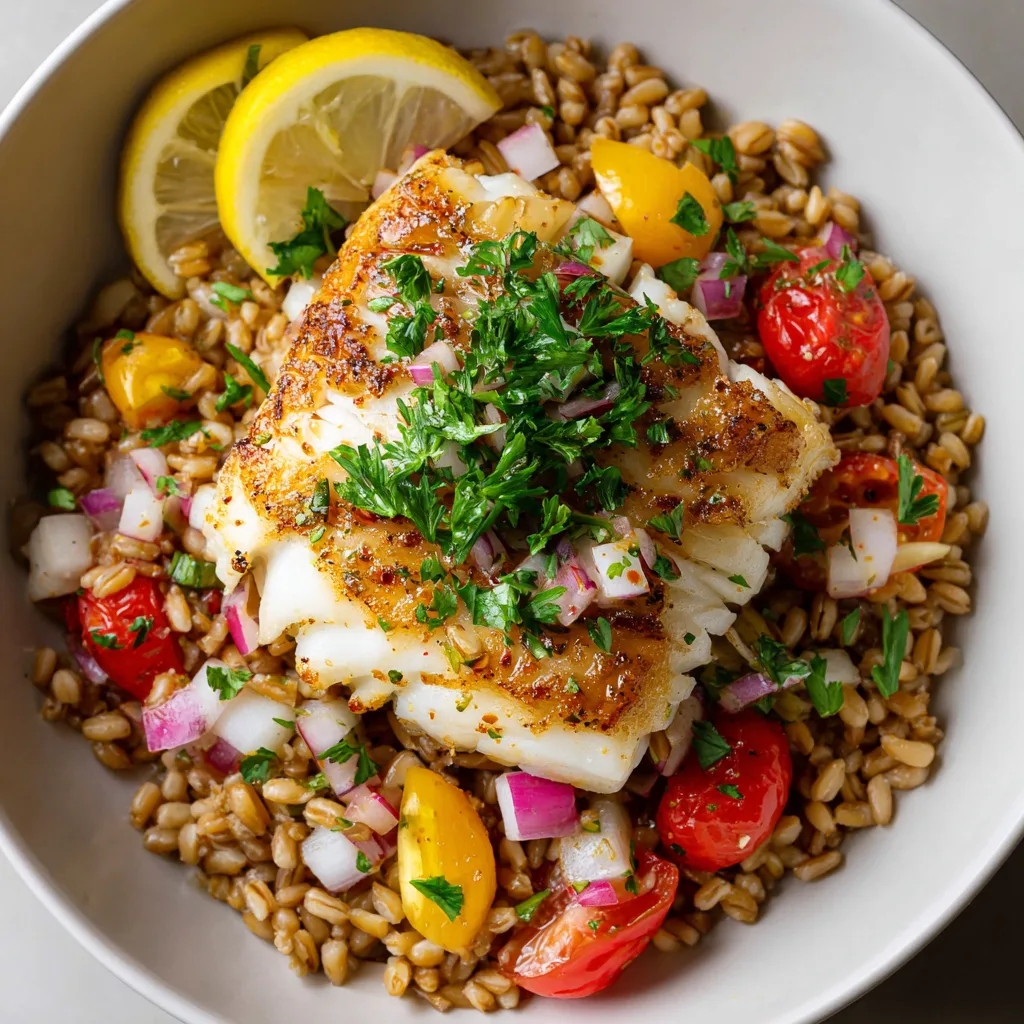
The Ultimate Lemon Garlic Cod Farro Bowl: A Mediterranean Masterpiece
The Lemon Garlic Cod Farro Bowl is the quintessential modern meal—a perfect intersection of bright Mediterranean flavors, heart-healthy nutrition, and effortless preparation. As more home cooks move away from heavy, processed dinners toward “power bowls,” this recipe has emerged as a gold standard. It combines the buttery, flaky texture of sustainably sourced Atlantic cod with the nutty, chewy bite of ancient grain farro. Infused with a vibrant dressing of fresh lemon juice, pungent minced garlic, and high-quality olive oil, this dish provides a restaurant-quality experience that is approachable enough for a Tuesday night yet elegant enough for a weekend dinner party.
Ingredients You’ll Need
To create a balanced bowl that hits every flavor note—salty, acidic, earthy, and savory—gather the following high-quality ingredients:
For the Cod:
-
Cod Fillets: 1 lb of fresh or thawed cod (halibut or haddock also work well).
-
Garlic: 3 cloves, finely minced.
-
Lemon: 1 whole lemon (zested and juiced).
-
Olive Oil: 2 tablespoons of extra-virgin olive oil.
-
Seasoning: 1/2 teaspoon paprika, kosher salt, and cracked black pepper to taste.
-
Fresh Herbs: 2 tablespoons of chopped Italian parsley.
For the Farro Base:
-
Farro: 1 cup pearled or semi-pearled farro.
-
Broth: 2 cups vegetable or chicken stock (provides more depth than water).
-
Aromatics: 1 bay leaf and a pinch of salt.
For the Bowl Assembly:
-
Greens: 2 cups baby spinach or arugula.
-
Vegetables: 1 cup cherry tomatoes (halved) and 1 cucumber (diced).
-
Fats: 1 avocado (sliced) or 1/4 cup crumbled feta cheese.
-
Dressing: An extra drizzle of olive oil and a squeeze of fresh lemon.
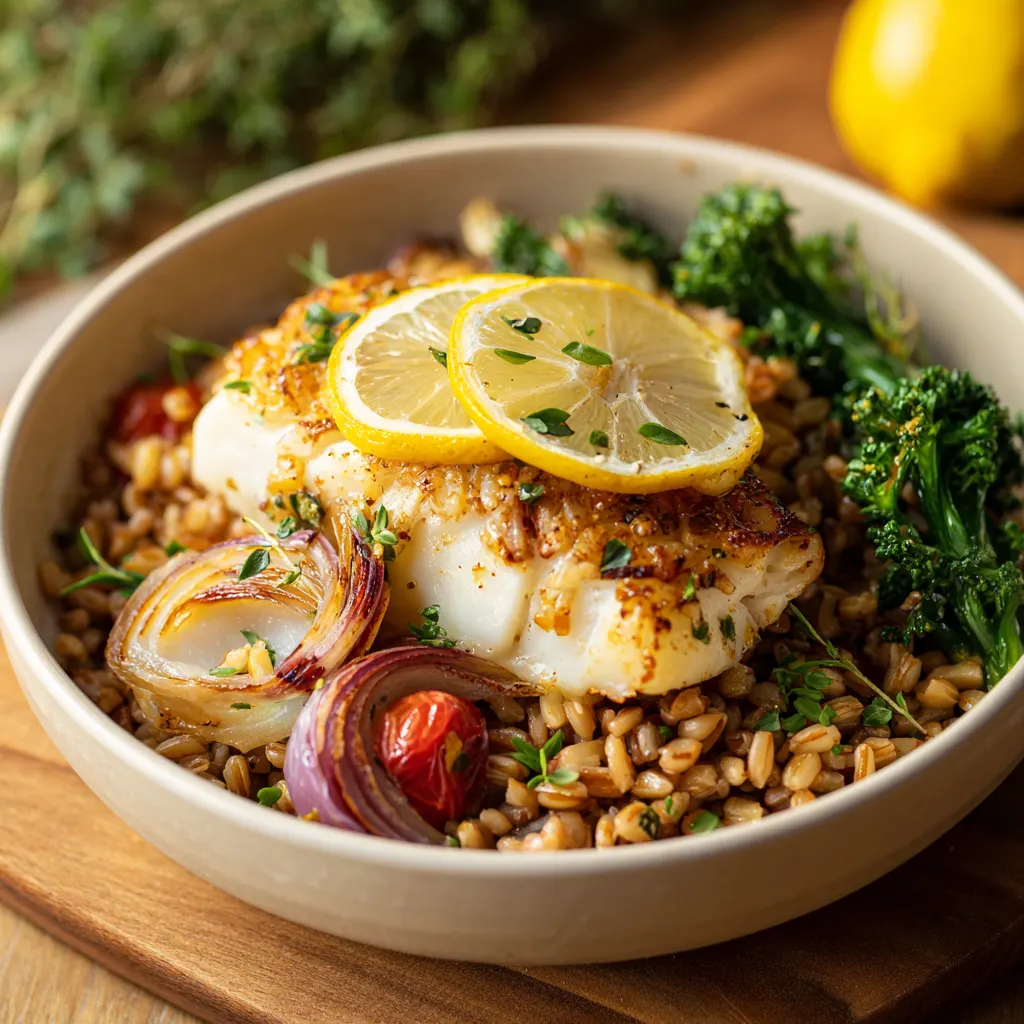
Step-by-Step Preparation
1. Cook the Farro: Begin by rinsing the farro under cold water to remove excess starch. In a medium saucepan, combine the farro, broth, and bay leaf. Bring to a boil, then reduce heat to low, cover, and simmer. Pearled farro typically takes 15–20 minutes, while semi-pearled may take up to 30. Once tender but still “al dente,” drain any excess liquid and fluff with a fork. Keep covered to retain heat.
2. Prepare the Lemon Garlic Marinade: In a small bowl, whisk together the olive oil, minced garlic, lemon zest, half of the lemon juice, paprika, salt, and pepper. Place the cod fillets on a plate and brush both sides generously with the mixture. Let the fish marinate for 10 minutes at room temperature—this allows the garlic and citrus to penetrate the delicate flesh without “cooking” it with acid.
3. Sear the Cod: Heat a large non-stick skillet over medium-high heat. Add a touch of olive oil. Once shimmering, place the cod fillets in the pan. Sear for 3–4 minutes on the first side until a golden-brown crust forms. Carefully flip the fillets—cod is delicate, so use a wide spatula. Cook for another 2–3 minutes until the fish is opaque and flakes easily with a fork. Remove from heat and drizzle with the remaining lemon juice.
4. Assemble the Bowls: Divide the warm farro among four bowls. If using spinach, you can toss it directly with the hot farro to let it wilt slightly. Top each bowl with the seared lemon garlic cod.
5. Add Toppings and Serve: Arrange the cherry tomatoes, cucumbers, and avocado around the fish. Sprinkle with fresh parsley and feta cheese. For the finishing touch, drizzle any remaining pan juices over the fish and grains to ensure every bite is infused with garlic and lemon.
Why Farro is the Superior Grain Choice
While quinoa and brown rice are popular staples, farro brings a unique textural element that elevates the entire dish. Farro is an ancient wheat grain that has been a staple in Italian cuisine for centuries. Unlike rice, which can sometimes become mushy, farro maintains a distinct “pop” and chewiness even when dressed in vinaigrettes.
Nutritionally, farro is a powerhouse. It is significantly higher in fiber than white rice and offers a surprising amount of protein per serving. This high fiber content ensures a low glycemic index, meaning the energy from this bowl is released slowly, keeping you full and focused throughout the evening. Furthermore, its nutty flavor profile acts as the perfect canvas for the acidity of the lemon and the pungency of the garlic, absorbing the juices from the cod without losing its structural integrity.
Customizing Your Mediterranean Bowl
The beauty of the Lemon Garlic Cod Farro Bowl lies in its versatility. Depending on the season or your dietary preferences, this recipe can be easily adapted. For a low-carb version, you can swap the farro for cauliflower rice, though you will lose that signature chew. If you prefer a bit of heat, adding crushed red pepper flakes to the garlic marinade provides a subtle “fra diavolo” kick that complements the white fish beautifully.
Vegetable additions are also highly encouraged. Roasted asparagus, blanched green beans, or pickled red onions can add layers of texture and brightness. If you are preparing this for meal prep, keep the dressing and fresh vegetables (like avocado) separate until you are ready to eat. The cod and farro reheat exceptionally well in a microwave or oven, making this one of the few seafood dishes that remains delicious as a leftover lunch the following day.
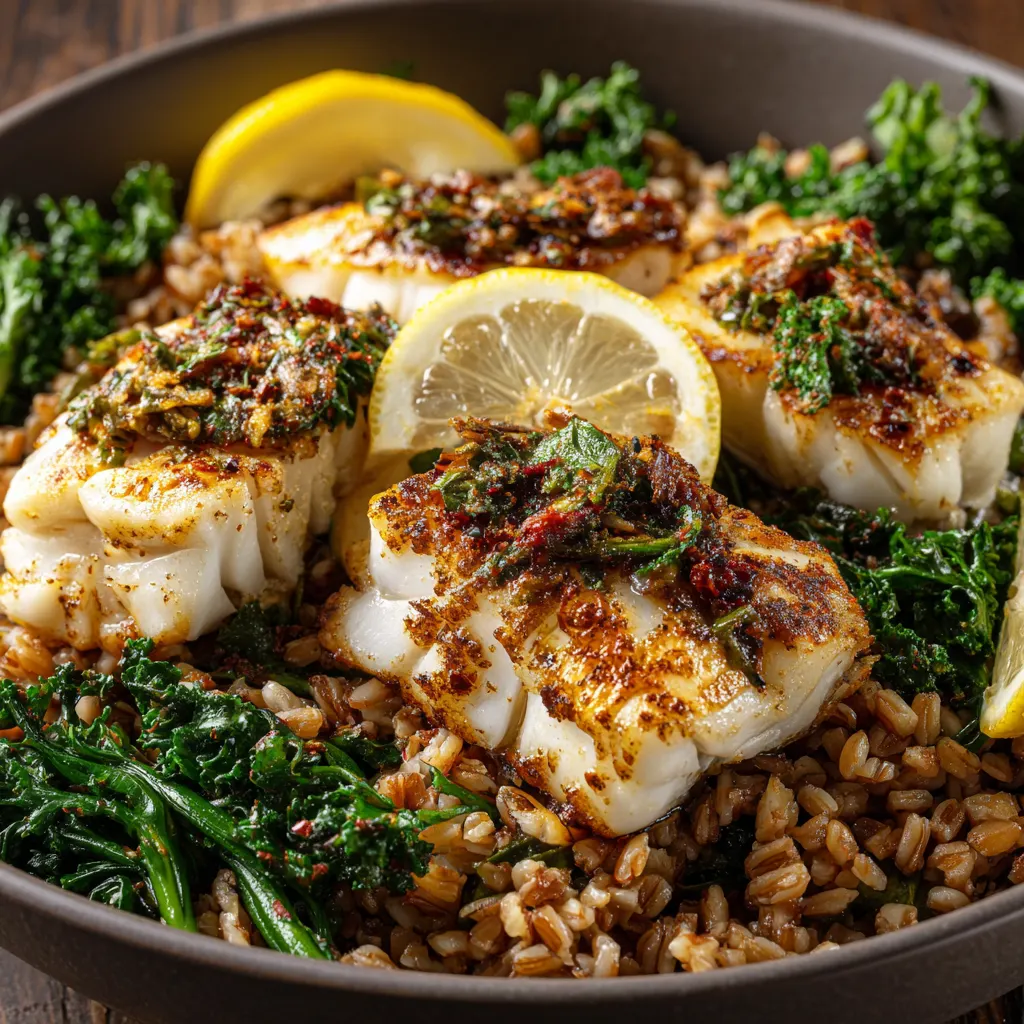
The Nutritional Synergy of Lean Protein and Healthy Fats
Beyond its impressive flavor profile, this meal is a masterclass in functional nutrition. Cod is one of the leanest sources of animal protein available, rich in Vitamin B12 and iodine, which are essential for metabolic health and cognitive function. By pairing this lean protein with the healthy monounsaturated fats found in olive oil and avocado, you increase the bioavailability of fat-soluble vitamins (A, D, E, and K) present in the vegetables.
The inclusion of fresh garlic and lemon isn’t just for taste; garlic contains allicin, known for its immune-boosting properties, while lemon provides a potent dose of Vitamin C. When you sit down to a Lemon Garlic Cod Farro Bowl, you aren’t just eating a meal; you are fueling your body with a sophisticated balance of complex carbohydrates, clean protein, and essential micronutrients. It is a dish that proves healthy eating never has to sacrifice depth of flavor or culinary satisfaction.