
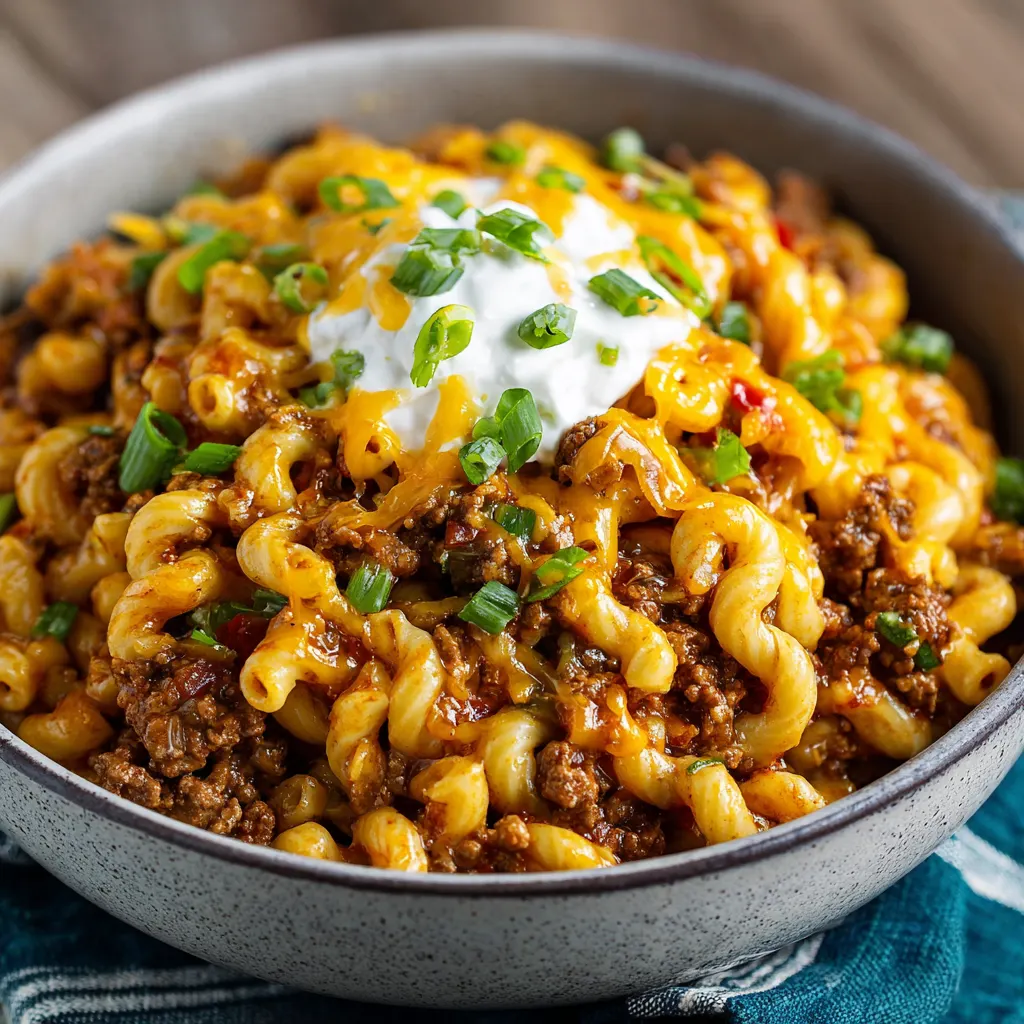
This indulgent, one-pan pasta dish elevates the standard weeknight meal by combining three of America’s most beloved comfort food flavors: hearty ground beef, the signature kick of buffalo sauce, and the cool, tangy richness of ranch seasoning. The result is a creamy, spicy, and satisfying creation reminiscent of a gourmet cheeseburger macaroni but with an unmistakable Buffalo wings twist. Designed for speed and maximum flavor, this recipe relies on a single skillet, making cleanup as easy as the preparation itself, delivering a truly optimized family favorite in under 30 minutes.
Ingredients
-
1 tablespoon olive oil or butter
-
1 pound (450g) lean ground beef (or minced beef)
-
1 small yellow onion, finely diced
-
2 cloves garlic, minced
-
1 packet (1 oz / 28g) dry Ranch seasoning mix
-
1/2 teaspoon black pepper
-
1/2 teaspoon paprika
-
2 1/2 cups (600ml) beef or chicken broth (stock)
-
1 cup (240ml) heavy cream (or double cream)
-
1/2 cup (120ml) quality Buffalo hot sauce (such as Frank’s Red Hot)
-
8 ounces (225g) dried pasta (penne, elbow macaroni, or farfalle recommended)
-
1 cup (113g) shredded mild cheddar cheese
-
1/2 cup (50g) grated Parmesan cheese
-
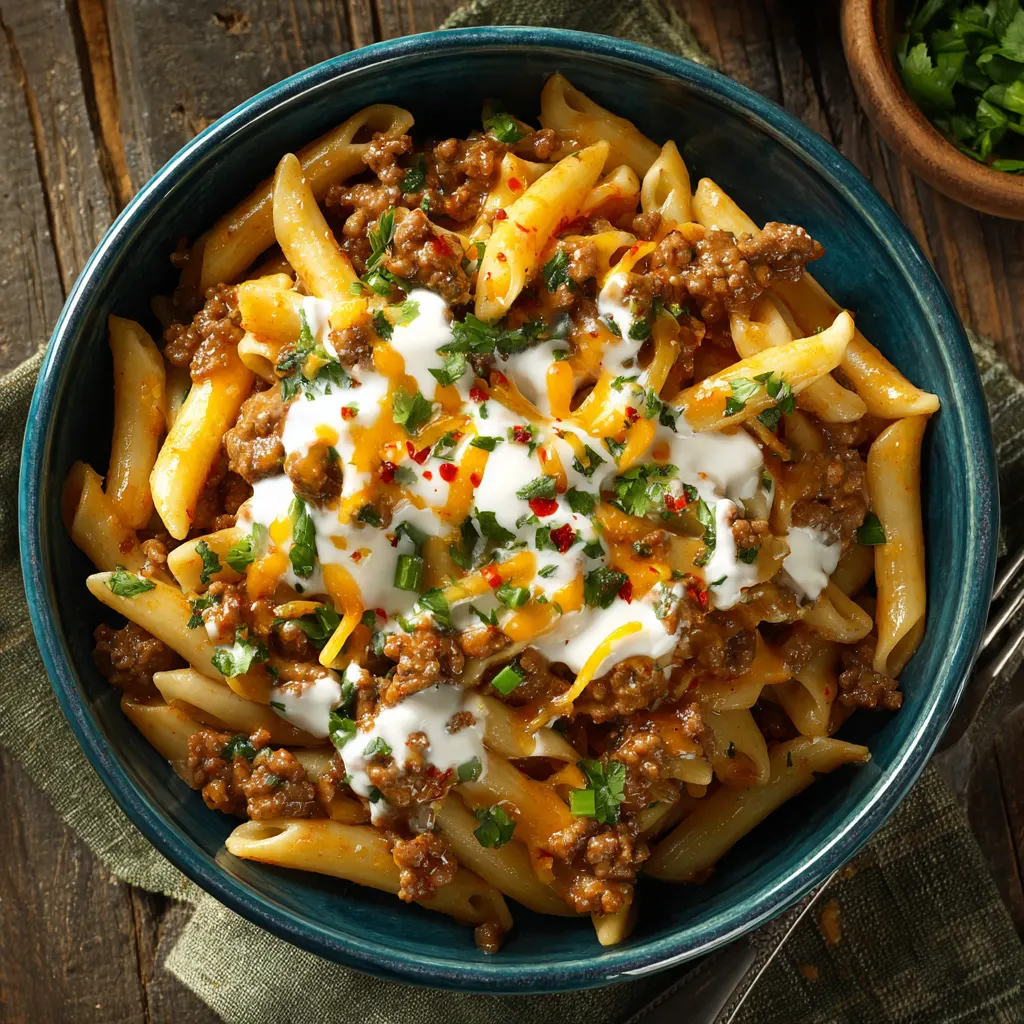
Optional Garnishes: Blue cheese crumbles, sliced green onions, or fresh parsley
Step-by-Step Instructions
-
Brown the Beef and Aromatics: Heat the olive oil or butter in a large skillet or Dutch oven over medium-high heat. Add the ground beef and cook, breaking it up with a spoon, until fully browned (about 6-8 minutes). Drain off any excess grease, which is crucial for a cleaner sauce. Add the diced onion and cook for 3-4 minutes until softened. Stir in the minced garlic, Ranch seasoning, black pepper, and paprika, cooking for 1 minute until fragrant.
-
Build the Sauce Base: Pour the beef broth, heavy cream, and Buffalo hot sauce into the skillet. Stir thoroughly to combine all the seasonings and beef. Bring the mixture to a gentle boil, then reduce the heat immediately to a low simmer.
-
Cook the Pasta (One-Pan Method): Add the uncooked pasta directly to the simmering sauce mixture. Stir well to ensure the pasta is submerged. Cover the skillet and let it simmer for 15–20 minutes, stirring occasionally to prevent the pasta from sticking to the bottom. The cooking time will vary slightly depending on the pasta shape; continue until the pasta is al dente and the sauce has reduced and thickened. If the sauce becomes too thick before the pasta is done, add a splash of water or extra broth.
-
Finish with Cheese and Serve: Turn off the heat. Stir in the shredded cheddar cheese and grated Parmesan cheese until fully melted and the sauce is smooth and creamy.
-
Garnish: Serve immediately in bowls, topping each serving with your desired garnishes, such as blue cheese crumbles or sliced green onions, for an added layer of texture and authentic Buffalo flavor.
The Anatomy of a Comfort Classic
The magic of Ground Beef Buffalo Ranch Pasta lies in the sophisticated balance of its three signature components, each playing a vital role in creating a rich, multi-layered profile. Understanding the function of each element allows for better optimization and customization.
The Heartiness of Ground Beef
Ground beef provides the necessary heft and satisfying texture that transforms this pasta from a side dish into a substantial main course. When choosing the meat, aim for a blend that is lean but not entirely fat-free (around 85/15 or 90/10). The small amount of rendered fat contributes flavor to the initial sauté and assists in carrying the spices, though it must be drained before the sauce is added to prevent an overly greasy final product. Alternatives like ground turkey or chicken can be substituted for a leaner meal, but they may require a tablespoon of olive oil added to the skillet to prevent drying out during the browning process.
The Tang and Heat of Buffalo
The “Buffalo” component is defined by two key characteristics: heat and tang. This flavor profile relies on a cayenne-pepper-based hot sauce, like Frank’s Red Hot, which contains vinegar for that signature acidic bite. It is crucial not to substitute Buffalo sauce with sweet chili sauce or sriracha, as these lack the required vinegary tang. The hot sauce is blended with broth and cream to create the sauce, tempering the heat while ensuring the acidic note remains prominent, providing a welcome counterpoint to the dish’s overall creaminess.
The Creamy Counterpoint: Ranch Flavor
The ranch element is essential for binding the dish and providing a cooling, herbaceous layer. While wet Ranch dressing can be used in some variations, the one-pan method is best optimized by utilizing dry Ranch seasoning mix. This powdered blend dissolves seamlessly into the simmering liquid, ensuring the flavor is distributed evenly without adding unnecessary oil or thickening agents right away. The ranch mix typically contains buttermilk powder, garlic, onion, and herbs (dill, parsley, chives), which are complementary to both the beef and the sharp spice of the Buffalo sauce. For an authentic Buffalo experience, substituting a portion of the Parmesan and cheddar with high-quality blue cheese crumbles or a tablespoon of blue cheese dressing stirred in at the end further enhances the classic pairing.
Mastering the One-Pan Technique for Optimization
The one-pan method is a time-saver, but it requires precision to achieve the perfect creamy, non-separated sauce and al dente pasta.
Importance of Degreasing the Beef
Before building the sauce, thoroughly draining the rendered fat from the ground beef is the most critical step for optimization. If the grease is left in the pan, it will emulsify poorly with the broth and dairy, resulting in a sauce that tastes oily or may separate. Once the beef is browned, push it to one side, tilt the pan, and use a spoon or paper towels to remove the excess liquid fat before adding the garlic and seasonings.
Liquid Dynamics and Pasta Selection
For the pasta to cook properly within the sauce, the liquid volume must be precisely balanced. Beef or chicken broth serves a dual purpose: it acts as the cooking medium and infuses the pasta with flavor from the start, unlike cooking in plain water.
-
Pasta Shape: Use short, sturdy pasta shapes like penne, elbow macaroni (mac), rigatoni, or farfalle. These shapes stand up well to the vigorous simmering and hold the thick, cheesy sauce effectively.
-
Absorption: The starch released by the pasta as it cooks is what naturally thickens the sauce. If the sauce thickens too much before the pasta is fully cooked, add a small splash of reserved hot pasta water (if using a pre-cooked method) or a bit of extra broth/water until the desired consistency is reached. Conversely, if the sauce is too loose, let it simmer uncovered for a few extra minutes at the end before adding the cheese.
Finishing the Sauce
The final steps are crucial for achieving a velvety finish. Always turn off the heat before stirring in the heavy cream and shredded cheeses. High heat can cause dairy products, particularly cheese, to curdle or break when combined with acidic ingredients (like the Buffalo sauce). By removing the pan from the heat, you allow the residual heat of the sauce and pasta to gently melt the cheese, creating a smooth, cohesive, and professional-grade sauce. Using both mild cheddar (for texture and color) and Parmesan (for sharpness and saltiness) provides a perfectly balanced cheesy flavor.
Flavor Deep Dive: Customization and Variations
While the traditional Ground Beef Buffalo Ranch Pasta recipe is a powerhouse of flavor, it is highly adaptable to dietary needs and personal preferences.
Adjusting the Heat Level
The level of spice can be easily controlled:
-
Mild: Reduce the Buffalo sauce to 1/4 cup. Replace the hot sauce with cream cheese (8 oz, cubed) added to the simmering liquid for extra creaminess and less heat.
-
Hot: Increase the Buffalo sauce to 3/4 cup. Additionally, incorporate finely diced jalapeños or green chillies alongside the onion and garlic in the browning step, letting them cook down into the beef mixture. A pinch of cayenne pepper added with the other seasonings will also boost the overall heat.
Alternative Proteins and Vegetables
The base recipe works exceptionally well with substitutions:
-
Ground Turkey or Chicken: Substitute the ground beef one-for-one. Ground white meat absorbs the strong Buffalo and Ranch flavors beautifully.
-
Meatless Option: Replace the ground beef with one can of drained black beans and one cup of corn (or peas) for a Southwestern-inspired twist.
-
Vegetable Boost: Incorporate diced red or yellow bell peppers with the onion for added color and sweetness. Frozen peas or corn can be stirred in during the last five minutes of simmering, providing sweetness to balance the heat.
The Baked Casserole Approach
For a hearty, potluck-ready meal, transform this skillet dish into a baked casserole.
-
Follow the recipe exactly, but stop at the point where the pasta is al dente (slightly undercooked).
-
Transfer the mixture to a 9×13 baking dish.
-
Top the entire casserole with an extra cup of shredded cheddar or mozzarella cheese.
-
Bake at 375°F (190°C) for 15-20 minutes, or until the topping is bubbly and golden-brown. This method allows the sauce to further thicken and delivers the beloved crispy cheese crust.
Serving, Storage, and Meal Prep
Ground Beef Buffalo Ranch Pasta is the definition of comfort food and is best enjoyed fresh, but it also holds up remarkably well for leftovers and meal preparation.
Ideal Pairings and Garnishes
The rich, savory, and spicy nature of this dish pairs wonderfully with simple, cooling sides that cleanse the palate.
-
Green Salad: A crisp, cool green salad dressed simply with oil and vinegar (a vinaigrette) or a light, crisp Caesar salad is the perfect counterpoint to the creamy, heavy pasta.
-
Bread: A crusty loaf of bread or homemade garlic bread is excellent for soaking up any remaining sauce.
-
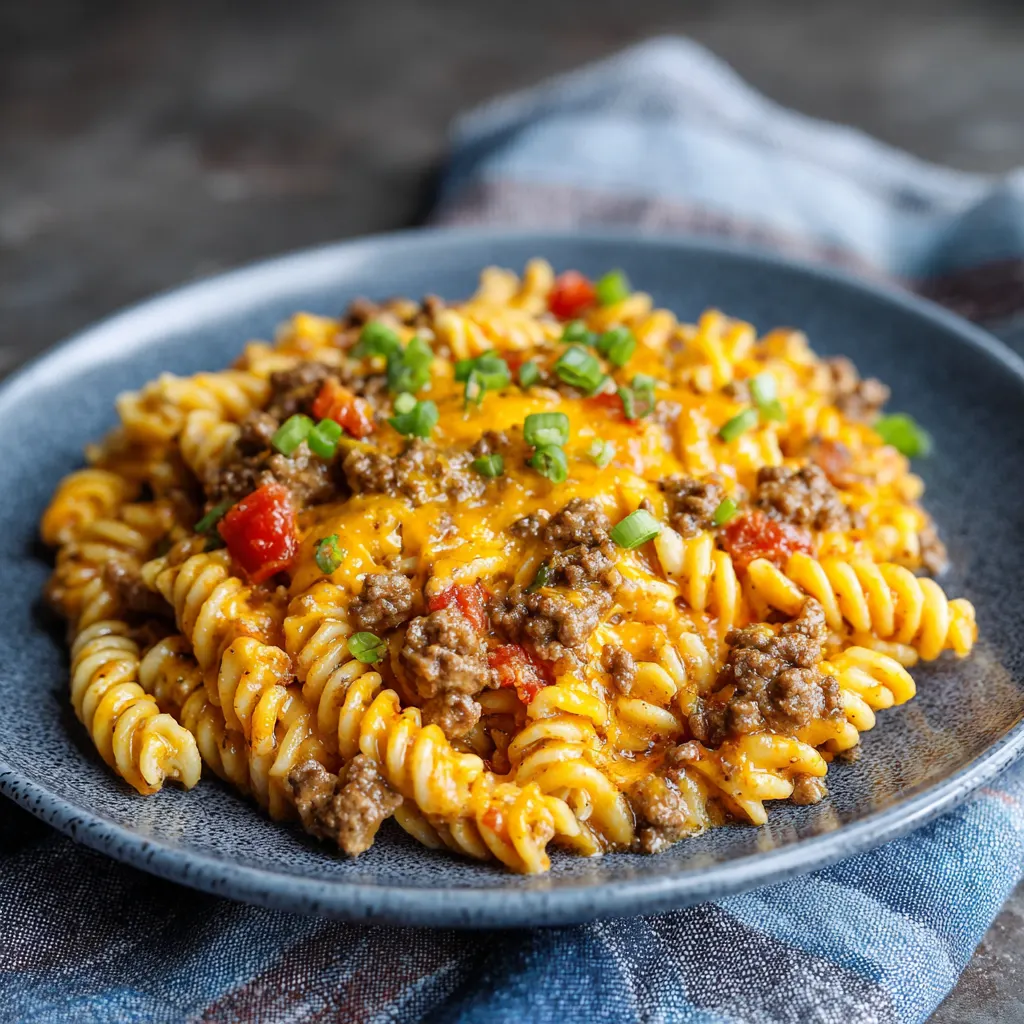
Final Touches: The presentation is enhanced by a final flourish of fresh garnishes. Sliced green onions (scallions), fresh chopped parsley, or a final drizzle of ranch or blue cheese dressing right before serving adds visual appeal and a fresh herbaceous flavor contrast. For those who enjoy texture, a sprinkling of crispy fried onions or crumbled potato chips can be added for a satisfying crunch.
Storing and Reheating Leftovers
Due to the starch content in the pasta, the sauce tends to absorb all the liquid and thicken considerably upon cooling.
-
Storage: Store leftovers in an airtight container in the refrigerator for up to 3-4 days. It is not recommended to freeze the dish, as the cream and cheese-based sauce can separate and become grainy upon thawing and reheating.
-
Reheating: To successfully reheat the pasta, whether in the microwave or on the stovetop, you must reintroduce moisture. For stovetop reheating, place the pasta in a lidded saucepan over low heat and add a small splash of milk, water, or extra broth (about 1–2 tablespoons per serving). Stir gently and warm until piping hot throughout. Adding a little extra Parmesan or cream cheese during reheating can also help restore the sauce’s smooth texture.