
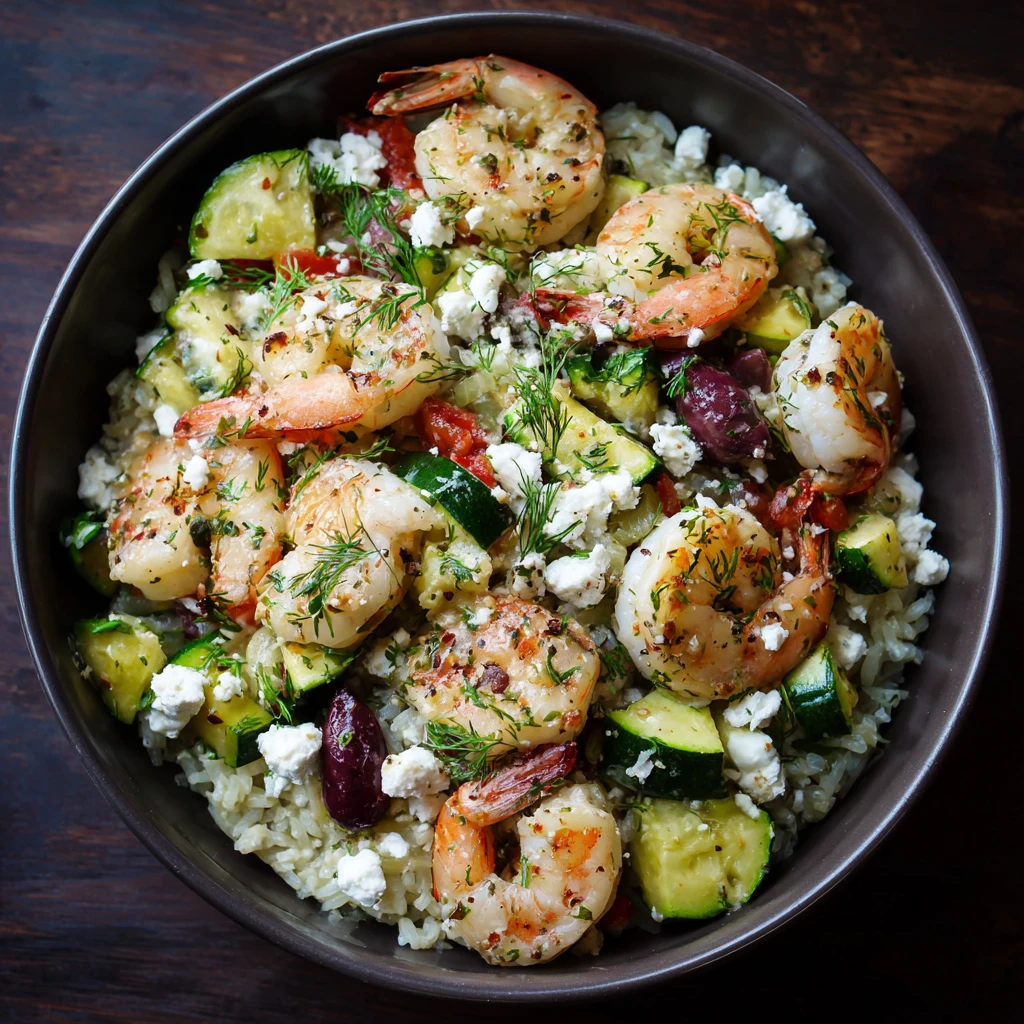
Greek Shrimp Zucchini Rice Bowl
Ingredients
-
- 1 tablespoon olive oil, plus more for dressing
- 1 pound large shrimp, peeled and deveined, tails on or off
- 1 teaspoon dried oregano
- 1/2 teaspoon garlic powder
- 1/4 teaspoon salt, plus more to taste
- 1/4 teaspoon black pepper, plus more to taste
- 2 medium zucchini, diced into 1/2-inch pieces
- 2 cups cooked brown rice (or white rice), warm
- 1/2 cup crumbled feta cheese
- 1/4 cup Kalamata olives, pitted and halved
- 1/4 cup chopped fresh dill or parsley
- For the Lemon-Dill Dressing:
3 tablespoons extra virgin olive oil
2 tablespoons fresh lemon juice
1 tablespoon chopped fresh dill (additional)
1 clove garlic, minced
1/4 teaspoon salt
1/8 teaspoon black pepper
Step-by-Step
1. Prepare the Shrimp: Pat the shrimp dry with paper towels. In a medium bowl, toss the shrimp with 1 tablespoon olive oil, dried oregano, garlic powder, 1/4 teaspoon salt, and 1/4 teaspoon black pepper until evenly coated. Set aside to marinate while you prepare other ingredients.
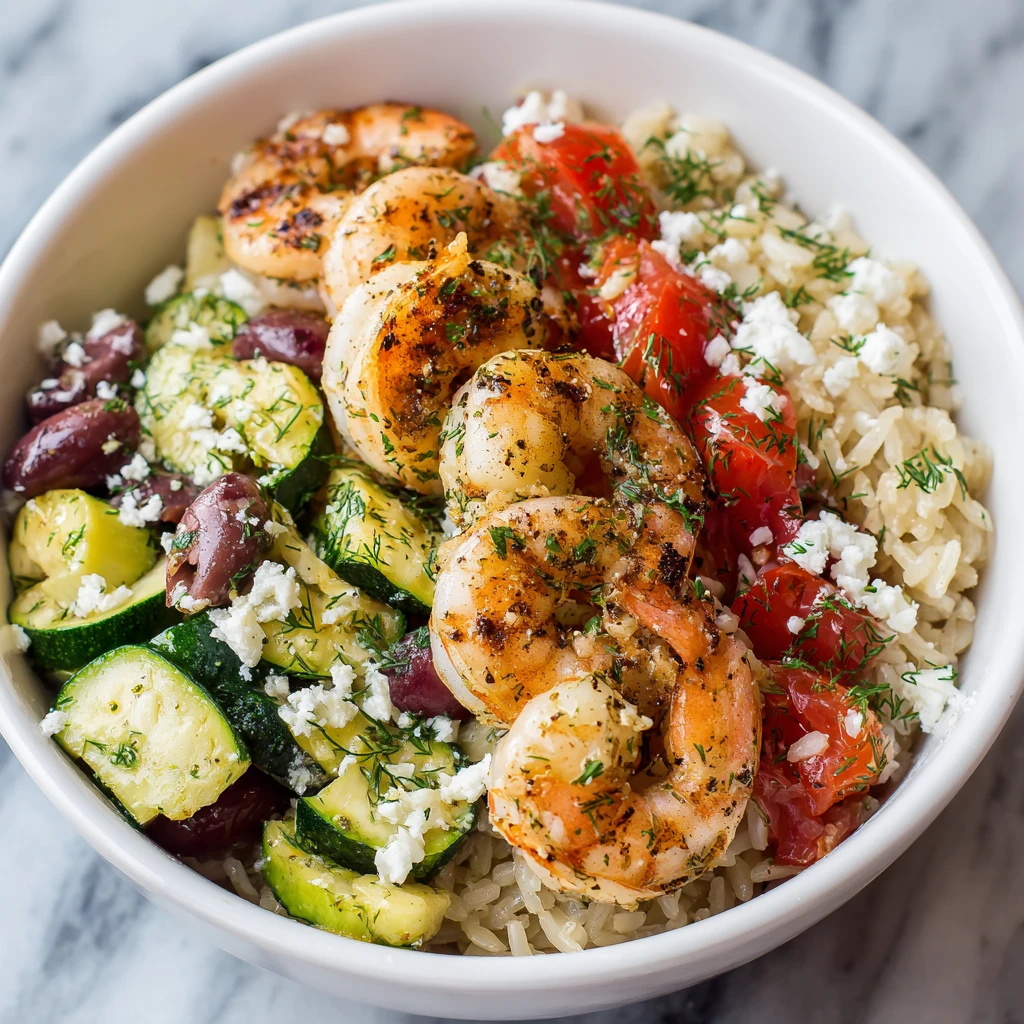
2. Cook the Zucchini: Heat a large skillet or non-stick pan over medium-high heat. Add the diced zucchini and cook for 5-7 minutes, stirring occasionally, until tender-crisp and lightly browned. Remove the zucchini from the skillet and set aside in a bowl.
3. Cook the Shrimp: Add the marinated shrimp to the same skillet, spreading them in a single layer. Cook for 2-3 minutes per side, or until the shrimp turn pink and opaque, and are cooked through. Be careful not to overcook them, as they can become rubbery.
4. Assemble the Bowls: Divide the warm cooked rice evenly among four serving bowls. Top the rice with the cooked zucchini and the perfectly seared shrimp.
5. Prepare the Dressing: In a small bowl, whisk together the extra virgin olive oil, fresh lemon juice, additional chopped fresh dill, minced garlic, 1/4 teaspoon salt, and 1/8 teaspoon black pepper until well combined. Taste and adjust seasonings as needed.
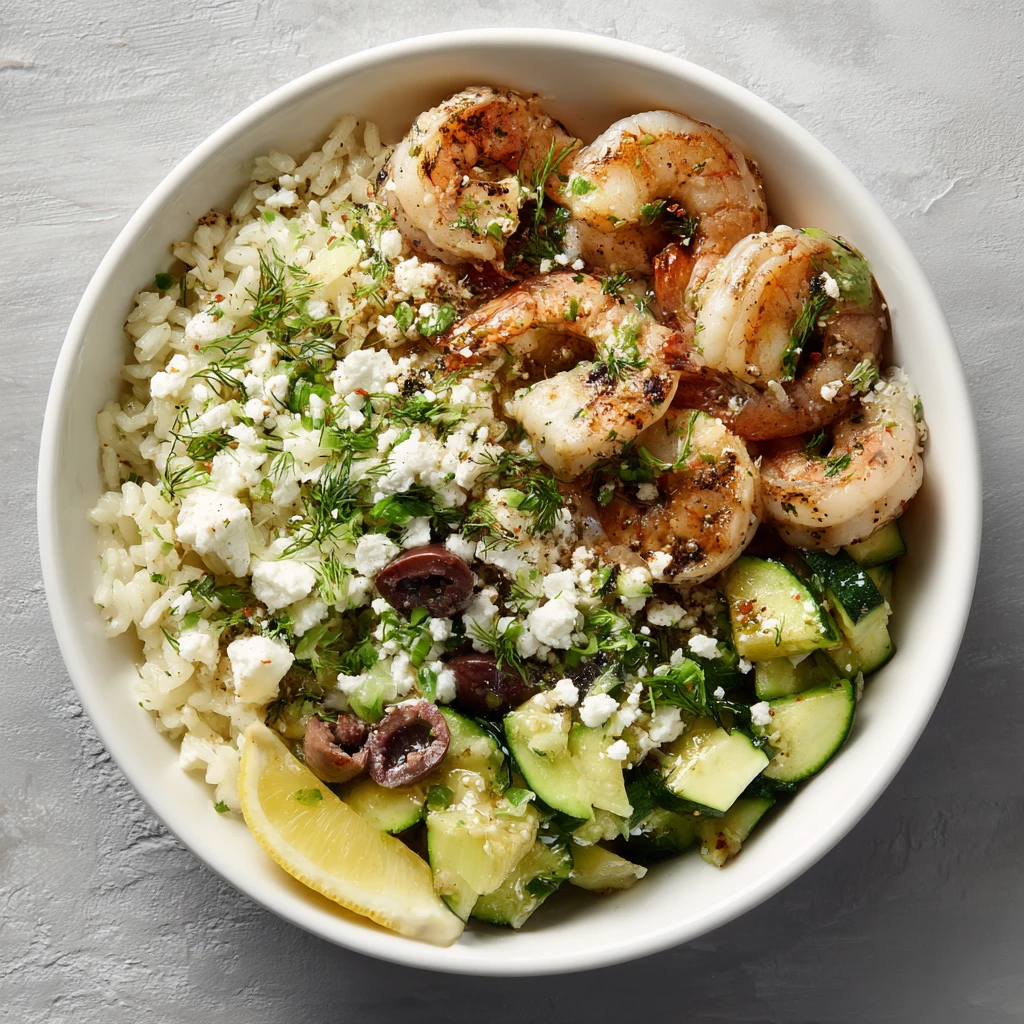
6. Garnish and Serve: Drizzle the lemon-dill dressing generously over each bowl. Sprinkle with crumbled feta cheese and halved Kalamata olives. Finish with an extra sprinkle of fresh dill or parsley for a burst of fresh flavor. Serve immediately and enjoy your vibrant Greek Shrimp Zucchini Rice Bowl.
The Allure of the Greek Shrimp Zucchini Rice Bowl
The Greek Shrimp Zucchini Rice Bowl is more than just a meal; it’s an invitation to savor the sun-drenched flavors of the Mediterranean. This dish brings together fresh ingredients and simple preparations to create a dining experience that is both satisfying and deeply nourishing. Its popularity stems from a perfect blend of taste, health, and convenience, making it a go-to for busy weeknights and leisurely weekend lunches alike.
The vibrant colors alone are enough to entice, promising a burst of flavor with every spoonful. From the succulent shrimp to the tender zucchini and fluffy rice, each component plays a crucial role in the symphony of the bowl. This dish celebrates the essence of Greek cuisine, offering a wholesome and delicious option that resonates with food lovers everywhere.
A Symphony of Mediterranean Flavors
At the heart of the Greek Shrimp Zucchini Rice Bowl lies a captivating array of Mediterranean flavors. Earthy oregano, bright lemon, fragrant dill, and pungent garlic create a harmonious base that elevates every ingredient. These seasonings are not just an afterthought; they are the soul of the dish, infusing the shrimp and vegetables with authentic Greek character.
The brininess of Kalamata olives perfectly complements the creamy tang of feta cheese. These classic Greek additions provide delightful contrasts in texture and taste, enhancing the overall complexity of the bowl. Each bite offers a mosaic of flavors, transporting you to the shores of Greece with its fresh and aromatic profile.
Health Benefits on Your Plate
Beyond its incredible taste, the Greek Shrimp Zucchini Rice Bowl is a powerhouse of nutrition. Shrimp is an excellent source of lean protein, low in calories, and rich in essential vitamins and minerals like selenium and vitamin B12. It provides the building blocks for muscle repair and overall bodily function.
Zucchini adds a significant boost of fiber, vitamins A and C, and antioxidants, supporting digestive health and boosting immunity. Brown rice, a whole grain, offers sustained energy release and a wealth of B vitamins. Together, these ingredients contribute to a balanced meal that aligns perfectly with the principles of the renowned Mediterranean diet, promoting heart health and longevity.
The Convenience of a One-Bowl Meal
One of the most appealing aspects of this Greek-inspired creation is its inherent convenience. Designed as a “bowl meal,” it simplifies both preparation and cleanup, making it ideal for anyone seeking efficiency without compromising on quality. The concept of a one-bowl meal streamlines the cooking process by combining all components into a single, cohesive serving.
This means less time spent juggling multiple pots and pans, and more time enjoying your delicious creation. For meal preppers, this structure is a dream, allowing for easy division into individual portions. The straightforward steps make it accessible even for novice cooks, proving that healthy, flavorful eating doesn’t have to be complicated.
Mastering the Art of the Greek Shrimp Zucchini Rice Bowl
Creating the perfect Greek Shrimp Zucchini Rice Bowl involves more than just following a recipe; it’s about understanding the nuances of each ingredient. From perfectly cooked shrimp to fluffy rice and vibrant dressing, attention to detail elevates a good meal to an exceptional one. Mastering these techniques ensures a consistently delicious outcome every time you prepare this delightful dish.
Each component requires specific care to bring out its best qualities, contributing to the overall harmony of the bowl. Learning these small tricks will not only improve this specific recipe but also enhance your general cooking skills. Let’s delve into the secrets behind each element.
Perfecting Your Shrimp
The key to succulent shrimp lies in proper preparation and precise cooking. Always start by patting your shrimp thoroughly dry with paper towels. This crucial step removes excess moisture, allowing for a better sear and preventing a steamed texture. Dry shrimp will caramelize beautifully, developing a richer flavor.
Shrimp cook very quickly, so vigilance is essential to avoid overcooking. They are done when they turn opaque and pink, typically within 2-3 minutes per side. Overcooked shrimp become tough and rubbery, losing their delicate sweetness. A hot pan is also critical for achieving that desirable golden crust.
Achieving Ideal Rice Texture
The foundation of any good rice bowl is, naturally, the rice itself. Whether you choose brown or white rice, the goal is a fluffy, separate grain texture. Follow the package instructions meticulously for your chosen rice variety, paying close attention to water ratios and cooking times. Undercooked rice is hard, while overcooked rice becomes mushy.
For brown rice, a slightly longer cooking time and resting period are often required. If cooking white rice, a quick rinse before cooking can remove excess starch, preventing stickiness. After cooking, let the rice rest covered for a few minutes, then fluff gently with a fork before serving to ensure perfect aeration and separation.
Zucchini Preparation Secrets
Zucchini adds a wonderful tenderness and subtle sweetness to the bowl, but its preparation requires a light touch. Dicing the zucchini into uniform 1/2-inch pieces ensures even cooking. Avoid overcrowding the pan when sautéing, as this can lead to steaming rather than searing, resulting in soggy zucchini.
Cook the zucchini until it is tender-crisp, retaining a slight bite and some vibrant color. Overcooking will render it watery and mushy. A medium-high heat allows for a good sear without breaking down the vegetable’s structure too much. Light browning adds depth of flavor, enhancing its natural sweetness.
Crafting the Ideal Greek Dressing
The lemon-dill dressing is the vibrant crown jewel of this Greek Shrimp Zucchini Rice Bowl. Its freshness and acidity cut through the richness of the other ingredients, tying everything together beautifully. Use fresh lemon juice; bottled juice simply doesn’t compare in brightness or flavor. Fresh dill is also non-negotiable for its distinct aromatic qualities.
Whisk the ingredients vigorously to emulsify the olive oil and lemon juice, creating a cohesive dressing. Taste and adjust seasonings – a little more salt or pepper can make a big difference. Don’t be shy with the garlic; minced fresh garlic provides a robust flavor that garlic powder cannot fully replicate. This dressing is not just a condiment; it’s a key flavor component.
Creative Variations and Customizations
The beauty of the Greek Shrimp Zucchini Rice Bowl lies in its versatility. While the core recipe is a delightful experience, it also serves as an excellent canvas for culinary creativity. You can easily adapt it to suit your dietary preferences, what you have on hand, or simply your mood. Exploring variations can keep the dish exciting and ensure it never feels repetitive.
From swapping proteins to experimenting with different grains and vegetables, the possibilities are vast. Customizing your bowl allows you to make it uniquely yours, catering to specific tastes and nutritional needs. Don’s be afraid to get adventurous and put your own spin on this Mediterranean classic.
Protein Power-Ups and Swaps
Shrimp is a fantastic choice, but the Greek flavor profile pairs wonderfully with other proteins. Consider grilled or pan-seared chicken breast for a leaner option; simply slice it into strips after cooking. Flaked salmon or cod would introduce another layer of omega-3 richness and a different texture.
For a vegetarian or vegan twist, chickpeas are an excellent plant-based protein. Roast them with the same Greek seasonings for a crispy addition. Tofu, pressed and cubed, can also be marinated and pan-fried until golden, offering a satisfying bite. These alternatives maintain the dish’s integrity while providing diverse options.
Vegetable Adventures
While zucchini is a star, feel free to introduce other vegetables to your bowl. Cherry tomatoes, halved or quartered, add a burst of juicy sweetness and color. Sautéed bell peppers (red, yellow, or orange) contribute sweetness and crunch. Spinach or baby kale can be wilted into the rice for extra greens and nutrients.
Artichoke hearts, either canned or marinated, bring a distinctive tang and tenderness. Roasted red onions or asparagus spears can also be fantastic additions, providing more depth and complexity. Seasonal vegetables can always be incorporated, making the bowl fresh and new with each passing season.
Grain Alternatives and Swaps
Brown rice provides a hearty, nutty base, but you can certainly experiment with other grains. Quinoa is a complete protein and cooks quickly, offering a lighter texture. Farro or barley provide a chewier texture and an earthy flavor profile. For a lower-carb option, consider cauliflower rice.
Cauliflower rice can be lightly sautéed until tender, mimicking the texture of traditional rice. This swap significantly reduces carbohydrates while still providing a satisfying base. Each grain brings its own unique nutritional benefits and textural contributions, allowing for endless customization.
Dressing and Topping Enhancements
The lemon-dill dressing is iconic, but subtle modifications can cater to different palates. A touch of red wine vinegar can be added for a sharper acidity. For a creamier dressing, whisk in a tablespoon of Greek yogurt or tahini. A pinch of red pepper flakes will introduce a gentle heat.
Beyond the classic feta and Kalamata olives, consider other toppings. Toasted pine nuts add a buttery crunch. A sprinkle of fresh mint or oregano can enhance the aromatic profile. Hummus or tzatziki can be served on the side for an extra layer of creaminess and flavor, creating an even more indulgent experience.
Meal Prep and Storage Solutions
The Greek Shrimp Zucchini Rice Bowl is not only delicious but also incredibly practical for meal planning. Its components hold up well, making it an excellent choice for batch cooking and enjoying throughout the week. Strategic preparation can save you valuable time during busy weekdays, ensuring you always have a healthy and flavorful meal at hand.
Proper storage is key to maintaining freshness and taste. Understanding how to store each component, and how to best reheat the assembled bowl, will maximize its appeal and prevent food waste. Embrace the ease of meal prepping this dish to streamline your healthy eating goals.
Prepping Ahead for Weekday Ease
To make your weekdays smoother, many components of the Greek Shrimp Zucchini Rice Bowl can be prepped in advance. Cook a large batch of brown rice at the beginning of the week and store it in an airtight container. Dice your zucchini and keep it in a separate container, ready for a quick sauté.
The lemon-dill dressing can be whisked together and stored in a jar in the refrigerator for up to 3-4 days. This allows you to assemble fresh bowls in minutes. You can also clean and devein the shrimp ahead of time, storing them raw in the fridge until you’re ready to cook, cutting down on active cooking time dramatically.
Optimal Storage Techniques
Once assembled, individual Greek Shrimp Zucchini Rice Bowls can be stored in airtight containers in the refrigerator for up to 3 days. It’s best to keep the dressing separate if possible, especially if you plan to enjoy the bowls over several days, to prevent the ingredients from becoming soggy.
If storing the components separately, ensure each is in its own airtight container. Cooked shrimp should be refrigerated promptly and consumed within 2-3 days. Cooked rice can last up to 4 days in the fridge. Proper cooling and sealing are essential to maintain food safety and flavor.
Reheating for Maximum Flavor
Reheating assembled Greek Shrimp Zucchini Rice Bowls can be done effectively to preserve their taste and texture. For best results, gently reheat the bowl in the microwave on medium power, stirring occasionally, until just warmed through. Be careful not to overheat the shrimp, as it can become tough.
If you stored the dressing separately, add it just before serving after reheating. This keeps the flavors fresh and vibrant. If reheating on the stovetop, place the contents of the bowl in a skillet over medium-low heat, adding a splash of water or broth to prevent drying, and stir until warmed.
Embracing the Mediterranean Lifestyle
The Greek Shrimp Zucchini Rice Bowl is more than a standalone recipe; it’s a delicious entry point into the broader Mediterranean lifestyle. This way of eating is renowned globally for its health benefits, vibrant flavors, and emphasis on fresh, whole ingredients. Incorporating such meals into your routine is a step towards a more wholesome and enjoyable approach to food.
It’s about fostering a relationship with food that prioritizes nourishment, pleasure, and balance. The Mediterranean diet isn’t just a list of foods; it’s a cultural practice that celebrates communal meals, fresh produce, and healthy fats. This bowl beautifully encapsulates those core tenets, making healthy eating both easy and exciting.
The Pillars of Mediterranean Eating
The Mediterranean diet is characterized by its abundant inclusion of fruits, vegetables, whole grains, legumes, nuts, and seeds. Olive oil is the primary source of fat, used generously for cooking and dressing. Fish and seafood are consumed regularly, often several times a week, providing lean protein and healthy omega-3s.
Poultry, eggs, cheese, and yogurt are eaten in moderation, while red meat is consumed only occasionally. The diet also emphasizes drinking plenty of water and, for some, moderate amounts of red wine with meals. These pillars work synergistically to promote heart health, reduce inflammation, and support overall well-being.
Beyond the Bowl: Complementary Dishes
While the Greek Shrimp Zucchini Rice Bowl is a complete meal in itself, it can also be part of a larger Mediterranean spread. Serve it alongside a simple Greek salad for added freshness and crunch. A side of warm pita bread with a dollop of tzatziki or hummus would be a perfect complement.
For a lighter starter, a bowl of lentil soup or a small plate of marinated olives would fit right in. To round out the meal, consider fresh fruit for dessert, such as sliced oranges with a sprinkle of cinnamon, or a handful of fresh berries. These additions enhance the dining experience without overwhelming the main dish.
Why the Mediterranean Diet Reigns Supreme
Numerous scientific studies consistently rank the Mediterranean diet as one of the healthiest eating patterns in the world. Its benefits are extensive, including a reduced risk of heart disease, stroke, type 2 diabetes, and certain cancers. It is also linked to improved brain health and a longer lifespan.
The emphasis on whole, unprocessed foods and healthy fats like olive oil helps to reduce inflammation throughout the body. The rich array of fruits and vegetables provides a wide spectrum of vitamins, minerals, and antioxidants, protecting cells from damage. Embracing this way of eating is a flavorful journey towards lasting health.
FAQ
Is the Greek Shrimp Zucchini Rice Bowl suitable for meal prep?
Yes, this bowl is excellent for meal prep. You can cook the rice, shrimp, and zucchini, and prepare the dressing in advance. Store components separately in airtight containers for up to 3 days in the refrigerator for optimal freshness, assembling just before serving.
Can I use frozen shrimp for this recipe?
Absolutely. If using frozen shrimp, thaw them thoroughly in the refrigerator overnight or under cold running water. Pat them very dry before seasoning and cooking to prevent excess moisture, which can lead to steaming instead of searing.
What kind of rice is best for this bowl?
Brown rice is recommended for its nutty flavor, fiber content, and whole-grain benefits. However, white rice, basmati, or even a blend of grains like quinoa or farro can also be used depending on your preference. Just ensure it’s cooked perfectly fluffy.
I don’t like dill. What other herbs can I use?
Fresh parsley is an excellent alternative to dill, offering a bright, clean flavor. Fresh oregano or mint could also be used for a slightly different, yet still authentic, Mediterranean profile. You can even use a combination of herbs.
How can I make this dish vegetarian or vegan?
To make it vegetarian, omit the shrimp and increase the amount of zucchini, or add chickpeas or firm tofu as a protein source. For a vegan version, also omit the feta cheese and use a dairy-free feta alternative or nutritional yeast for a cheesy flavor.
Can I cook all the vegetables and shrimp in one pan?
Yes, you can cook them in the same pan. Sauté the zucchini first until tender-crisp and remove it. Then cook the shrimp. This method helps to develop separate flavors and textures while still minimizing cleanup, aligning with the “one-bowl” concept.
Is this recipe gluten-free?
Yes, the Greek Shrimp Zucchini Rice Bowl, as written with rice, shrimp, zucchini, and the dressing ingredients, is naturally gluten-free. Always double-check labels on ingredients like feta cheese or any pre-made seasonings to ensure they are certified gluten-free if strict dietary requirements apply.
What if I don’t have fresh lemon juice?
Fresh lemon juice is highly recommended for its vibrant flavor. If absolutely necessary, you can use bottled lemon juice, but taste and adjust the quantity as its intensity can vary. A splash of white wine vinegar could also provide some acidity.
How spicy is this dish?
As written, the dish is not spicy. It relies on savory and tangy Mediterranean flavors. If you prefer a little heat, you can add a pinch of red pepper flakes to the shrimp marinade or the dressing.
Can I add more vegetables?
Absolutely! This bowl is highly customizable. Consider adding cherry tomatoes (halved), bell peppers (sautéed), or spinach (wilted into the rice) for extra nutrients and color. Artichoke hearts or cucumber could also be nice additions.