
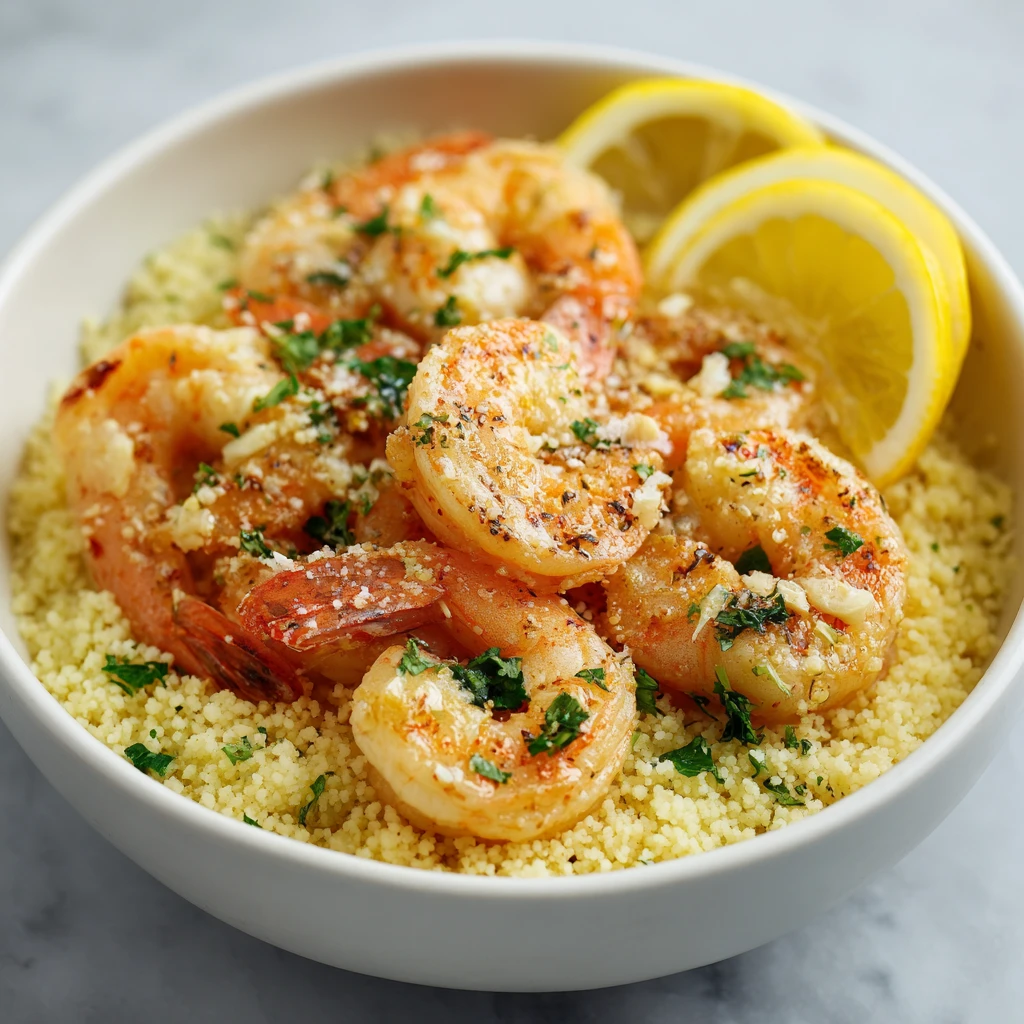
Easy Lemon Butter Shrimp Couscous Dinner Recipe
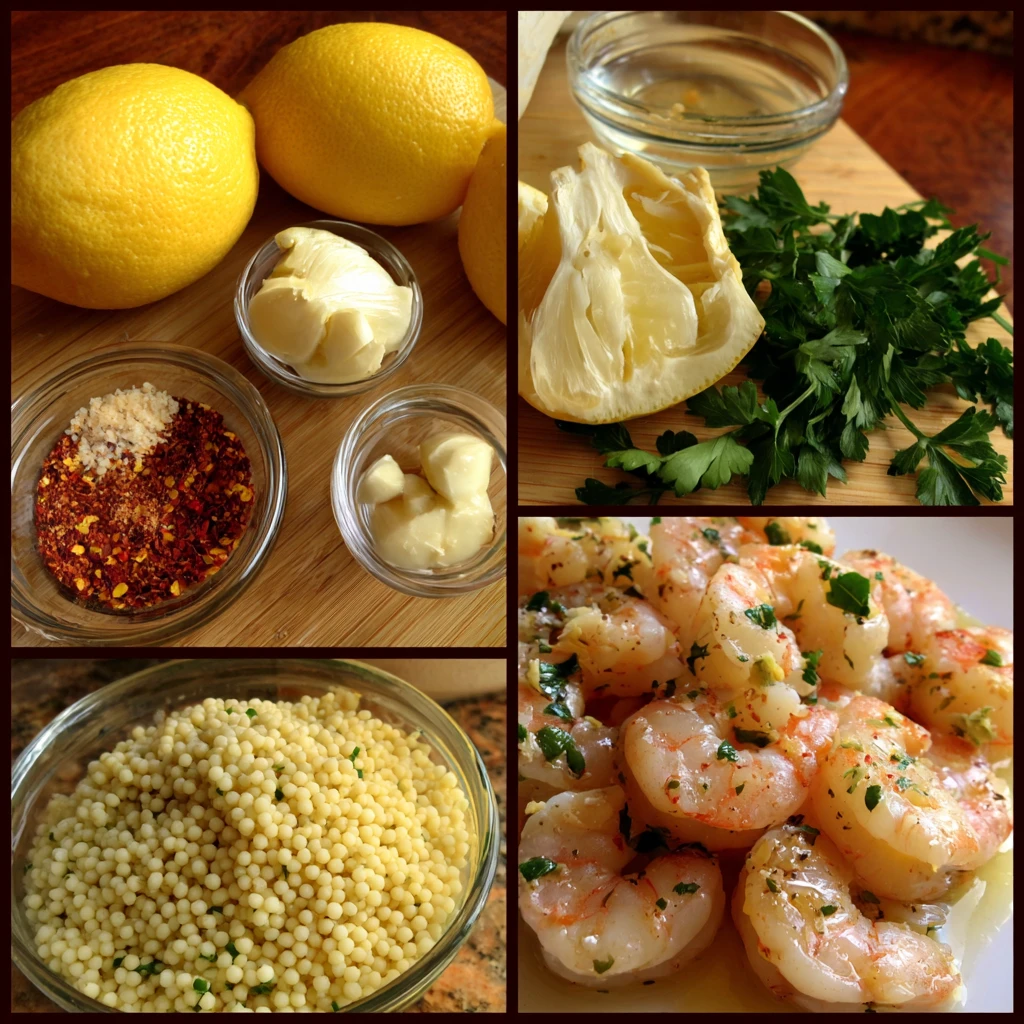
Ingredients
- 1 pound large shrimp, peeled and deveined
- 1 cup couscous
- 1 cup chicken broth (or vegetable broth)
- 1/4 cup butter, unsalted
- 2 cloves garlic, minced
- 1/4 cup lemon juice, freshly squeezed
- 2 tablespoons olive oil
- 1/4 cup fresh parsley, chopped
- 1/4 teaspoon red pepper flakes (optional)
- Salt and pepper to taste
- 1 lemon, sliced (for garnish)
Step-by-Step
1. Prepare the couscous: In a medium saucepan, bring the chicken broth to a boil. Stir in the couscous, cover, and remove from heat. Let it sit for 5 minutes, then fluff with a fork.
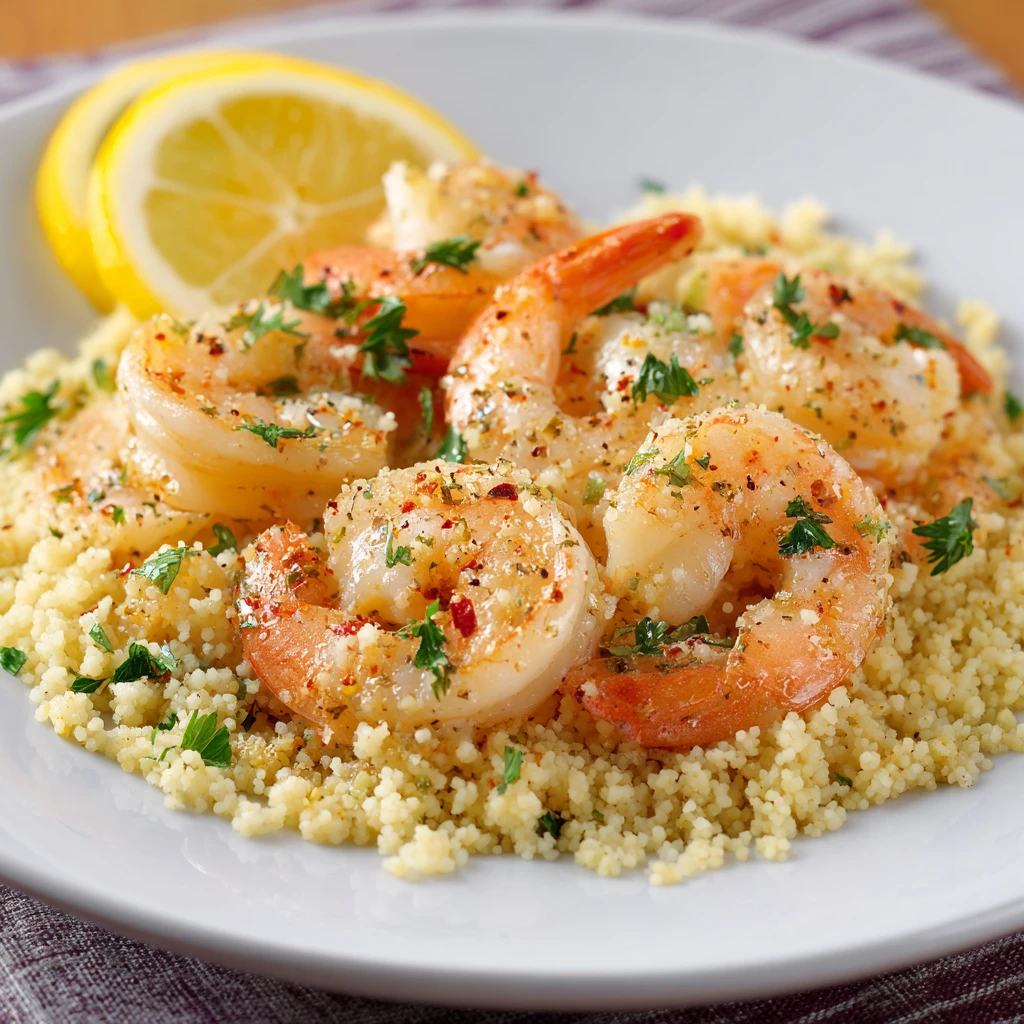
2. Season the shrimp: In a bowl, toss the shrimp with olive oil, salt, and pepper.
3. Cook the shrimp: Heat a large skillet over medium-high heat. Add the shrimp and cook for 2-3 minutes per side, until pink and cooked through. Remove the shrimp from the skillet and set aside.
4. Make the lemon butter sauce: In the same skillet, melt the butter over medium heat. Add the minced garlic and red pepper flakes (if using) and cook for about 30 seconds until fragrant.
5. Add lemon juice: Pour in the lemon juice and simmer for 1 minute, stirring constantly.
6. Combine: Add the cooked shrimp back to the skillet with the lemon butter sauce. Toss to coat.
7. Serve: Spoon the couscous onto plates and top with the lemon butter shrimp. Garnish with fresh parsley and lemon slices. Serve immediately.
Tips for Perfect Lemon Butter Shrimp Couscous
H3: Choosing the Right Shrimp
Using high-quality shrimp makes a big difference in the final dish. Look for shrimp that are firm, translucent, and free of any ammonia odor.
Fresh or frozen shrimp can be used. If using frozen, thaw them completely before cooking. Deveining the shrimp is essential for a clean taste.
H3: Perfecting the Couscous
Couscous is incredibly easy to prepare, but a few tips ensure it turns out perfectly fluffy every time. Use chicken or vegetable broth instead of water for added flavor.
Fluff the couscous with a fork immediately after it sits to prevent it from clumping together. You can also toast the couscous in a dry pan for a few minutes before cooking to enhance its nutty flavor.
H3: Mastering the Lemon Butter Sauce
The lemon butter sauce is the heart of this dish. Using fresh lemon juice is crucial for the best flavor. Bottled lemon juice can sometimes have a slightly artificial taste.
Don’t overcook the garlic, as it can become bitter. Cook it just until it’s fragrant. Adjust the amount of red pepper flakes to your desired level of spiciness.
Variations and Substitutions
H3: Vegetarian Option
To make this dish vegetarian, simply omit the shrimp and add sautéed vegetables such as zucchini, bell peppers, and mushrooms.
You can also add chickpeas or white beans for added protein. Consider using vegetable broth to keep it completely vegetarian.
H3: Gluten-Free Adaptation
For a gluten-free version, substitute the couscous with quinoa or rice. Both quinoa and rice work well with the lemon butter shrimp.
Ensure that the chicken or vegetable broth you are using is also gluten-free. Check the label carefully.
H3: Adding Vegetables
This recipe is easily customizable with your favorite vegetables. Asparagus, spinach, and cherry tomatoes are all excellent additions.
Sauté the vegetables with the garlic before adding the shrimp. This will ensure they are cooked to your liking.
Make Ahead and Storage
H3: Preparing Ahead of Time
You can prepare the couscous ahead of time and store it in the refrigerator for up to 2 days. Reheat it in the microwave or on the stovetop before serving.
The lemon butter sauce can also be made ahead of time and stored in the refrigerator. Reheat it gently before adding the shrimp.
H3: Storing Leftovers
Store any leftover lemon butter shrimp couscous in an airtight container in the refrigerator for up to 3 days.
Reheat it gently in the microwave or on the stovetop. Be careful not to overcook the shrimp when reheating, as it can become tough.
H3: Freezing Considerations
While technically possible, freezing this dish is not recommended as the texture of the shrimp and couscous can change. It’s best enjoyed fresh.
If you must freeze it, thaw it completely in the refrigerator before reheating.
Nutritional Benefits
H3: Shrimp: A Protein Powerhouse
Shrimp is an excellent source of lean protein, which is essential for building and repairing tissues. It’s also relatively low in calories and fat.
Shrimp contains several important vitamins and minerals, including vitamin B12, selenium, and iodine.
H3: Couscous: A Source of Carbohydrates
Couscous is a good source of carbohydrates, which provide energy for the body. It’s also a decent source of fiber.
Choose whole wheat couscous for an even higher fiber content.
H3: Lemon: Vitamin C Boost
Lemons are rich in vitamin C, an antioxidant that helps boost the immune system. Vitamin C also plays a role in collagen production, which is important for healthy skin.
The lemon juice in this recipe adds a bright, refreshing flavor and provides a nutritional boost.
Serving Suggestions and Pairings
H3: Side Dish Companions
This lemon butter shrimp couscous is delicious on its own, but it can also be paired with a variety of side dishes. A simple green salad with a light vinaigrette is a great complement.
Roasted asparagus or steamed broccoli are also excellent choices.
H3: Wine Pairings
For a perfect wine pairing, choose a crisp, dry white wine such as Sauvignon Blanc or Pinot Grigio.
These wines will complement the bright flavors of the lemon butter sauce and the sweetness of the shrimp.
H3: Garnish Ideas
Garnish with extra fresh parsley and lemon wedges. A sprinkle of red pepper flakes can add a touch of heat.
You can also add a dollop of Greek yogurt or sour cream for added creaminess.
FAQ: Common Questions About Lemon Butter Shrimp Couscous
What kind of shrimp is best for this recipe?
Large or jumbo shrimp work best, as they are easier to cook and hold their shape well. Fresh or frozen shrimp can be used.
Can I use dried parsley instead of fresh?
Fresh parsley is preferred for its brighter flavor, but you can use dried parsley if needed. Use about 1 teaspoon of dried parsley for every 1 tablespoon of fresh parsley.
How can I make the sauce thicker?
To thicken the sauce, you can whisk in a cornstarch slurry (1 tablespoon of cornstarch mixed with 2 tablespoons of cold water) while the sauce is simmering. Simmer until the sauce thickens to your desired consistency.
Can I add other seasonings to the sauce?
Yes, you can add other seasonings to the sauce to customize the flavor. Garlic powder, onion powder, or Italian seasoning are all good options.
Is couscous healthy?
Couscous is a decent source of carbohydrates and fiber. Whole wheat couscous is a healthier option with more fiber. It is not a complete source of protein.