
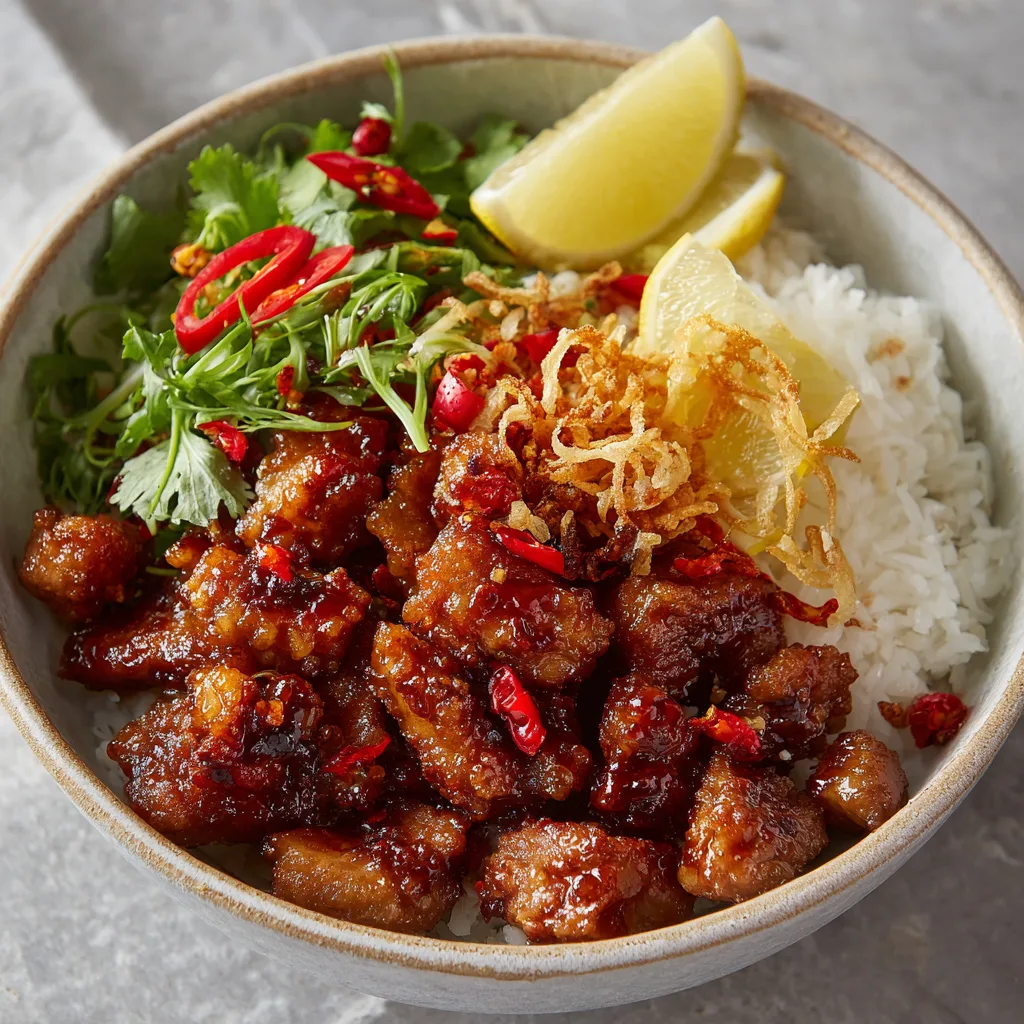
This dish transforms simple pork into an extraordinary weeknight meal, featuring perfectly crispy, golden pieces of pork coated in a vibrant, sticky glaze that perfectly balances the sweetness of honey with the bright tang of fresh lemon. Serving this over a bed of fluffy rice with fresh, crisp vegetables creates a complete, satisfying bowl dinner that’s quick enough for busy evenings yet impressive enough for company. The secret lies in a light, dual-coating technique for the pork, ensuring maximum crunch before it meets the irresistible sauce.
Ingredients
For the Crispy Pork:
-
1.5 lbs pork shoulder (or tenderloin), trimmed and cut into 1-inch cubes
-
1 teaspoon salt
-
1/2 teaspoon black pepper
-
1 large egg, lightly beaten
-
1/4 cup all-purpose flour
-
1/2 cup cornstarch (or potato starch)
-
3 cups neutral oil for frying (such as vegetable or canola), or use an air fryer
For the Honey Lemon Glaze:
-
1/2 cup fresh lemon juice (about 2-3 lemons)
-
1/4 cup honey
-
1/4 cup white granulated sugar
-
2 tablespoons soy sauce (low sodium preferred)
-
1 tablespoon rice vinegar
-
1 teaspoon fresh ginger, minced
-
1 clove garlic, minced
-
1 teaspoon cornstarch, dissolved in 2 tablespoons cold water (slurry)
For the Bowl:
-
4 cups cooked white rice (Jasmine or Basmati)
-
1 cup steamed broccoli florets
-
1 red bell pepper, thinly sliced
-
Garnishes: Sesame seeds, sliced green onions, extra lemon slices
Instructions
-
Prepare the Pork: In a medium bowl, toss the cubed pork with salt and pepper. In a shallow dish, whisk the egg. In another shallow dish, combine the flour and cornstarch.
-
Coat the Pork: Dip each pork piece first into the beaten egg, ensuring it is fully coated, then dredge it in the flour and cornstarch mixture. Press lightly to make sure the coating adheres well. Place the coated pieces on a rack or plate, ensuring they do not touch.
-
Fry the Pork: Heat the oil in a deep pot or wok to 350°F (175°C). Working in batches to avoid overcrowding, carefully add the pork pieces. Fry for 4-6 minutes, or until the pork is golden brown and cooked through (internal temperature of 145°F/63°C). Remove the pork with a slotted spoon and drain on a wire rack or paper towels.
-
(Air Fryer Option: Preheat to 400°F (200°C). Spray the coated pork with cooking oil and air fry for 10-12 minutes, flipping halfway, until golden and crispy.)
-
-
Make the Glaze: While the pork is frying, whisk together the lemon juice, honey, sugar, soy sauce, rice vinegar, ginger, and garlic in a small saucepan. Bring the mixture to a simmer over medium heat, stirring until the sugar is dissolved.
-
Thicken the Glaze: Whisk the cornstarch slurry and pour it into the simmering sauce. Stir continuously for about 1 minute until the sauce thickens to a glossy, syrup-like consistency. Remove from heat immediately.
-
Glaze the Pork: In a large bowl or wok, gently toss the crispy pork pieces with about two-thirds of the honey lemon glaze until they are evenly coated. Reserve the remaining sauce for drizzling.
-
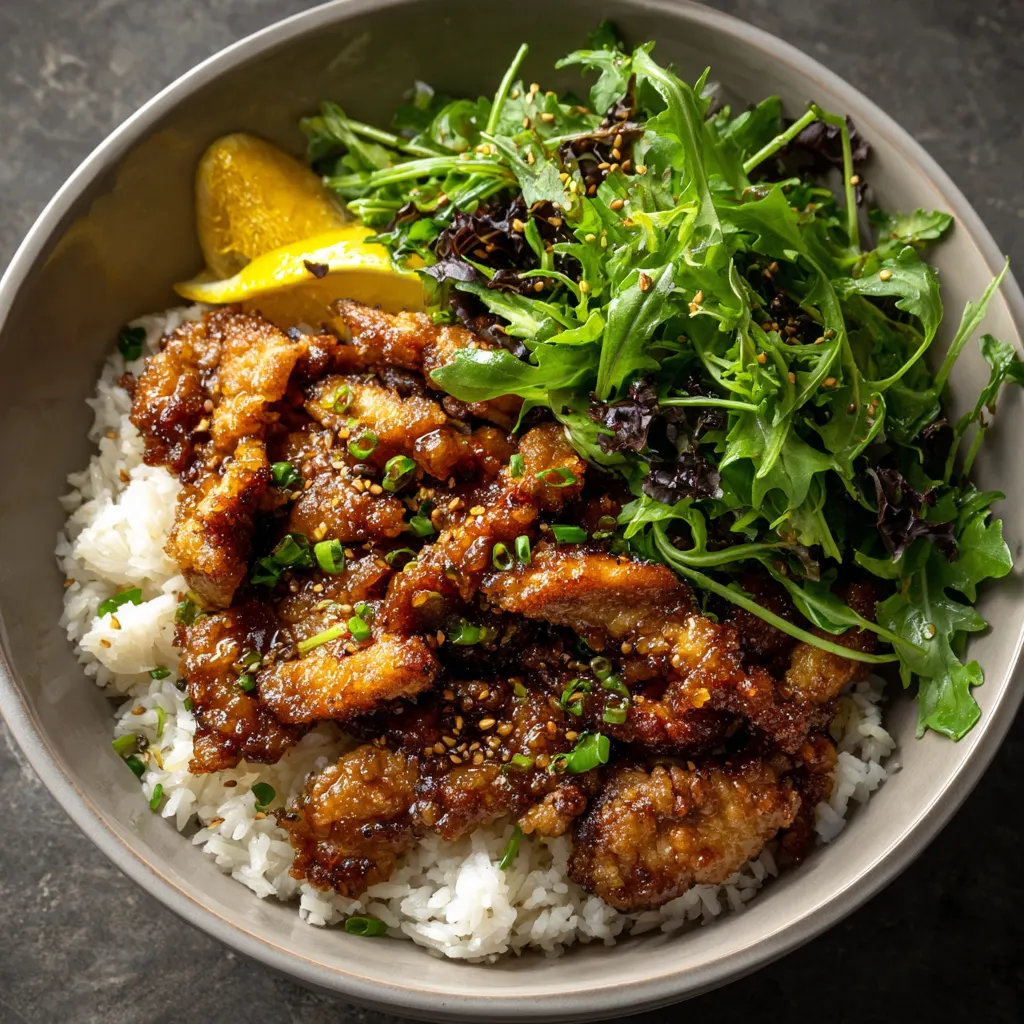
Assemble the Bowls: Divide the cooked rice among four bowls. Arrange the honey lemon pork alongside the steamed broccoli and sliced red bell pepper. Drizzle the remaining glaze over the pork and vegetables. Garnish generously with sesame seeds and green onions before serving.
Achieving Maximum Crisp: The Secret to Perfect Pork Texture
The defining characteristic of this dish is the incredible texture contrast between the tender interior of the pork and the shatteringly crisp exterior, even after it has been coated in the sticky glaze. Achieving this requires attention to detail in the coating and cooking process.
The Role of Starch in Coating
While a simple flour coating provides some crust, the use of cornstarch or potato starch is essential for a true “crispy” result. Starch granules absorb less moisture than wheat flour during frying, resulting in a lighter, drier, and significantly crunchier crust that resists sogginess longer. A successful coating involves a two-stage process: a wet binder (the egg) followed by a dry dredge (flour and starch mix). The flour ensures initial adhesion, while the high proportion of starch delivers the signature crispness. For best results, allow the coated pork to rest for 5-10 minutes before frying; this helps the coating “set” and adhere more firmly, reducing the likelihood of it flaking off in the hot oil.
Oil Temperature and Double Frying
For deep-fried perfection, maintaining the correct oil temperature (350°F or 175°C) is critical. If the oil is too cool, the pork will absorb excessive oil and become greasy; if it’s too hot, the exterior will burn before the interior is cooked. Frying in small batches is non-negotiable; overcrowding the pan dramatically lowers the oil temperature, leading to a steamy, soft crust.
For an extra crunchy, restaurant-quality result, consider the “double fry” technique. After the initial 4-6 minute cook until light golden, remove the pork and allow it to rest for 5 minutes. Then, increase the oil temperature slightly to 375°F (190°C) and fry the pork again for 60-90 seconds until a deep golden brown. This second, quick blast of heat expels any residual moisture in the crust, locking in a powerful, long-lasting crunch.
Air Frying and Baking Alternatives
If deep-frying is not preferred, air frying is an excellent alternative that still delivers great crispness with minimal oil. The key is ensuring the pork pieces are lightly coated with cooking spray or a teaspoon of oil after the dry coating. A single layer in the air fryer basket allows the hot air to circulate freely. For baking, place the coated pork on a wire rack set over a baking sheet to allow heat circulation around the bottom, preventing a soggy base. Bake at 400°F (200°C) until golden.
The Zest and Sweetness: Crafting the Ideal Honey Lemon Glaze
The honey lemon glaze is the heart of this dish, providing the dynamic flavor profile that cuts through the richness of the pork. A successful glaze is glossy, thick enough to coat the pork without running off, and perfectly balanced between acidity and sweetness.
Mastering the Balance of Flavors
The intensity of the lemon must be prominent to prevent the dish from becoming overly sweet. Always use fresh lemon juice; bottled juice lacks the brightness and complexity needed. The combination of honey and sugar provides depth of sweetness, where the honey adds a distinct floral note that elevates the standard “lemon sauce.” A small amount of rice vinegar and soy sauce is included not just for flavor, but for complexity; the vinegar provides a secondary, milder tang, while the soy sauce adds umami and deepens the overall savory profile, ensuring the sauce is not one-dimensional. Taste the sauce before thickening and adjust: add a squeeze more lemon for brightness, or a splash more honey for balance.
Achieving the Perfect Consistency
The enemy of a good glaze is a watery consistency. The secret to a professional-grade, glossy thickness is the cornstarch slurry. A slurry is cornstarch dissolved in an equal or slightly greater amount of cold water. It is imperative that the water is cold, as adding dry cornstarch or a slurry made with hot water will result in clumping.
Add the slurry only after the main sauce ingredients have dissolved and come to a gentle simmer. Once added, stir constantly and quickly. The sauce will thicken rapidly, usually within 60 seconds. Once it coats the back of a spoon, it is ready. Do not boil the sauce vigorously after adding the slurry, as prolonged heat can cause the starch to break down, resulting in a thinner sauce. The glaze should be a syrupy consistency, thick enough to cling to the crispy coating but still liquid enough to pour.
Glazing Technique for Maximum Crunch
To maintain the crispness of the pork for as long as possible, the glazing technique is crucial. Glaze the pork just before serving. The heat of the freshly cooked pork helps the glaze adhere and warms it up slightly. Toss the pork in a bowl using only about two-thirds of the prepared glaze. This coats the majority of the pieces without drowning them. Reserve the remaining glaze to drizzle over the finished bowls and rice; this provides an extra punch of flavor without compromising the structural integrity of the crispy exterior.
Beyond the Basics: Building a Balanced and Flavorful Bowl
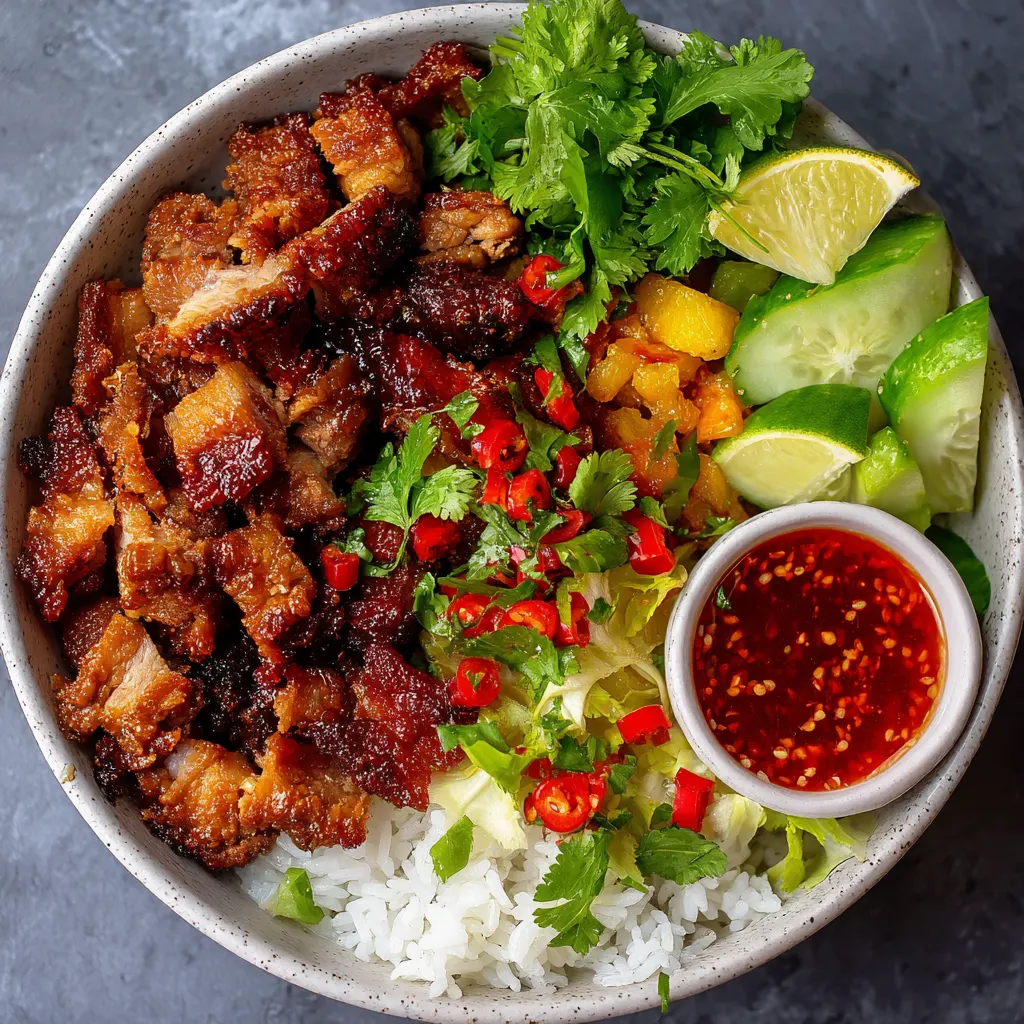
A “bowl dinner” is inherently versatile, offering endless opportunities to customize nutrition and texture. The components surrounding the crispy pork are just as important as the protein itself, providing contrasting textures and absorbing the flavorful glaze.
The Foundation: Choosing Your Grain
While classic white Jasmine or Basmati rice offers a neutral, fluffy base perfect for soaking up the glaze, consider other grains for enhanced nutrition and texture:
-
Brown Rice: Offers a nuttier flavor and a satisfying chewiness, along with added fiber.
-
Quinoa: A complete protein source that provides a light, fluffy texture and cooks quickly.
-
Cauliflower Rice: An excellent low-carb option that absorbs the sauce beautifully while adding a vegetable boost.
To ensure the rice is bowl-ready, cook it slightly drier than usual to prevent the final bowl from becoming mushy once the sauce is added.
Vegetable Pairings for Color and Crunch
The best bowls include both cooked and fresh elements to maximize visual appeal and textural variety.
-
Steamed or Blanched: Broccoli, green beans, or snap peas provide a vibrant green contrast and a tender bite. Steaming them briefly ensures they are cooked but still maintain their crisp structural integrity.
-
Fresh and Raw: Thinly sliced red bell peppers, shredded carrots, or thinly sliced cabbage add a refreshing, cold crunch that contrasts beautifully with the warm, crispy pork.
-
Sautéed: For a deeper flavor, quickly sautéed mushrooms or sliced onions can add an earthy element.
Aim for a ratio where the vegetables make up about half of the total bowl content, promoting a nutritionally balanced meal.
Finishing Touches and Garnishes
The final garnishes are small details that make a huge difference in the overall experience. Sliced green onions (scallions) are mandatory; their fresh, pungent flavor cuts through the richness of the pork and the sweetness of the glaze. Toasted sesame seeds, both white and black, add a nutty, complex crunch and an elegant visual touch. For a spicy kick, a light sprinkle of red pepper flakes or a side of sriracha chili sauce can be offered. Always include a few extra lemon wedges on the side, allowing diners to add a final burst of fresh citrus acidity if desired.
Preparation, Preservation, and Protein Swaps
Efficiency and versatility are key to making this recipe a staple. Understanding how to prepare components ahead of time and store leftovers correctly ensures the “easy” promise of this dinner recipe is maintained.
Smart Meal Prep Strategies
The component nature of the bowl dinner lends itself well to meal prepping:
-
Pork Coating (Ahead of Time): The pork can be cut, coated, and placed in the refrigerator on a baking sheet (covered loosely) up to 2 hours before frying. This allows the coating to fully adhere. Alternatively, you can mix the glaze ingredients (excluding the slurry) and store the sauce base in an airtight container in the fridge for up to 3 days.
-
Grain and Vegetable Prep: Cook your chosen grain and prep your vegetables (slice peppers, chop broccoli) days in advance. Store them separately in portioned containers.
-
The Glaze: While the sauce base can be made ahead, it’s best to add the cornstarch slurry and thicken the sauce just before serving.
Storing and Reheating Leftovers
Leftovers should be stored with the components separated to maintain quality:
-
Pork: Store the glazed pork separately in an airtight container for up to 3 days. The crispy coating will soften once mixed with the glaze, but it can be largely revived.
-
Reheating: To regain some crispness, reheat the pork in a preheated air fryer at 350°F (175°C) for 5-7 minutes, or in a toaster oven. Avoid microwaving the pork, as this will turn the crust completely soft. Reheat the rice and vegetables separately in the microwave or a pan. Reassemble the bowl just before eating.
-
Freezing: This dish is not ideal for freezing once assembled due to the texture change in the crispy coating and the rice.
Flexible Protein Substitutions
The honey lemon glaze is versatile and pairs beautifully with other proteins, allowing for easy rotation in your dinner routine:
-
Chicken: Boneless, skinless chicken thighs or breasts cut into cubes can be swapped directly for the pork, using the exact same coating and cooking times.
-
Shrimp: For a lighter, quicker option, use large shrimp. Skip the initial coating step and simply pat the shrimp dry before tossing them lightly in cornstarch. Sauté the shrimp for 2-3 minutes per side and then gently toss with the glaze.
-
Tofu (Vegetarian Option): Extra-firm tofu pressed well to remove moisture, then cut into cubes and tossed in the cornstarch/flour mixture, can be pan-fried or air-fried for a satisfying, plant-based alternative that crisps up beautifully and readily absorbs the honey lemon flavor.