
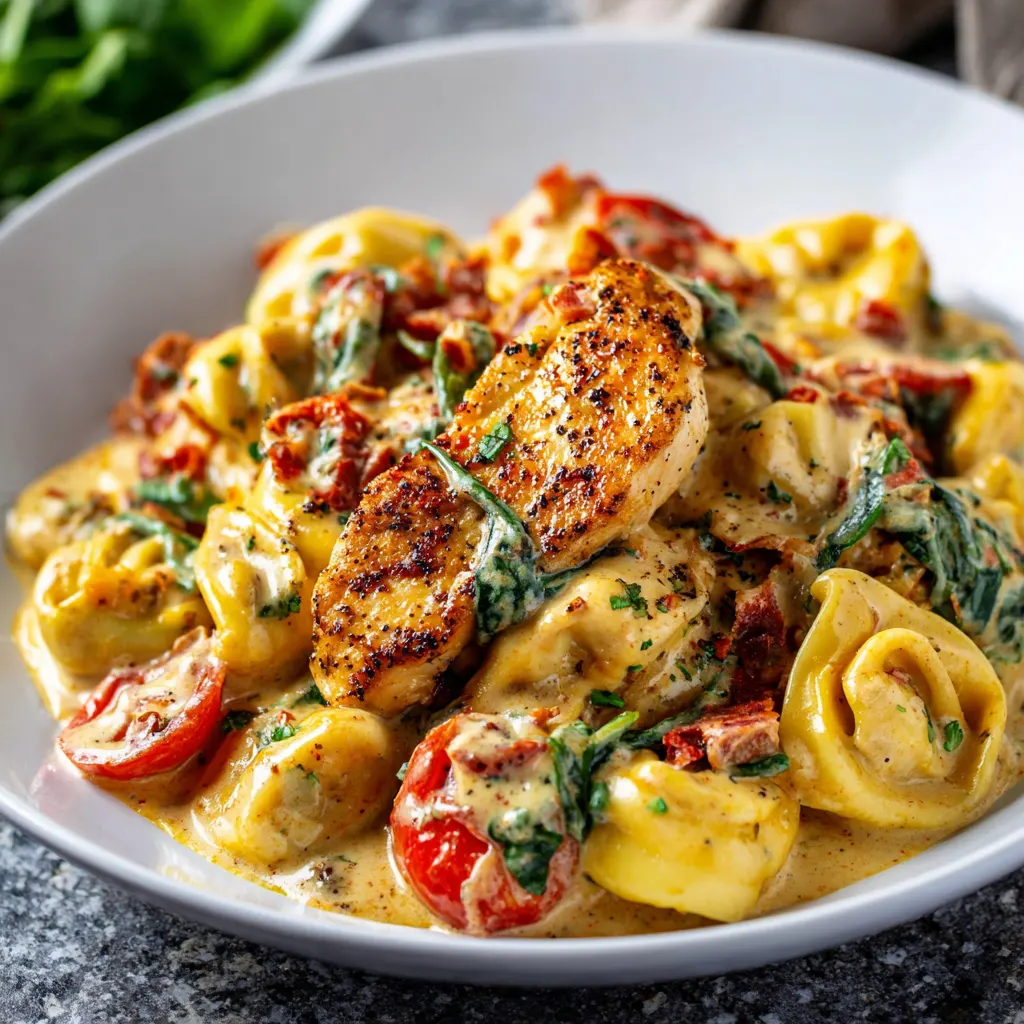
The Creamy Tuscan Chicken Tortellini Dinner Recipe is the definition of comfort food made fast. This dish elevates simple refrigerated pasta and everyday pantry staples into a rich, restaurant-quality meal, all in a single pan. Combining perfectly seasoned chicken with cheese-filled tortellini, a vibrant sun-dried tomato and spinach cream sauce, and a generous dusting of Parmesan cheese, it’s a quick-prep recipe that consistently delivers incredible flavor and warmth. Whether you are looking for a simple family dinner or a sophisticated dish to impress guests, this one-pan marvel is guaranteed to become a permanent fixture in your weekly rotation.
Ingredients
For the Chicken:
-
1 lb boneless, skinless chicken breasts or thighs, cut into 1-inch cubes
-
1 tsp Italian seasoning
-
½ tsp smoked paprika (optional, for depth)
-
½ tsp kosher salt
-
¼ tsp black pepper
-
1 tbsp all-purpose flour (optional, for browning and thickening)
-
1 tbsp olive oil
-
1 tbsp butter
For the Sauce & Pasta:
-
1 tbsp olive oil (or oil from sun-dried tomato jar)
-
1 small shallot or ½ yellow onion, minced
-
4-6 cloves garlic, minced
-
½ cup sun-dried tomatoes (oil-packed or rehydrated), roughly chopped
-
½ tsp red pepper flakes (optional, for a kick)
-
1 cup chicken broth (low sodium preferred)
-
1 cup heavy cream
-
1 cup freshly grated Parmesan cheese, plus extra for serving
-
19-20 oz refrigerated cheese tortellini
-
3 cups fresh baby spinach, packed
-
1 tsp balsamic vinegar or juice of ½ lemon (for balance)
-
Fresh basil, chiffonade, for garnish
Step-by-Step Instructions
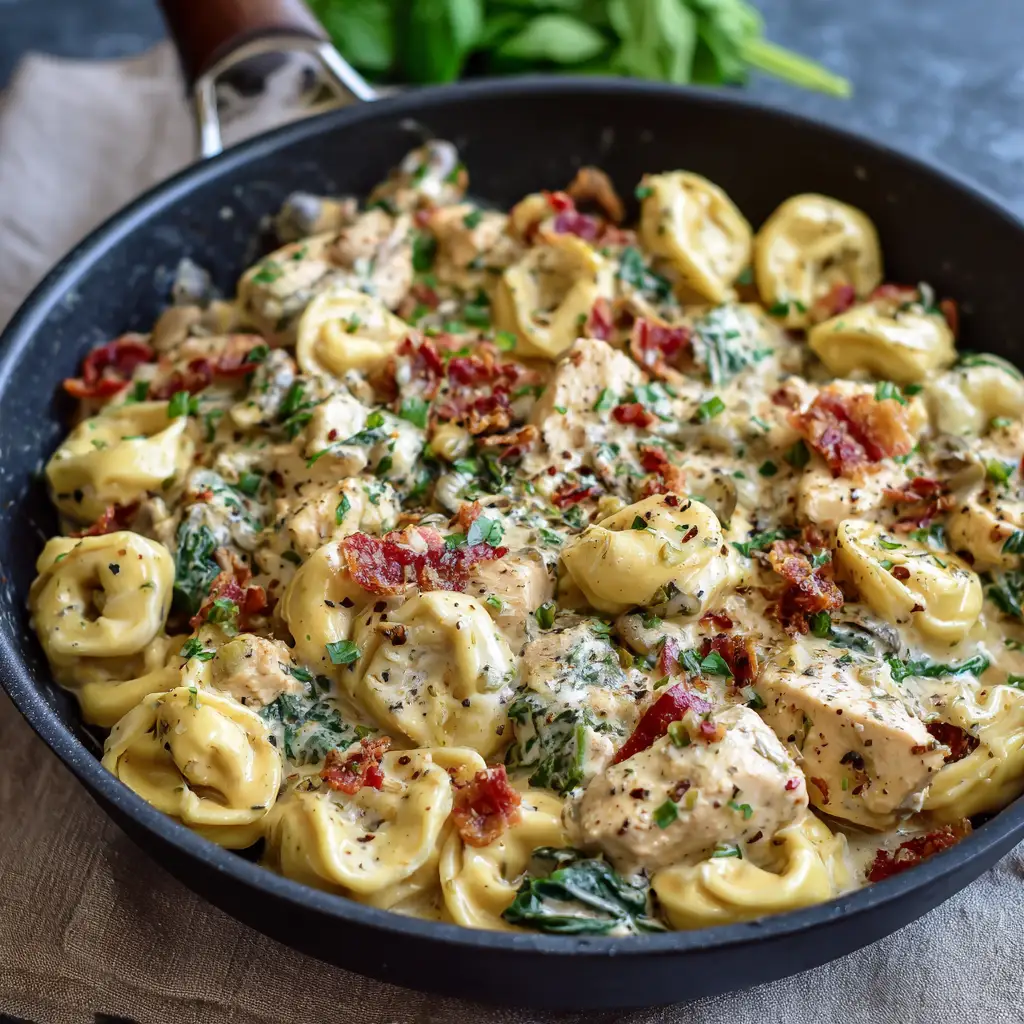
1. Prepare and Cook the Chicken: In a medium bowl, toss the cubed chicken with Italian seasoning, paprika, salt, and pepper. If using, toss with the flour until lightly coated. Heat a large, deep skillet or Dutch oven over medium-high heat. Add 1 tablespoon of olive oil and 1 tablespoon of butter. Once the butter is melted and foaming, add the chicken in a single layer. Sear and cook for 5-7 minutes, turning occasionally, until golden brown and cooked through (internal temperature of 165°F). Remove the chicken from the skillet and transfer to a clean plate, tented with foil to keep warm.
2. Build the Tuscan Sauce Base: Reduce the heat to medium. Add the remaining 1 tablespoon of olive oil (or sun-dried tomato oil) to the same skillet. Add the minced shallot/onion and sauté for 2-3 minutes until softened. Add the minced garlic, chopped sun-dried tomatoes, and red pepper flakes (if using). Cook for 1 minute until fragrant. Pour in about ¼ cup of the chicken broth and scrape the bottom of the pan thoroughly with a wooden spoon to deglaze and release any flavorful browned bits (fond).
3. Create the Creamy Sauce: Pour in the remaining chicken broth and the heavy cream. Bring the mixture to a gentle simmer. Reduce the heat to medium-low and slowly stir in the Parmesan cheese until it is completely melted and the sauce begins to thicken slightly. Season with extra salt and pepper to taste.
4. Cook the Tortellini and Wilt the Spinach: Add the fresh tortellini directly into the simmering sauce, ensuring it is submerged. Cover the pan and let it simmer for 3-5 minutes, stirring once halfway through, until the tortellini is tender and cooked al dente (check package directions for specific time). Stir in the fresh baby spinach and continue to cook for 1-2 minutes until the spinach is fully wilted.
5. Finish and Serve: Nestle the cooked chicken and any accumulated juices back into the skillet. Stir gently to combine everything and ensure the chicken is heated through. Stir in the balsamic vinegar or lemon juice. Serve immediately, garnished generously with fresh basil and an extra grating of Parmesan cheese.
Mastering the Sauce: Secrets to Tuscan Flavor and Creaminess
The hallmark of a truly successful Creamy Tuscan Chicken Tortellini lies in its lusciously rich sauce. Achieving that perfect balance of creamy texture, savory depth, and bright Tuscan flavor requires attention to a few key components.
The Foundation of Creaminess: Heavy Cream and Cheese While some recipes suggest using lighter alternatives like half-and-half or milk, heavy cream (or whipping cream) is the gold standard for this dish. Its higher fat content prevents curdling and yields a thick, velvety sauce that clings beautifully to the tortellini. For an extra rich, almost velvet-like texture, some chefs incorporate a small amount of softened cream cheese or mascarpone into the sauce when adding the heavy cream.
The single most important tip regarding the cheese is to use freshly grated Parmesan cheese. Pre-shredded or pre-grated cheeses contain anti-caking agents that prevent smooth melting, often resulting in a grainy sauce. Buying a block of high-quality Parmesan or Parmigiano Reggiano and grating it yourself ensures the cheese fully melts and integrates, contributing a complex, nutty flavor while thickening the sauce. For the best result, add the cheese gradually while the sauce is at a low simmer, stirring continuously.
The Signature Tuscan Elements The distinctive flavor profile comes from the combination of sun-dried tomatoes, garlic, and seasoning.
-
Sun-Dried Tomatoes: Opt for oil-packed sun-dried tomatoes, as the oil adds a layer of depth. For an extra flavor boost, use a tablespoon of the tomato oil in place of regular olive oil when sautéing the aromatics. If you use dried tomatoes, ensure they are properly rehydrated first by soaking them in hot water for about 15 minutes.
-
Aromatics and Deglazing: Do not skip the process of deglazing. After cooking the chicken, the browned bits left on the bottom of the pan—known as fond—are concentrated flavor. Scraping these up with a splash of chicken broth or wine and incorporating them into the sauce is essential for depth, complexity, and a rich savory undertone that goes beyond just cream and cheese.
-
The Balancing Act: A rich cream sauce can sometimes feel heavy. A small amount of acid is the professional chef’s trick to cut through the richness and brighten the overall taste. Stirring in a teaspoon of balsamic vinegar or a squeeze of fresh lemon juice at the very end elevates the dish, making the flavor profile lively and well-rounded.
Chicken and Tortellini: Choosing the Best Base
The main protein and pasta in this dish are flexible, allowing for customization based on preference and time constraints. Making the right choice for your Easy Creamy Tuscan Chicken Tortellini can dramatically impact its quality and convenience.
Optimizing the Chicken
-
Cut: Boneless, skinless chicken breasts are the most common choice due to their lean profile and fast cooking time. However, boneless, skinless chicken thighs offer a moister, more flavorful result due to their higher fat content.
-
Preparation: Cutting the chicken into smaller, uniform 1-inch cubes ensures even and quick cooking. Some recipes call for slicing the breasts thin, which also speeds up the process. A quick dredge in seasoned flour before searing provides a beautiful golden-brown crust and contributes a subtle thickening agent to the final sauce.
-
The Shortcut: If time is severely limited, you can substitute the pan-seared chicken with 1.5 to 2 cups of shredded rotisserie chicken. Simply skip the initial cooking step and stir the pre-cooked chicken in during the final stage to heat it through.
Tortellini Selection and Cooking Method The tortellini is the star of the show, and selecting the right kind—and cooking it correctly—is crucial.
-
Type: Fresh or refrigerated tortellini is highly recommended, as it cooks in a fraction of the time compared to dry or frozen versions, often requiring just 3-5 minutes. While cheese filling is traditional (three-cheese or ricotta), you can also opt for spinach and ricotta, mushroom, or meat-filled varieties for added complexity.
-
One-Pot Magic: Most “easy” variations of this recipe utilize the one-pot method: cooking the tortellini directly in the sauce. This allows the pasta to absorb the rich flavors of the broth and cream while releasing its own starch, which naturally thickens the sauce.
-
Tip: When cooking the pasta directly in the sauce, watch the clock and cook it only until al dente. Since the tortellini will continue to soak up sauce as it rests, overcooking it initially can result in mushy pasta and a dry dish later on. If the sauce becomes too thick during this process, simply add a splash more chicken broth.
-
Customization and Flavor Variations
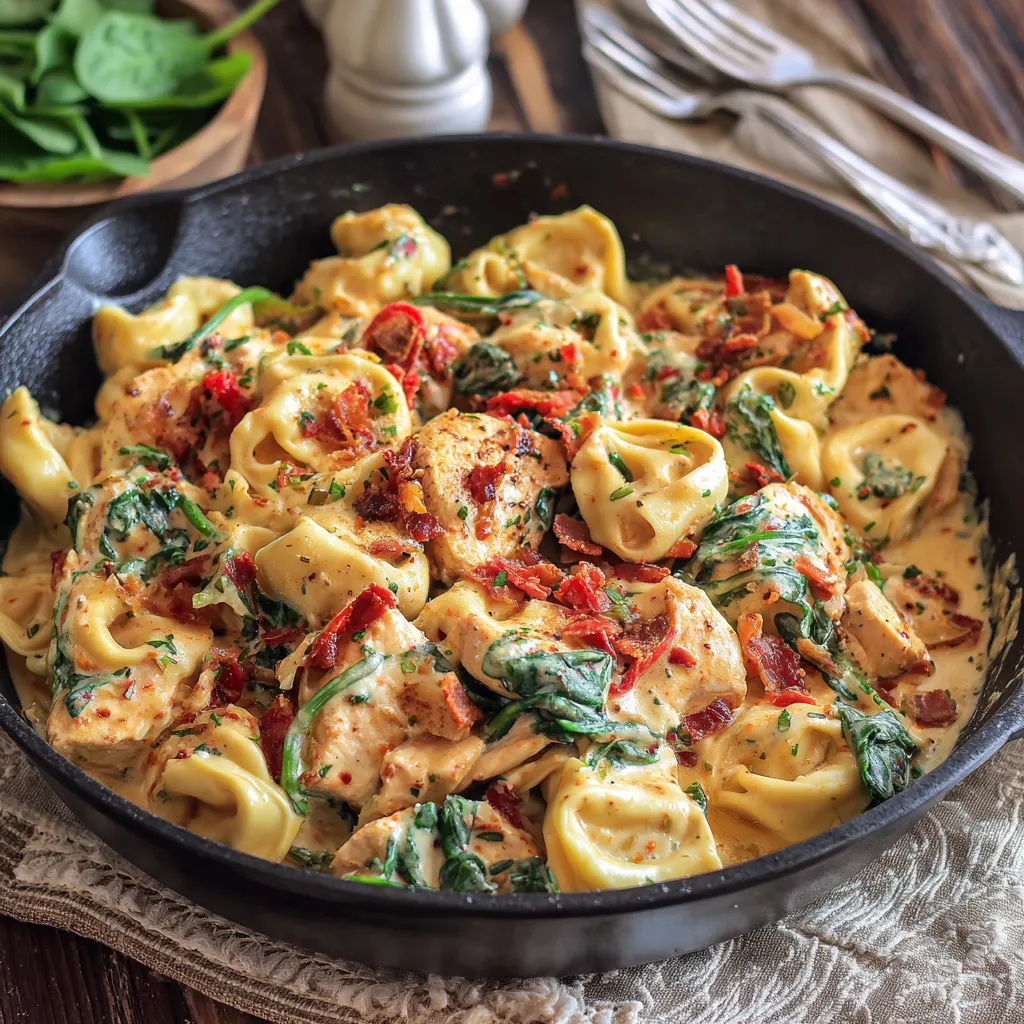
One of the best features of the Creamy Tuscan Chicken Tortellini recipe is its adaptability. It serves as a perfect canvas for swapping proteins, boosting vegetables, and adjusting the heat to suit any palate.
Protein Swaps for New Flavors: If you want to move beyond chicken, a few alternatives work exceptionally well with the creamy Tuscan base:
-
Italian Sausage: Remove mild or hot Italian sausage from its casing, brown it in the skillet, and break it up. This adds a powerful fennel and herb flavor to the sauce.
-
Ground Meat: Ground turkey or lean ground beef can be browned and drained before building the sauce.
-
Seafood: For a faster-cooking, lighter option, use shrimp. Sauté the shrimp quickly (about 2-3 minutes per side) before starting the sauce, or add it raw into the simmering sauce during the last 5 minutes of cooking.
-
Vegetarian: For a meatless version, simply omit the chicken. Add extra vegetables, such as white beans (cannellini) or portobello mushrooms, to maintain heartiness.
Boosting the Veggie Count: While spinach and sun-dried tomatoes are core ingredients, you can easily add more color and nutrients:
-
Mushrooms: Sauté sliced cremini or button mushrooms along with the shallots and garlic for a rich, earthy flavor.
-
Roasted Red Peppers: Jarred roasted red peppers, roughly chopped, pair beautifully with the sun-dried tomatoes and add a sweet, smoky depth.
-
Artichoke Hearts: Canned or jarred artichoke hearts, quartered and drained, bring a tangy bite that complements the creamy sauce.
-
Fresh Tomatoes: For a less intense tomato flavor, substitute the sun-dried tomatoes with a handful of halved cherry or grape tomatoes, pressing some to release their juice as they cook in the sauce.
Spice Level Adjustment: The recipe is typically mild, but it’s easy to dial up the heat:
-
Red Pepper Flakes: The simplest way to add warmth. Start with ¼ teaspoon and increase to ½ or 1 teaspoon for a more noticeable kick.
-
Spicy Sausage: Use hot Italian sausage instead of mild.
-
Pinch of Cayenne: A tiny pinch of cayenne pepper added with the Italian seasoning can intensify the background heat without changing the texture of the sauce.
The Perfect Pairing: Serving and Storage
A truly complete Easy Creamy Tuscan Chicken Tortellini dinner is about more than just the main dish; it’s about presentation, thoughtful side dishes, and planning for leftovers.
Thoughtful Side Dishes and Garnishes Because this dish is rich, a light, acidic, or fresh component is the perfect complement.
-
Crusty Bread: Essential for soaking up every drop of the luxurious sauce. Serve with warm, crusty Italian bread, focaccia, or simple garlic breadsticks.
-
Green Salad: A simple side salad dressed with a light vinaigrette (lemon and olive oil) provides a necessary textural contrast and bright, palate-cleansing counterpoint to the creaminess.
-
Roasted Vegetables: Lightly roasted or grilled green vegetables are excellent. Consider asparagus, broccoli florets, or Brussels sprouts roasted with just a little salt, pepper, and lemon juice.
-
Finishing Touches: Always finish with fresh garnishes. Freshly chopped basil, parsley, or oregano adds a burst of green color and a fresh, herbaceous aroma that elevates the entire dish. A final crack of black pepper and a drizzle of high-quality olive oil are also welcome additions.
Storing and Reheating for Later Leftovers of Creamy Tuscan Chicken Tortellini are delicious, but they require a little care to maintain the sauce’s texture.
Storage Tips:
-
Sauce Absorption: The tortellini will continue to soak up the sauce as it cools and sits in the refrigerator. Do not be surprised if the leftovers appear much thicker than the original dish.
-
Refrigeration: Store leftovers in an airtight container in the refrigerator for up to 3-4 days.
Reheating Methods:
-
Stovetop (Recommended): The best way to reheat is gently on the stovetop. Place the leftovers in a skillet over low-medium heat. As the dish warms, the sauce will be extremely thick. Gradually add a splash of chicken broth (or milk/cream) at a time, stirring constantly, until the sauce returns to your desired creamy consistency.
-
Microwave: While quicker, the microwave can sometimes cause the cream sauce to separate slightly. Reheat in short, 1-minute bursts, stirring well between each interval, and add a teaspoon of broth or cream halfway through to help restore moisture.