
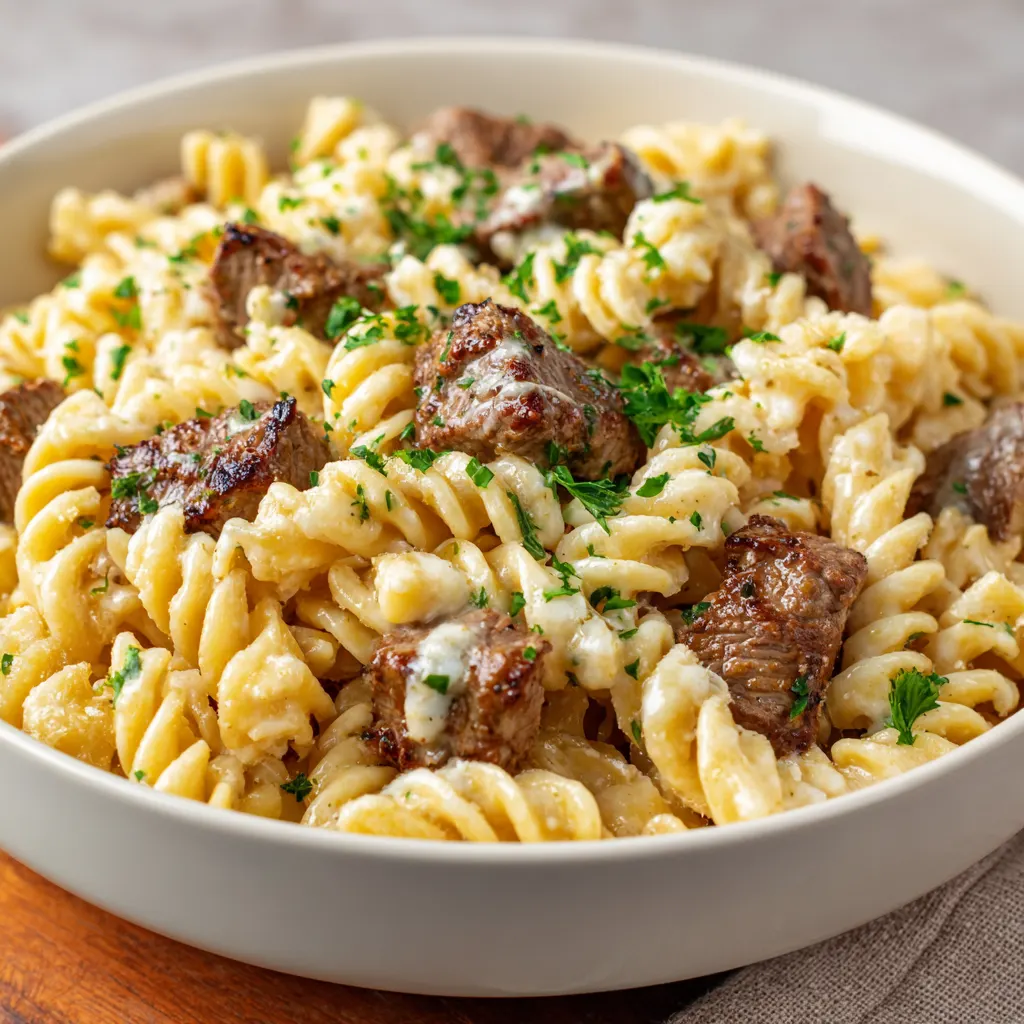
When the craving hits for a meal that feels indulgent yet takes under 30 minutes to prepare, this Easy Creamy Garlic Steak Bites Pasta is the ultimate solution. It combines perfectly seared, tender steak bites coated in a rich garlic butter with al dente pasta enveloped in a luxurious, velvety cream sauce. This recipe is designed for maximum flavor impact with minimal effort, making it ideal for a quick weeknight dinner or an impressive date night meal. By focusing on smart techniques like high-heat searing and careful sauce building, you can achieve restaurant-quality results in your own kitchen.
Ingredients
For the Steak Bites:
-
1 lb Top Sirloin, Ribeye, or Flat Iron steak, trimmed and cut into 1-inch cubes
-
1 tbsp High-heat cooking oil (e.g., avocado or vegetable oil)
-
2 tbsp Unsalted butter, divided
-
1 tsp Montreal steak seasoning (or salt and pepper to taste)
-
1 tsp Fresh rosemary or thyme, chopped (optional, for basting)
For the Pasta and Cream Sauce:
-
12 oz Pasta (Fettuccine, Rigatoni, or Penne recommended)
-
4 tbsp Unsalted butter
-
6 cloves Garlic, minced (about 2 tbsp)
-
½ cup Chicken or beef broth (low-sodium preferred)
-
1½ cups Heavy cream (or double cream)
-
¾ cup Freshly grated Parmesan cheese, plus more for serving
-
½ tsp Red pepper flakes (optional, for heat)
-
Salt and freshly ground black pepper to taste
-
¼ cup Reserved pasta water
-
¼ cup Fresh parsley, chopped, for garnish
Step-by-Step Instructions
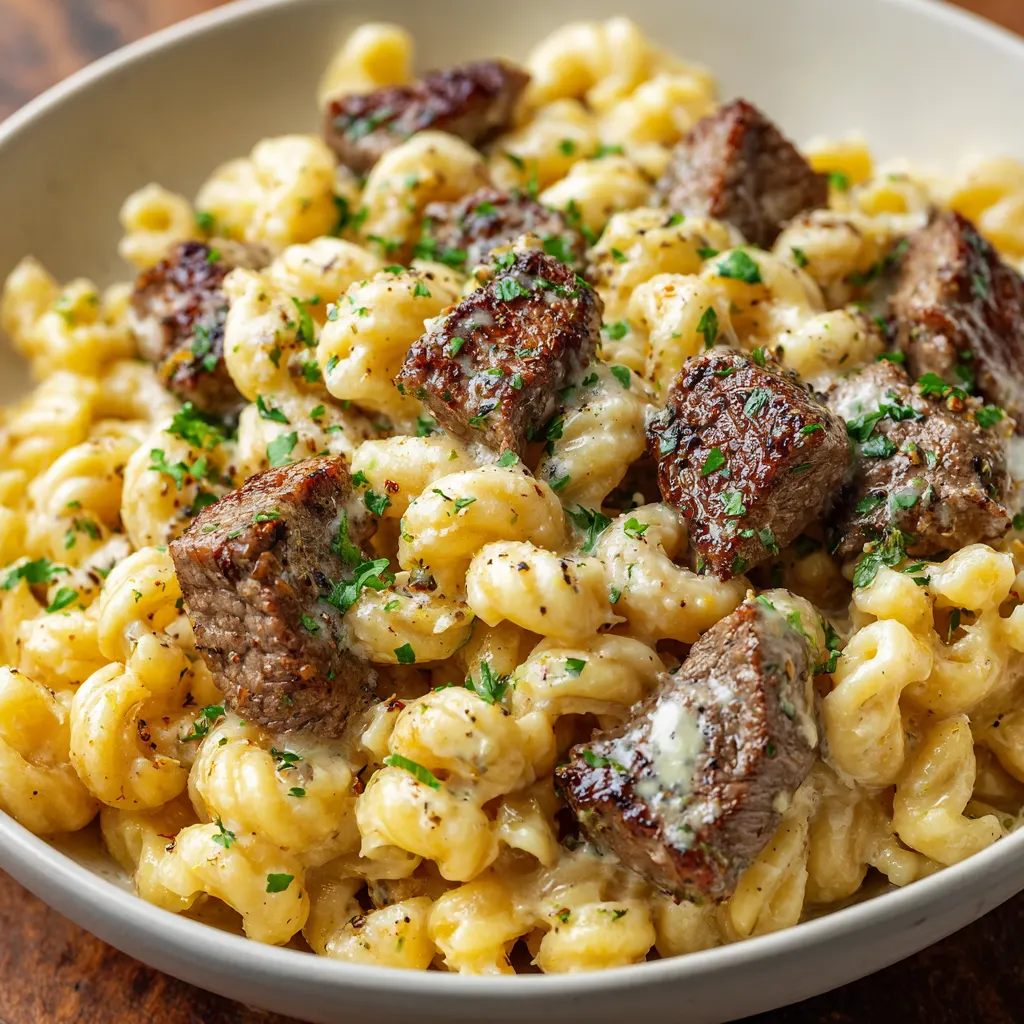
1. Prepare and Sear the Steak: Bring the steak bites to room temperature for at least 15 minutes. Pat them completely dry with paper towels, then season generously with steak seasoning (or salt and pepper). Heat a large cast-iron or heavy-bottomed skillet over high heat for 2-3 minutes until smoking hot. Add the high-heat oil. Once the oil shimmers, add the steak bites in a single layer, ensuring not to overcrowd the pan (work in batches if necessary). Sear for 2-3 minutes without moving them to develop a deep crust.
2. Baste and Rest: Flip the steak bites. Add 1 tablespoon of the butter and fresh herbs (if using) to the pan. Once melted, spoon the foaming butter over the steak for the remaining minute of cooking. Cook until the internal temperature reaches your desired doneness (around 130–135°F for medium-rare). Immediately remove the steak bites and place them on a plate. Tent loosely with foil and let them rest. Do not clean the pan—the flavor bits (fond) are essential for the sauce.
3. Cook the Pasta: While the steak rests, cook the pasta in heavily salted boiling water according to package directions, aiming for al dente (firm to the bite). Before draining, reserve at least ½ cup of the starchy cooking water. Drain the pasta and set aside.
4. Build the Creamy Garlic Sauce: Return the skillet to medium-low heat. Add the remaining 3 tablespoons of butter and the minced garlic (and optional red pepper flakes). Sauté for 1-2 minutes until fragrant, being careful not to let the garlic brown or burn. Pour in the broth and use a wooden spoon to scrape up all the browned bits (fond) from the bottom of the pan—this is the base of the sauce’s rich flavor.
5. Finish and Combine: Stir in the heavy cream. Bring the mixture to a gentle simmer, then reduce the heat to low. Whisk in the grated Parmesan cheese until fully melted and the sauce is smooth. Stir in the resting juices that collected on the steak plate. Toss the cooked, drained pasta directly into the sauce. Add reserved pasta water, a tablespoon at a time, until the sauce reaches your desired consistency and beautifully clings to the pasta. Season with salt and pepper.
6. Serve: Divide the creamy pasta among serving bowls. Place the rested steak bites directly on top of the pasta. Garnish generously with fresh chopped parsley and an extra sprinkle of Parmesan cheese. Serve immediately.
The Secret to Perfect Steak Bites: Cut, Sear, and Rest
The excellence of this pasta dish hinges entirely on the quality and technique applied to the steak bites. Unlike a traditional steak dinner where a large cut is the focus, these small pieces must be cooked rapidly to ensure a deeply caramelized exterior while remaining juicy and tender inside. Choosing the right cut and mastering the searing process are non-negotiable steps for success.
Selecting the Ideal Cut: The best steaks for this recipe are those that are tender and well-marbled, which helps them retain moisture during high-heat cooking. Ribeye is the top choice for its rich marbling, providing the fattiest and most flavorful bite. Top Sirloin is an excellent, slightly leaner, and more budget-friendly alternative that performs well. Flat iron and New York strip are also great candidates. Crucially, the steak must be cut against the grain into uniform 1 to 1.5-inch cubes. Cutting against the grain shortens the muscle fibers, resulting in maximum tenderness once cooked.
The High-Heat Searing Technique: To achieve that desirable dark crust—or Maillard reaction—the steak needs extreme, dry heat.
-
Preparation is Key: Always pat the steak bites thoroughly dry using paper towels. Moisture on the surface will cause the meat to steam rather than sear, preventing the formation of a proper crust.
-
Pan Temperature: Use a heavy-bottomed pan, such as cast iron or stainless steel, and heat it over high heat until it is smoking hot. Use an oil with a high smoke point (like avocado or vegetable oil) to prevent burning.
-
No Overcrowding: The steak must be added in a single layer without touching. Overcrowding drops the pan temperature significantly, causing the steak to leach moisture and stew in its own juices. Cook in batches if necessary, ensuring each piece develops a good, browned crust on the first side before flipping.
The Golden Rule of Resting: Once the steak bites are seared, they must be immediately removed from the pan and allowed to rest, loosely tented under foil, for at least 5 minutes. As meat cooks, its muscle fibers contract, forcing the internal juices to the center. Resting allows these juices to redistribute throughout the meat. Skipping this step means the juices will spill out onto the cutting board or, in this case, into the pasta, resulting in dry steak and a diluted sauce. Furthermore, the steak bites should be added on top of the finished pasta, not stirred in, to preserve their tenderness and prevent overcooking in the hot cream sauce.
Mastering the Velvety Creamy Garlic Sauce
The creamy garlic sauce is the soul of this dish, tying the rich steak and hearty pasta together with its signature velvety texture and intense flavor. The best sauce is built in layers, starting with the flavorful remnants from the steak searing process.
Building the Flavor Foundation (Deglazing): The crucial step that elevates this sauce beyond a simple Alfredo is deglazing. After the steak is removed, the pan contains fond—the caramelized, browned bits stuck to the bottom. These bits are pure, concentrated steak flavor.
-
Aromatics: Before deglazing, melt butter (using the pan’s residual heat) and gently sauté the minced garlic and any optional aromatics like shallots or finely diced onion. Sauté only until fragrant (1-2 minutes); burnt garlic is bitter and will ruin the sauce.
-
Scraping the Fond: Pouring in the chicken or beef broth immediately stops the cooking process and allows you to scrape up the fond with a wooden spoon, dissolving those flavorful bits directly into the liquid base. Using low-sodium broth is advisable, as both the Parmesan cheese and the resting juices from the steak will add significant salinity.
Achieving the Perfect Creamy Texture: The sauce should be rich enough to coat the back of a spoon without feeling gluey. Heavy cream (or double cream) is the foundation, providing the necessary fat content to remain stable when simmering.
-
Emulsification and Reduction: Once the cream and broth are combined, bring the mixture to a gentle simmer. Do not allow it to boil vigorously, as high heat can cause the cream to separate or “break.” Simmering for a few minutes reduces the liquid slightly, concentrating the flavor and naturally beginning the thickening process.
-
The Cheese Factor: Freshly grated Parmesan cheese is whisked in last. Parmesan is vital not just for its nutty, salty flavor but also for its natural thickening properties. Use fresh, quality Parmesan; pre-shredded varieties often contain anti-caking agents that can prevent smooth melting.
-
Starch for Insurance (The Pasta Water): If the sauce is too thin, the final addition of reserved pasta water provides a starchy boost. The starch acts as an emulsifier, binding the fat and liquid together to create a smooth, glossy texture that clings beautifully to the noodles. This technique is often superior to using flour or cornstarch, as it thickens without dulling the inherent flavors.
Optimizing Your Meal: Pasta Choices and Flavor Variations
While the core recipe focuses on steak, garlic, and cream, this dish is highly versatile and can be customized with various pasta shapes and flavor additions to suit any preference or pantry.
The Best Pasta Pairings: The ideal pasta shape for a creamy sauce is one that maximizes surface area to trap and hold the richness.
-
Long Cuts: Fettuccine, tagliatelle, and linguine are classic choices, offering a comforting slurp factor as the sauce clings to their flat ribbons.
-
Short Cuts: Rigatoni and penne, with their tubular shape and ridged surfaces, are excellent alternatives. The sauce gets scooped up and trapped inside the tubes, guaranteeing a burst of flavor in every bite. Always cook the pasta al dente—firm to the bite—and finish the cooking process by tossing it in the skillet with the sauce. This final simmer allows the pasta to absorb the sauce’s flavor and release enough residual starch to perfect the sauce’s consistency.
Incorporating Vegetables for Color and Nutrition: To round out the meal, vegetables can be easily integrated. They should be sautéed after the steak is removed and before the garlic is added.
-
Mushrooms: Sliced mushrooms (cremini or button) are a classic pairing, as their earthy flavor complements the beef. Sauté them on medium-high heat until they release their moisture and brown deeply.
-
Spinach: Fresh spinach can be stirred in at the very end with the pasta. The heat from the sauce will cause it to wilt rapidly, adding a pleasant green contrast.
-
Sun-Dried Tomatoes: For a tangy, savory complexity, chopped sun-dried tomatoes (oil-packed, drained) can be stirred in with the cream.
Flavor Enhancements and Variations:
-
Spicy Kick: Stirring in red pepper flakes with the garlic is the easiest way to introduce heat. For a deeper, smoky spice, use a pinch of cayenne pepper or hot smoked paprika.
-
Depth of Flavor: For a richer, darker sauce reminiscent of a stroganoff, stir in a small amount (1-2 tablespoons) of tomato paste after the garlic is fragrant and cook it for two minutes before adding the broth. This step caramelizes the paste, intensifying its umami notes.
-
Herb Infusion: While rosemary and thyme are excellent for basting the steak, fresh herbs like basil, chives, or oregano can be used to garnish the final dish, adding a bright, aromatic lift to counter the richness of the cream. A touch of Dijon mustard (about 1 teaspoon) stirred into the sauce can also provide a subtle, welcome tang.
The Final Plate: Serving, Storage, and Reheating Essentials
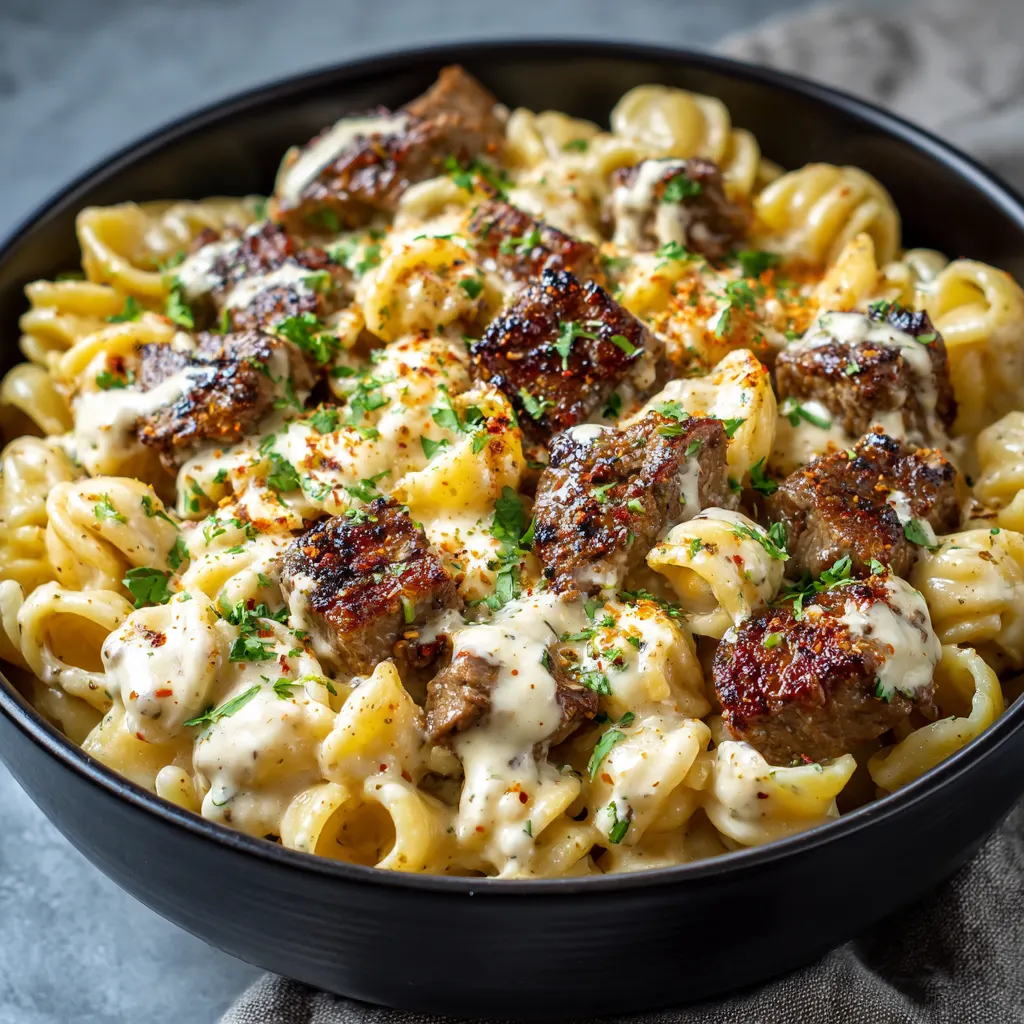
The effort put into perfecting the steak and sauce deserves a thoughtful finish. Knowing how to serve this dish immediately and how to manage leftovers correctly ensures every bite is as intended—tender, creamy, and satisfying.
Serving and Presentation Tips: The visual contrast between the deeply seared steak and the pale, creamy pasta is part of the dish’s appeal.
-
Steak Placement: Resist the urge to mix the steak bites directly into the large batch of pasta. Instead, serve the creamy pasta first, and then arrange the warm, rested steak bites on top of each individual portion. This keeps the steak juicy and prevents the pieces from overcooking in the residual heat of the sauce.
-
Garnish: A vibrant garnish is essential. Freshly chopped flat-leaf parsley is the standard choice, adding a pop of green and a mild, peppery flavor. A final grating of Parmesan cheese and a generous crack of black pepper complete the restaurant-quality presentation.
Storage and Shelf Life: This creamy pasta dinner is best enjoyed immediately, but leftovers can be safely stored. Due to the dairy and meat content, the dish should be transferred to an airtight container and refrigerated within two hours of cooking. It will remain safe and palatable for 3 to 4 days.
The Art of Reheating Leftovers: Reheating creamy pasta dishes often results in a dry texture or a sauce that separates. The key is gentle, low-heat rehydration.
-
Stovetop is Best: Avoid the microwave if possible, as it can cause the sauce to break and the steak to toughen.
-
Add Moisture: Transfer the leftovers to a non-stick skillet over low to medium-low heat. Before heating, add a splash (1-2 tablespoons) of liquid—either heavy cream, milk, or, ideally, chicken broth.
-
Gentle Heat: Slowly stir the pasta and sauce while heating. The added liquid will rehydrate the starches in the pasta and help the cream re-emulsify, bringing back the desired velvety consistency.
-
Steak Handling: If the steak bites were stored separately, they should be reheated very quickly, either in a separate small pan or lightly warmed in the microwave, and added to the pasta only after the pasta and sauce are fully warmed through. This prevents the steak from becoming chewy.
By following these optimized techniques for both preparing the ingredients and handling the final meal, you transform a simple concept into a profoundly satisfying and effortless weeknight masterpiece.