
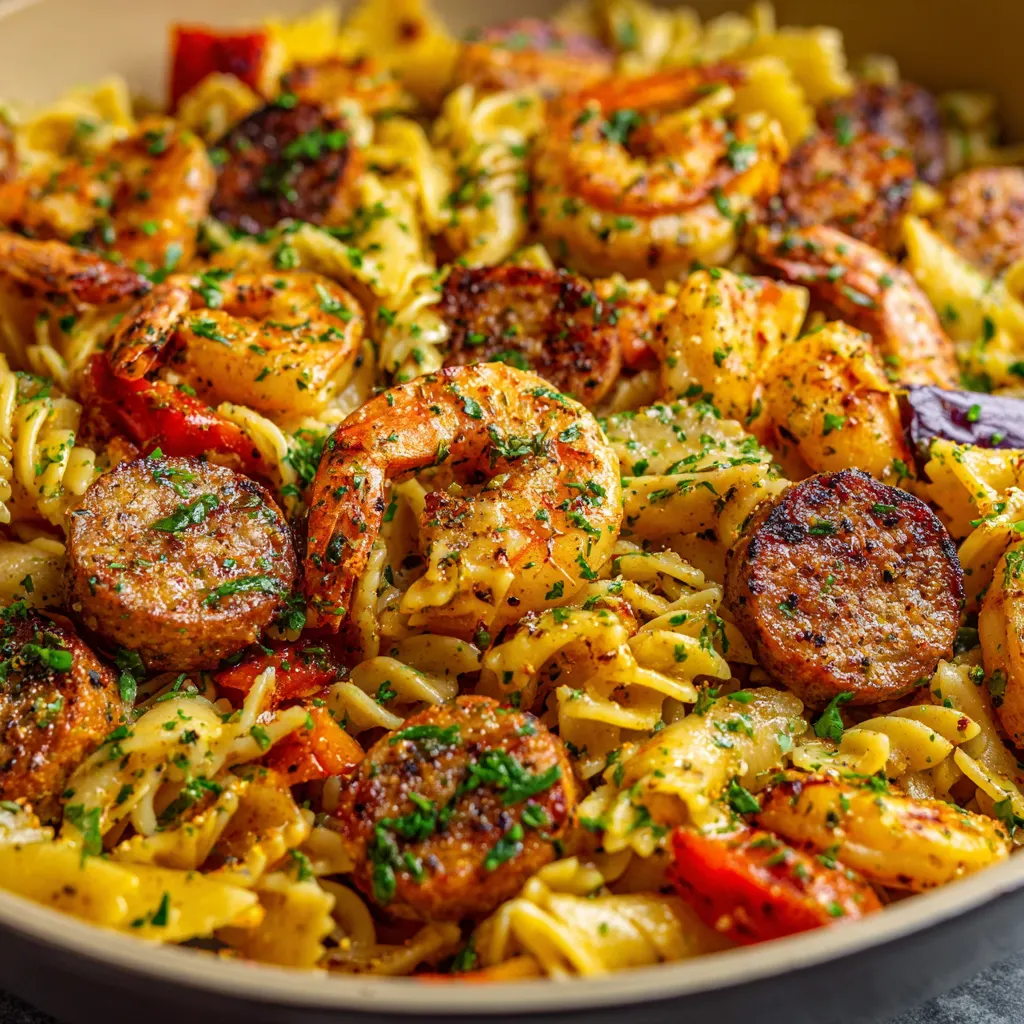
This dish is a vibrant culinary journey straight to the heart of Louisiana, combining the smoky depth of Andouille sausage, the delicate sweetness of shrimp, and a rich, spicy cream sauce coating perfectly cooked pasta. It’s a weeknight miracle: bold in flavor, yet incredibly fast and simple to prepare, transforming a few key ingredients into a satisfying, restaurant-quality meal. Forget bland dinners; this recipe delivers a fiery, soulful warmth that makes it a consistent family favorite, proving that authentic-tasting Cajun food doesn’t require hours over a simmering pot. It’s the ultimate fusion of comfort and spice, perfect for shaking up your regular dinner rotation.
Ingredients
For the Pasta:
-
1 pound pasta (such as penne, rotini, or fettuccine)
-
1 tablespoon salt (for pasta water)
For the Sausage and Shrimp:
-
1 tablespoon olive oil
-
1 pound smoked sausage (preferably Andouille), sliced into rounds or half-moons
-
1 pound medium or large shrimp, peeled and deveined (fresh or frozen/thawed)
-
1 tablespoon Cajun or Creole seasoning (divided)
For the Cream Sauce:
-
2 tablespoons unsalted butter
-
1 medium yellow onion, finely diced
-
1 red bell pepper, diced
-
1 green bell pepper, diced
-
2–3 cloves garlic, minced
-
1/4 cup all-purpose flour (optional, for thicker sauce)
-
2 cups chicken broth (low sodium)
-
1 1/2 cups heavy cream
-
1/2 cup grated Parmesan cheese, plus extra for serving
-
1 teaspoon dried oregano
-
1/2 teaspoon dried thyme
-
Salt and black pepper to taste
-
Optional: 1/4 teaspoon cayenne pepper (for extra heat)
For Garnish:
-
Fresh parsley, chopped
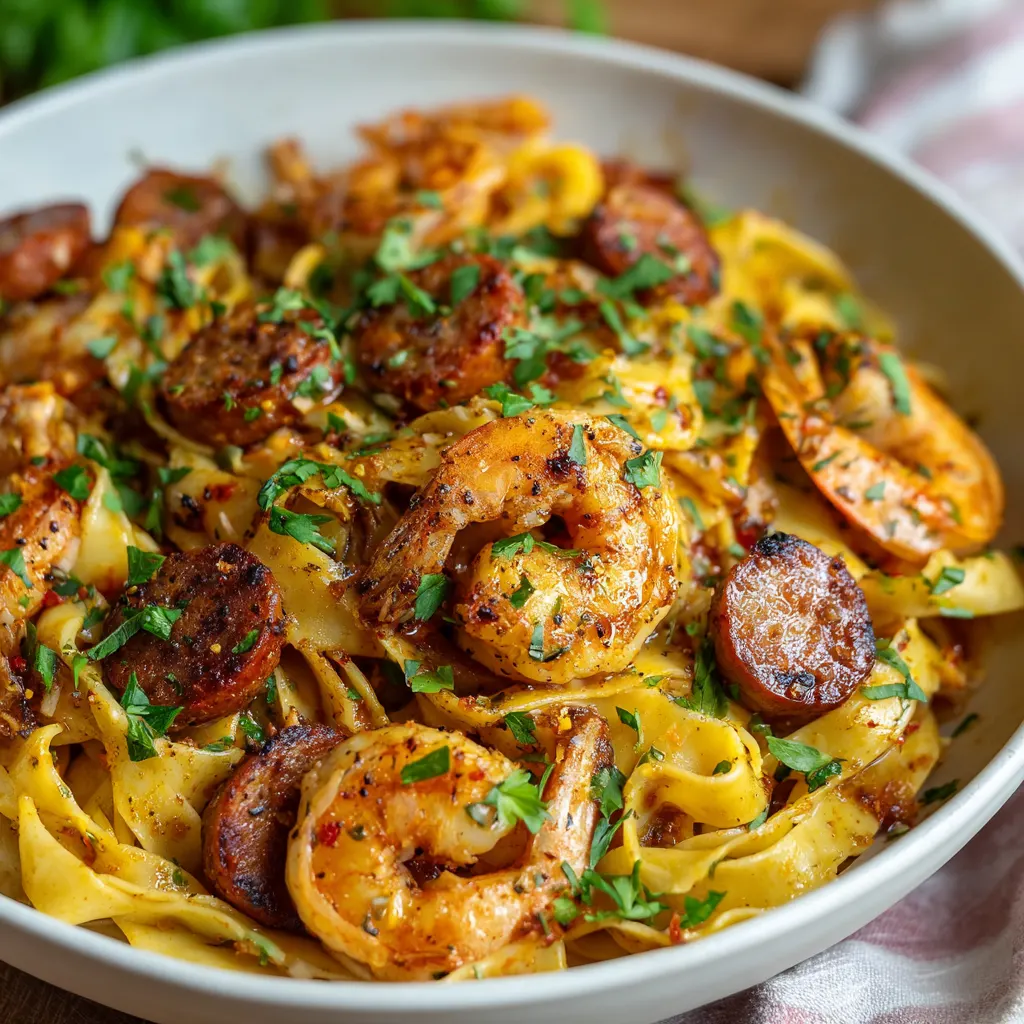
Step-by-Step Instructions
1. Cook the Pasta: Bring a large pot of salted water to a rolling boil. Add the pasta and cook according to package directions until al dente. Reserve about 1 cup of the starchy pasta water before draining the pasta. Set the pasta aside.
2. Cook the Sausage: While the pasta cooks, heat the olive oil in a large skillet or Dutch oven over medium-high heat. Add the sliced sausage and cook for 5–7 minutes, turning occasionally, until the sausage is browned and slightly crispy. Remove the sausage with a slotted spoon and set it aside, leaving the flavorful rendered fat in the skillet.
3. Sauté the Vegetables: Reduce the heat to medium and add the butter to the skillet with the rendered sausage fat. Once melted, add the diced onion, red bell pepper, and green bell pepper. Sauté for 5–8 minutes until the vegetables have softened. Add the minced garlic and cook for 1 minute until fragrant.
4. Build the Flavor Base (Seasoning and Broth): Sprinkle 1/2 tablespoon of the Cajun seasoning, oregano, thyme, and optional cayenne pepper over the vegetables. Cook and stir for 1 minute. If using flour for a thicker sauce, sprinkle the flour over the vegetables and stir continuously for 1 minute (creating a quick, light roux). Slowly pour in the chicken broth, stirring constantly to scrape up any browned bits from the bottom of the pan and ensure there are no lumps of flour. Bring the mixture to a simmer.
5. Create the Cream Sauce: Reduce the heat to low. Stir in the heavy cream and the grated Parmesan cheese until the sauce is smooth and creamy. Let the sauce simmer gently for 3–5 minutes, allowing it to slightly thicken. Taste the sauce and adjust the salt and pepper as needed.
6. Cook the Shrimp: Pat the shrimp dry and toss them with the remaining 1/2 tablespoon of Cajun seasoning. Add the seasoned shrimp to the simmering cream sauce. Cook for 2–4 minutes, depending on the size of the shrimp, until they are opaque, pink, and cooked through. Be careful not to overcook them, as they will turn tough.
7. Combine and Finish: Return the cooked sausage and the drained pasta to the skillet with the sauce. Toss gently to ensure every piece of pasta, shrimp, and sausage is coated in the creamy sauce. If the sauce seems too thick, add the reserved pasta water, a tablespoon at a time, until the desired consistency is reached.
8. Serve: Transfer the pasta to bowls, garnish generously with fresh chopped parsley and a final dusting of Parmesan cheese. Serve immediately.
Mastering the Cajun Cream Sauce
The soul of this “Easy Cajun Shrimp Sausage Pasta” lies entirely within its sauce—a rich, savory, and perfectly spiced counterpoint to the sweetness of the shrimp and the smokiness of the sausage. Achieving the optimal cream sauce means focusing on three critical flavor-building stages: the fat base, the spice infusion, and the final cream stabilization.
The Triple-Threat Fat Base
Unlike a traditional gumbo or étouffée, which relies on a dark roux (requiring time and patience), this “easy” recipe cleverly uses the fat rendered from the Andouille sausage as its primary flavor base. This step is non-negotiable. As the sausage slices crisp up, they release a flavorful, often spicy, fat into the pan. By using this fat (supplemented with butter) to sauté the “Holy Trinity” ingredients (onion and bell peppers in this streamlined version), you immediately infuse the entire dish with a deep, smoky Cajun profile before any dry spices are even added. If you skip this, or drain all the fat, the dish will lack the signature depth it needs.
The Art of the Spice Infusion
The Cajun or Creole seasoning is the star of this recipe. While pre-blended mixes are convenient, maximizing their flavor requires “blooming” them. Once the vegetables are tender, adding the dry seasonings (Cajun blend, oregano, and thyme) directly to the hot pan before the liquids go in allows the spices to toast slightly in the fat. This process, lasting just 60 seconds, releases their volatile oils, dramatically intensifying their aroma and flavor. This simple technique prevents the final dish from tasting merely “seasoned” and ensures it tastes truly “spicy-savory.” For those seeking more heat, adding a small pinch of pure cayenne pepper during this stage provides clean, direct heat without masking the complex flavors of the main spice blend.
Achieving Creamy Perfection
The transition from seasoned vegetables to a luxurious sauce is facilitated by the addition of liquid and heavy cream. Using chicken broth first serves two purposes: it deglazes the pan (scraping up all those flavorful brown bits left by the sausage and spices) and provides the necessary liquid to carry the flavors. Crucially, the heavy cream must be added over low heat. Boiling or aggressively simmering cream and cheese can cause the fat and proteins to separate, resulting in a curdled or grainy sauce texture.
The key to a silky, stable sauce is the slow and steady incorporation of Parmesan cheese. Parmesan adds necessary saltiness and umami, but because it contains milk solids, it must be stirred in gently off the main heat, or at a very low simmer, to melt smoothly into the warm cream. The secret weapon for consistency is the optional use of reserved pasta water. The starch in the pasta water is a natural emulsifier; if the sauce appears too thick or breaks, adding a splash of the starchy water while stirring vigorously will bind the sauce components back together, giving it that glossy, restaurant-quality sheen.
The Ingredients That Matter: Sausage, Shrimp, and the Holy Trinity
While the recipe is straightforward, the selection and preparation of the core ingredients are paramount to elevating this simple weeknight meal into an authentic and memorable culinary experience. Focusing on quality and proper technique for the protein and vegetables guarantees maximum flavor extraction and texture contrast.
The Essential Sausage: Andouille vs. Alternatives
The choice of sausage dictates the foundation of the dish’s flavor. Andouille sausage is the authentic choice for Cajun and Creole cuisine. It is a coarse-grained, heavily smoked, pork sausage characterized by a sharp, peppery, and often fiery flavor profile. Its smokiness is what provides the necessary counterpoint to the rich cream sauce. When buying, look for “fully cooked” or “smoked” Andouille.
-
Preparation Tip: Slice the sausage into thin rounds or half-moons. The goal of the initial cooking step is not just to heat it, but to aggressively brown and crisp the edges. This caramelization (Maillard reaction) enhances the sausage’s smoky depth and, most importantly, renders the fat that will carry the flavor throughout the entire sauce.
If Andouille is unavailable or too spicy, a smoked Kielbasa or Polish sausage can be substituted, though the flavor will be milder. In this case, consider adding a dash more liquid smoke to the pan during the vegetable sauté stage to compensate for the lost smokiness.
The Delicate Balance of Shrimp
Shrimp is the ideal pairing for the smoky sausage because of its quick cooking time and delicate, sweet flavor. The most critical aspect of the shrimp is timing. Shrimp overcooks rapidly, transitioning from tender and succulent to tough and rubbery in less than a minute.
-
Preparation Tip: Use medium to large shrimp, peeled and deveined. Crucially, add the shrimp to the sauce only after the sauce has achieved its desired consistency and is at a gentle simmer. Shrimp should cook for no more than 2 to 4 minutes until they curl into a ‘C’ shape and turn opaque pink. They should be added last and removed from the heat immediately once cooked. Toss them in the sauce gently; aggressive stirring can tear them apart.
Maximizing the Flavor from the Holy Trinity
While a true Cajun “Holy Trinity” consists of onion, celery, and bell pepper, the “Easy” version often simplifies this to just onion and bell pepper for convenience and speed. However, their inclusion is non-negotiable for texture and aromatics.
-
Vegetable Technique: Dice the onion and bell peppers finely and uniformly. This ensures they cook evenly and become tender—releasing their subtle sweetness—before the garlic is added. Garlic must be added last and cooked only briefly (30–60 seconds) to avoid burning, which would introduce a bitter taste that would ruin the cream sauce. Proper sautéing of these aromatics sets the stage for the rest of the dish, creating a necessary foundation for the spices to adhere to and bloom in.
Customization and Dietary Adaptations
Part of the beauty of a pasta dish like this is its inherent flexibility. Once the foundation of the smoky sausage and spicy cream sauce is established, the recipe can be easily adapted to suit different palates, dietary needs, or simply to use up what’s available in the refrigerator.
Adjusting the Heat Level
Cajun food is known for its kick, but not everyone prefers fiery heat. The spice level can be precisely controlled by adjusting the type and amount of seasoning used:
-
Lower Heat: Use a mild “Creole” seasoning blend, which often focuses more on herbs (thyme, oregano) and less on cayenne pepper. Skip the optional pure cayenne pepper entirely.
-
Moderate Heat: Stick to a standard Cajun blend.
-
Maximum Heat: Add 1/4 teaspoon to 1/2 teaspoon of pure cayenne pepper to the spice mix. Additionally, incorporating a few dashes of your favorite Louisiana-style hot sauce (like Tabasco or Crystal) at the end brightens the overall flavor with a necessary acidic component.
Pasta and Vegetable Variations
While this recipe works well with robust shapes like penne, rotini, or fettuccine, you can experiment with alternatives:
-
Vegetable Additions: To enhance the nutritional content or color, stir in a handful of baby spinach during the last minute of simmering (it will wilt instantly). Sautéed mushrooms or a small can of diced, fire-roasted tomatoes (drained) can also add depth. If using the tomatoes, add them just before the chicken broth.
-
Pasta Swaps: For a gluten-free option, use gluten-free pasta, ensuring you cook it according to package directions, as it can go from al dente to mushy very quickly. For a lower-carb meal, serve the sauce over zucchini noodles (zoodles) or spaghetti squash, adding them to the sauce just long enough to heat them through.
Lightening the Sauce
If you desire a less rich sauce, substitutions can be made for the heavy cream, though they will slightly alter the final texture:
-
Milk/Cream Mix: Swap half of the heavy cream for half-and-half or even whole milk. You may need to use the full 1/4 cup of all-purpose flour in the roux step to ensure the sauce still thickens adequately, as the fat content is lower.
-
Dairy-Free Option: A creamy, dairy-free version can be achieved by using full-fat coconut milk (for richness) or a plant-based cashew cream. Note that coconut milk will impart a subtle sweetness that balances the spice, offering a unique twist on the traditional flavor profile.
Serving Suggestions, Pairings, and Storage
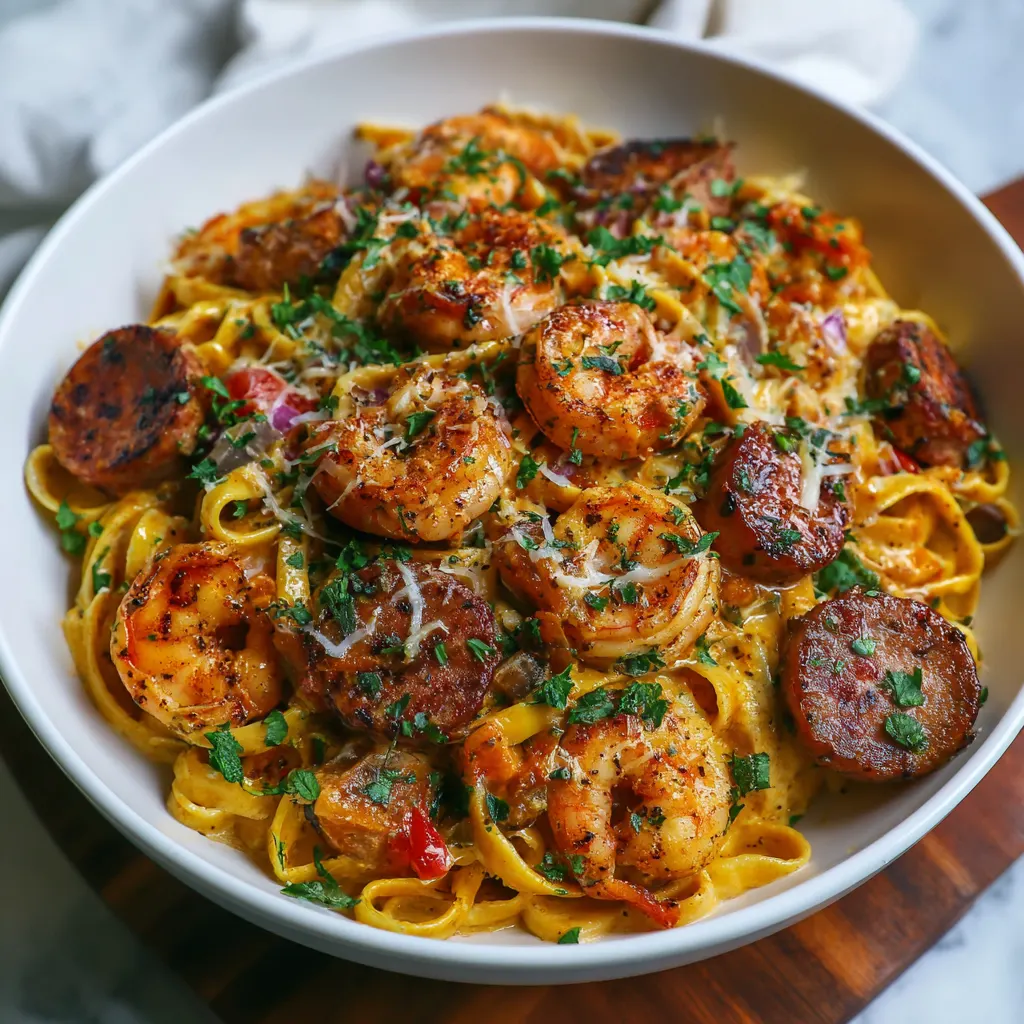
A satisfying dish like Cajun Shrimp Sausage Pasta doesn’t require complex accompaniments, but pairing it strategically can enhance its richness and complexity. Proper storage and reheating techniques are also essential for enjoying leftovers without sacrificing quality.
Perfect Side Dishes
Because the pasta is already rich, starchy, and packed with protein, the best side dishes are those that offer a clean, acidic, or light contrast:
-
Crisp Green Salad with Vinaigrette: A simple mix of Romaine lettuce, cucumber, and a bright lemon or red wine vinaigrette cuts through the creaminess of the sauce and refreshes the palate.
-
Garlic Bread or Cheesy Biscuits: While indulgent, a side of crusty, freshly-baked garlic bread is ideal for soaking up any remaining sauce at the bottom of the bowl—a practice often referred to as “sopping the plate.”
-
Steamed or Sautéed Greens: Blanched or lightly sautéed green beans, asparagus, or broccoli provide necessary texture and a vegetal component that balances the richness of the meat and cream. Season them simply with salt, pepper, and a dash of lemon juice.
Beverage Pairings
The spiciness and creaminess of this dish call for beverages that are refreshing and capable of standing up to bold flavors.
-
Wine: The best wine pairings are those with high acidity and a clean finish. A crisp Sauvignon Blanc offers bright citrus notes, while a lightly-oaked Chardonnay complements the cream sauce without being too heavy. For red wine enthusiasts, a light-bodied, fruit-forward Pinot Noir or a chilled Beaujolais works well, as heavy tannins will clash with the heat of the Cajun spices.
-
Beer: A cold Lager or a crisp Pilsner is an excellent choice, as the carbonation and light body help to cleanse the palate between bites of rich, spicy pasta. A domestic light beer also works perfectly to cool the heat.
-
Non-Alcoholic: Iced tea (sweetened or unsweetened) is a classic Southern pairing. For something more complex, a sparkling lemonade or a ginger beer provides a refreshing counterpoint to the dish’s intensity.
Storage and Reheating Tips
This pasta dish makes excellent leftovers, but proper technique is necessary to prevent the cream sauce from separating or drying out.
-
Cooling and Storage: Allow the pasta to cool to room temperature before transferring it to an airtight container. Store in the refrigerator for up to 3–4 days.
-
Reheating (Stovetop is Best): The microwave can often cause cream sauces to separate. For best results, reheat the pasta in a skillet over medium-low heat.
-
The Secret: Add a splash (1–2 tablespoons) of chicken broth, water, or heavy cream to the pan before adding the pasta. This added moisture helps to “re-emulsify” the sauce as it heats up, preventing it from breaking. Stir constantly until the pasta is heated through and the sauce is creamy again.
-
-
Making Ahead: If you wish to make this ahead, prepare the sausage, vegetables, and sauce, but do not add the shrimp or the pasta. Store the sauce separately. When ready to serve, reheat the sauce, cook the shrimp and pasta fresh, and combine everything at the last minute for optimal texture.