
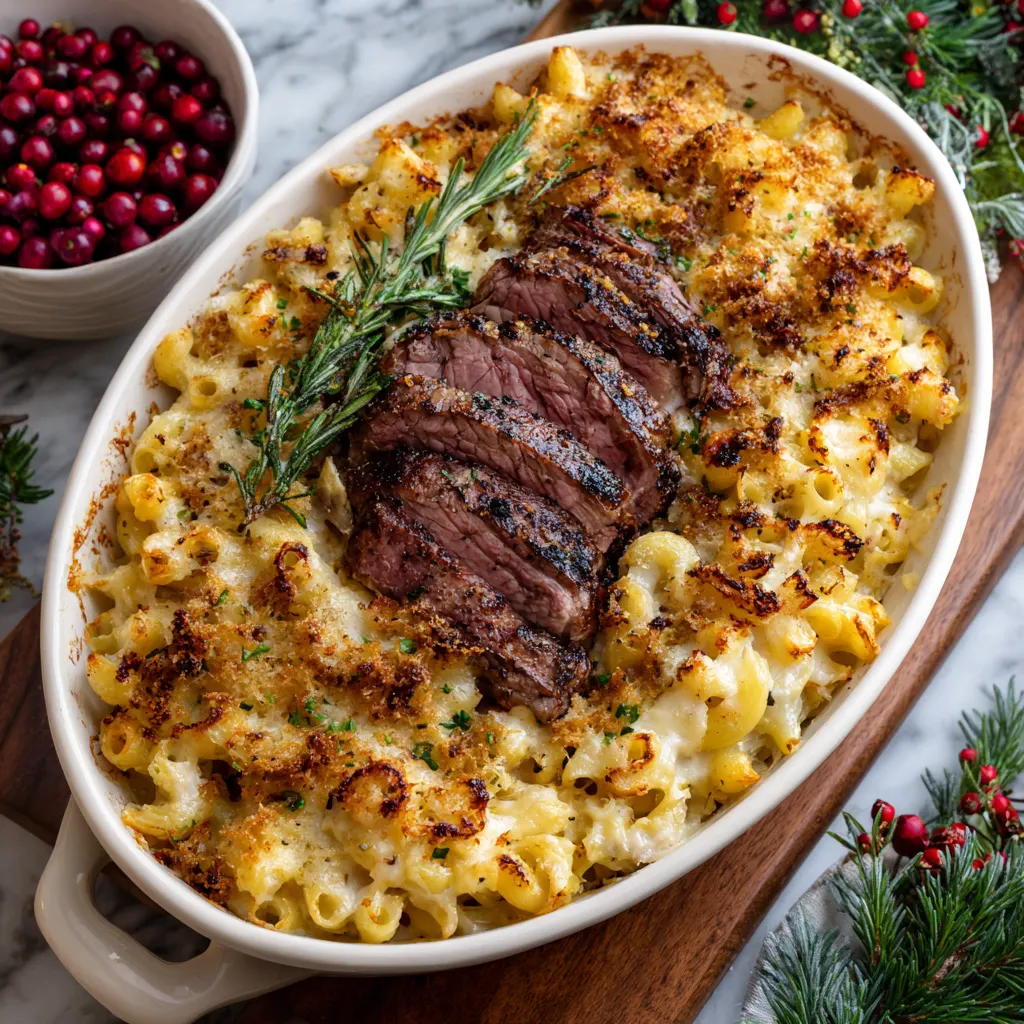
After the majesty of the holiday centerpiece—the perfectly roasted prime rib—comes the joyful task of creating an encore. No dish captures the spirit of indulgence and comfort quite like a prime rib macaroni and cheese. It transforms the king of roasts into the ultimate comfort food, pairing the rich, succulent beef with a creamy, sharp, and luxurious cheese sauce. This is not your childhood mac and cheese; it is a sophisticated, deeply satisfying baked pasta designed to be the highlight of your Christmas weekend, blending steakhouse elegance with fireside comfort.
The Ultimate Christmas Prime Rib Mac & Cheese
Yields: 8-10 servings Prep time: 20 minutes Cook time: 30 minutes
Ingredients
For the Pasta:
-
1 lb (450g) short pasta (elbow macaroni, cellantini, or rotini)
-
1 tbsp salt (for pasta water)
For the Roux & Sauce:
-
4 tbsp (56g) unsalted butter
-
4 tbsp all-purpose flour
-
4 cups (950ml) whole milk or half & half, warmed
-
1 tsp Dijon mustard
-
½ tsp garlic powder
-
¼ tsp nutmeg (optional, for depth)
-
Salt and freshly ground black pepper to taste
For the Cheese:
-
2 cups (225g) Sharp White Cheddar, freshly grated
-
1 cup (112g) Gruyère or Fontina cheese, freshly grated
-
½ cup (56g) Parmesan cheese, finely grated (divided for sauce and topping)
For the Prime Rib & Topping:
-
3 cups (approx. 1 lb/450g) leftover cooked Prime Rib, diced into ½-inch cubes
-
½ cup Prime Rib au jus or rich beef gravy (optional, for heating meat)
-
½ cup panko bread crumbs or cubed cheddar-jalapeño bread (for topping)
-
2 tbsp melted butter (for topping)
-
¼ cup chopped chives, for garnish
Step-by-Step Instructions
-
Prepare the Pasta and Oven: Preheat your oven to 375°F (190°C). Grease a 9×13-inch baking dish. Bring a large pot of salted water to a boil. Cook the pasta until just al dente—about 1-2 minutes less than the package directs. Drain the pasta and set it aside, reserving about 1 cup of the starchy pasta water.
-
Make the Roux: In a large, deep saucepan or Dutch oven, melt the 4 tablespoons of butter over medium heat. Whisk in the flour and cook, stirring constantly, for 2-3 minutes until the mixture turns light golden and smells slightly nutty (a roux). This step is crucial to cook out the raw flour taste.
-
Build the Béchamel: Slowly whisk in the warm milk, a little at a time, ensuring no lumps form before adding more. Continue whisking until the sauce is smooth and begins to thicken, about 5-8 minutes.
-
Melt the Cheese: Remove the saucepan from the heat. Stir in the Dijon mustard, garlic powder, nutmeg (if using), and a pinch of salt and pepper. Gradually add the Cheddar, Gruyère, and half of the Parmesan cheese, stirring continuously until the cheese is fully melted and the sauce is smooth. If the sauce is too thick, add a tablespoon of the reserved pasta water until the desired consistency is reached.
-
Fold in the Mac and Meat: Add the drained, al dente pasta to the cheese sauce and stir gently until every noodle is coated. In a separate small pan, gently warm the diced prime rib with the au jus or gravy (if using) just until heated through, which enhances moisture and flavor. Gently fold the warmed prime rib pieces into the mac and cheese mixture.
-
Bake and Finish: Transfer the mixture to the prepared baking dish. In a small bowl, mix the panko or bread cubes with 2 tablespoons of melted butter and the remaining grated Parmesan. Sprinkle this topping evenly over the mac and cheese. Bake for 20-30 minutes, or until the topping is golden brown and the cheese sauce is bubbling around the edges.
-
Serve: Let the dish rest for 5-10 minutes before serving. Garnish generously with fresh chives.
The Art of the Béchamel: Building the Ultimate Cheese Sauce
The hallmark of a truly elevated mac and cheese lies in the quality and execution of its cheese sauce. Simply melting cheese over pasta will not achieve the rich, decadent creaminess required to stand up to prime rib. The classic French technique of the béchamel (a white sauce thickened with a roux) provides the necessary stability and luxurious texture.
Mastering the Roux: Start by cooking your roux—equal parts butter and flour, cooked together gently. This step eliminates the raw, pasty flavor of the flour. Cook the mixture for at least two minutes, stirring constantly, until it smells like popcorn.
Dairy Integration: The secret to a velvety sauce is the gradual addition of warm milk or half & half. Pouring cold liquid into a hot roux will seize the starch and create lumps. Add the liquid slowly, whisking vigorously after each addition to create a smooth, homogenous base.
The Cheese Blend: For a dish as rich as this, a single cheese is insufficient. A perfect blend combines melting ability with sharp flavor:
-
Melting Base: Gruyère, Fontina, or Havarti are excellent melters, providing a smooth, stretchable texture.
-
Flavor Anchor: Aged, sharp white Cheddar (or a blend of 3-year, 6-year, or 10-year varieties) provides the necessary tang and depth.
-
Umami Finish: A touch of Parmesan or Asiago, stirred in at the end and reserved for the topping, adds a salty, savory layer of complexity.
Always grate your cheese fresh. Pre-shredded cheese contains anti-caking agents that prevent it from melting smoothly, resulting in a grainy or oily sauce. Finally, remove the sauce from the heat before adding the cheese. This prevents the proteins from tightening and separating, keeping the final product divinely smooth.
Prime Rib Perfection: Preparing and Integrating the Meat
The use of prime rib—especially holiday leftovers—is what elevates this dish from side to main course. Handling the meat correctly is key to ensuring it remains tender and flavorful, not dry and chewy, when baked into the pasta.
Handling Leftovers: Prime rib is often served medium-rare, and reheating it directly in the oven can overcook it. The best method is to dice the cold leftovers into bite-sized cubes (roughly ½-inch) and then gently warm them on the stovetop with a small amount of residual au jus, prime rib gravy, or even a splash of good beef stock. This infuses moisture and flavor back into the meat.
Flavor Integration: The exterior seasoning and crust (or “bark”) of the original roast must be respected. When dicing the prime rib, ensure each piece includes a bit of the seasoned exterior fat and crust. This carries the roast’s signature flavor—often rosemary, garlic, pepper, and salt—directly into the mac and cheese.
When to Add: The prime rib should be folded into the mac and cheese just before it goes into the baking dish. Do not let the meat simmer in the cheese sauce, which can cause it to break down. Gentle folding ensures the meat is evenly distributed and protected from excessive heat, emerging from the oven tender and perfectly integrated. For those seeking an ultimate presentation, you can reserve a small portion of the diced, warm prime rib to artistically mound on top of each serving after the dish comes out of the oven.
Holiday Harmony: Flavor Enhancements and Textural Contrast
An optimized holiday mac and cheese should offer more than just cheese and meat; it requires complementary textures and flavors that echo the festive season.
The Crunch Factor: A baked mac and cheese is incomplete without a golden, crunchy topping. This contrast is vital against the creamy sauce and soft pasta.
-
Classic Panko: Panko bread crumbs mixed with melted butter and grated Parmesan cheese offer a light, uniformly crispy crust.
-
Artisan Option: Consider using cubes of leftover sourdough or a savory bread, such as a cheddar-jalapeño or rosemary loaf, lightly tossed in butter and scattered over the top.
-
Savory Additions: A traditional holiday twist is to add crushed, pre-baked stuffing or crispy fried onions (like those used for green bean casserole) to the crust mixture for an additional layer of festive flavor.
Seasonal Aromatic Notes: A few specific ingredients can transform the mac and cheese from a beef dish into a true Christmas indulgence:
-
Spice: A touch of freshly grated nutmeg and Dijon mustard are classic additions to a béchamel, enhancing the savory character of the cheese without overpowering it.
-
Sweet/Nutty: For an authentic holiday spin, gently fold in a handful of chopped, roasted chestnuts or a tablespoon of whole-berry cranberry sauce (as a layer in the baking dish or swirled in) to provide a sweet, earthy counterpoint to the beef’s richness.
Pasta Integrity: Regardless of the shape—elbow, penne, or cellantini—the pasta must be cooked al dente. Since the dish is baked, the pasta will continue to absorb the sauce in the oven. Undercooking it slightly ensures that when it emerges, it is perfectly tender, not mushy, maintaining its structural integrity against the heavy sauce and meat.
Serving the Feast: Presentation, Pairings, and Storage
Given its richness, Christmas Prime Rib Mac & Cheese shines when it is properly served and paired. It is versatile enough to be a standalone main course for a smaller gathering or a spectacular side dish for a large, extended holiday meal.
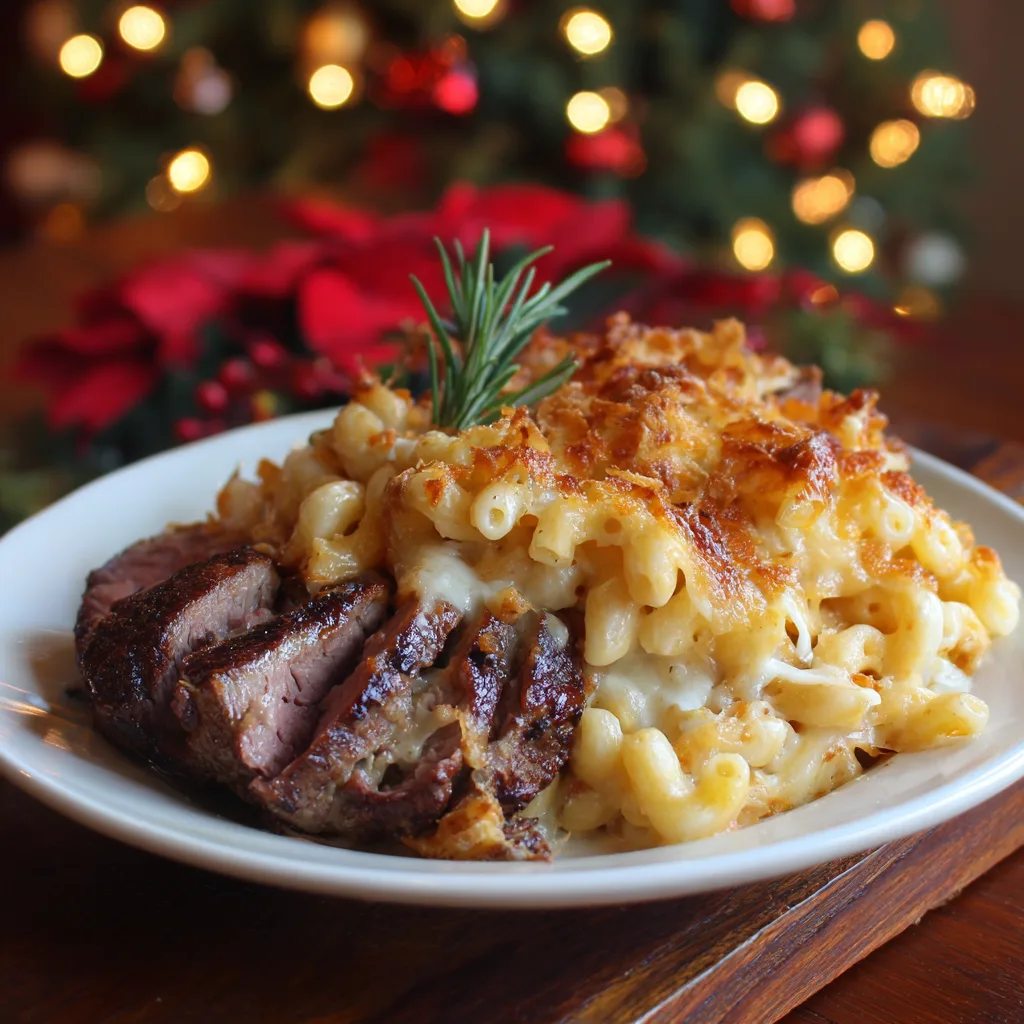
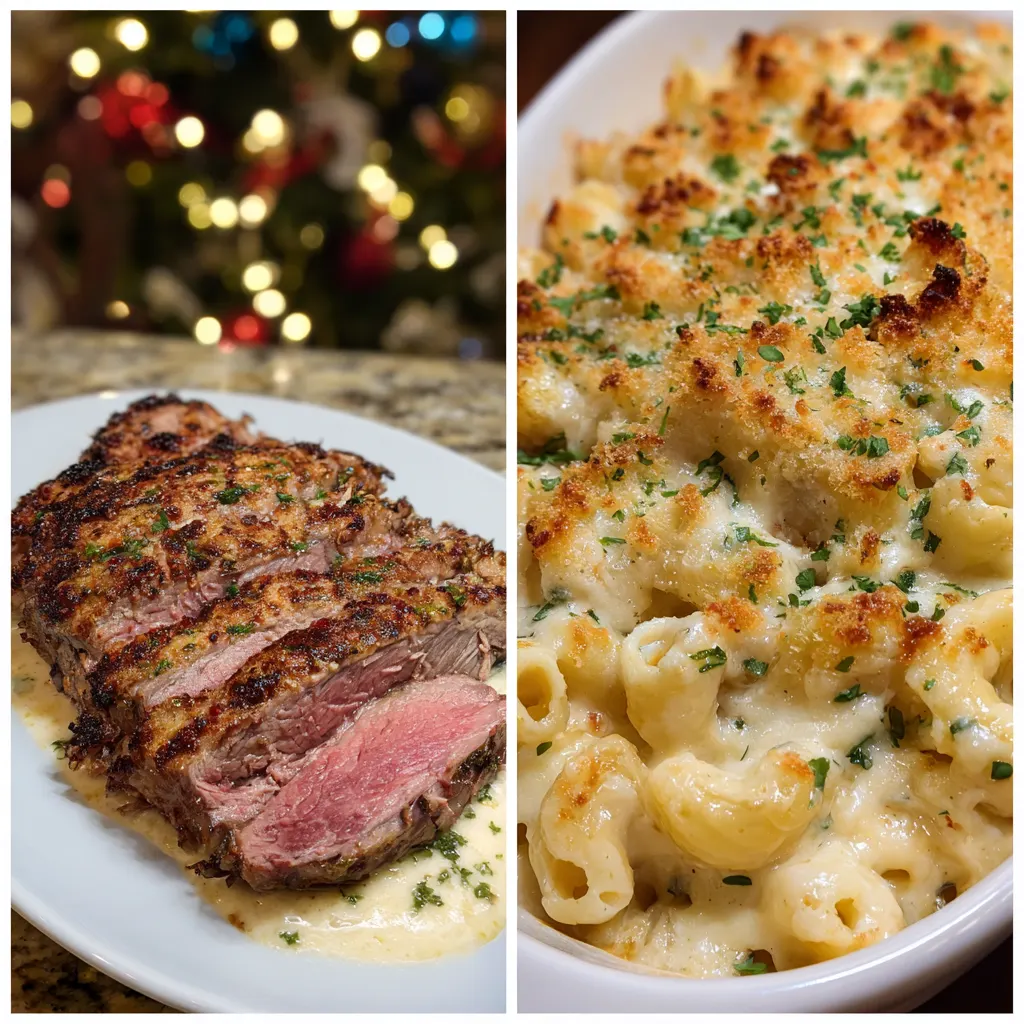
The Perfect Plate: For an elegant presentation, spoon the mac and cheese onto plates while still hot, ensuring a generous portion of the crispy crust is included. A simple sprinkle of fresh, vibrant green chives or parsley provides a clean finish and a sharp aromatic contrast. Serving it directly from a beautiful cast-iron or ceramic baking dish also highlights its rustic comfort.
Beverage Pairings: The deep umami of the prime rib and the intensity of the sharp cheese sauce require a robust pairing:
-
Red Wine: A medium-to-full-bodied Cabernet Sauvignon, Merlot, or a classic, earthy Chianti will cut through the richness of the beef and cream.
-
Beer: A dark, malty brew like a Porter or a seasonal Winter Warmer provides complementary, toasty notes, while a crisp India Pale Ale (IPA) can cleanse the palate between bites.
-
Non-Alcoholic: A spiced cranberry cider or a dry, sparkling grape juice offers a refreshing lift that cuts through the creaminess.
Reheating and Storage: Baked mac and cheese keeps well, making it a perfect make-ahead option. Store leftovers, tightly covered, in the refrigerator for up to four days.
To reheat, the key is moisture. Place individual servings in an oven-safe dish. Add a splash of milk or cream (about 1-2 tablespoons per serving) over the mac and cheese, then cover the dish with foil. Bake at 325°F (160°C) for 15-20 minutes, or until warmed through. The added liquid prevents the pasta from drying out and returns the sauce to its original creamy consistency. For the best crust, remove the foil for the last 5 minutes. This ensures that every bite, even days later, retains the luxurious texture that makes this dish a true holiday miracle.