

The Ultimate Baked Falafel Chickpea Pasta Salad: A Healthy, Protein-Rich Mediterranean Delight
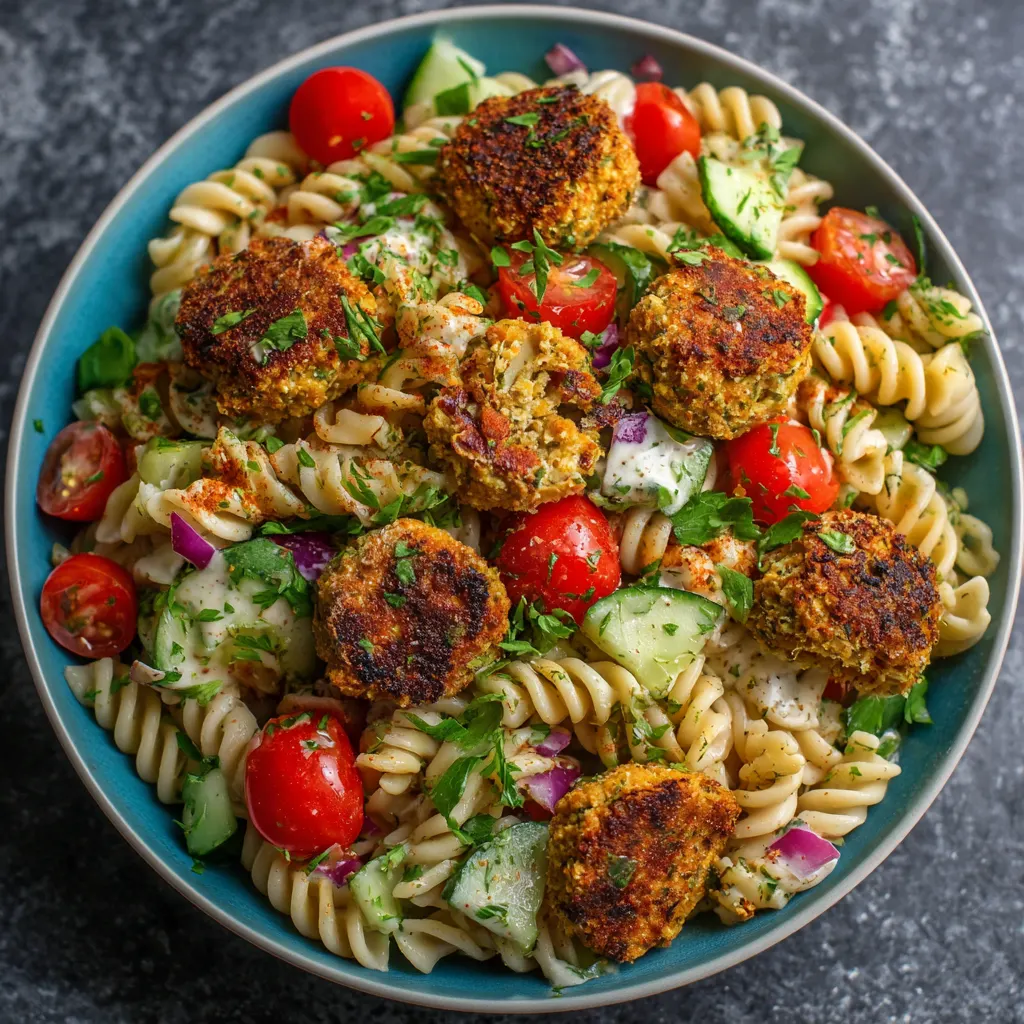
Combining the earthy crunch of traditional Middle Eastern street food with the satisfying heartiness of a modern pasta bowl, this Baked Falafel Chickpea Pasta Salad is a nutritional powerhouse. This recipe reimagines the classic fried falafel by baking it to golden perfection, then pairing it with grain-free chickpea pasta and a vibrant array of fresh Mediterranean vegetables. It is a dish designed for those who refuse to choose between indulgence and wellness, offering a high-fiber, high-protein meal that works beautifully for a quick weeknight dinner or a sophisticated meal-prep option. By utilizing chickpea-based pasta, you double down on plant-based protein while keeping the dish naturally gluten-free and incredibly filling.
Ingredients
For the Baked Falafel:
-
1 (15 oz) can chickpeas, drained, rinsed, and patted very dry
-
1 cup fresh flat-leaf parsley, stems removed
-
1/2 cup fresh cilantro
-
3 cloves garlic, minced
-
1 small shallot, roughly chopped
-
2 tablespoons chickpea flour (or all-purpose flour)
-
1 teaspoon ground cumin
-
1 teaspoon ground coriander
-
1/2 teaspoon sea salt
-
1/4 teaspoon black pepper
-
1/2 teaspoon baking powder
-
2 tablespoons extra virgin olive oil (for brushing)
For the Pasta Salad:
-
8 oz chickpea-based rotini or penne pasta
-
1 cup cherry tomatoes, halved
-
1 English cucumber, diced
-
1/2 red onion, thinly sliced
-
1/4 cup Kalamata olives, pitted and halved
-
1/4 cup crumbled feta cheese (optional, or vegan feta)
-
2 cups baby spinach or arugula
For the Lemon-Tahini Dressing:
-
1/4 cup creamy tahini
-
2 tablespoons fresh lemon juice
-
1 tablespoon maple syrup or honey
-
1 clove garlic, grated
-
2–3 tablespoons warm water (to thin)
-
Salt and pepper to taste
Step-by-Step Instructions
-
Prepare the Oven and Chickpeas: Preheat your oven to 400°F (200°C) and line a large baking sheet with parchment paper. Ensure your canned chickpeas are as dry as possible using a paper towel; moisture is the enemy of a crispy baked falafel.
-
Make the Falafel Mixture: In a food processor, combine the chickpeas, parsley, cilantro, garlic, shallot, cumin, coriander, salt, and pepper. Pulse until the mixture is finely minced but not a smooth purée. You want a coarse, grainy texture that holds together when pressed.
-
Form and Bake: Stir in the chickpea flour and baking powder. Scoop about 1.5 tablespoons of the mixture and roll into small balls or slightly flattened patties. Place them on the baking sheet and brush the tops generously with olive oil. Bake for 20–25 minutes, flipping halfway through, until the outsides are golden and crisp.
-
Cook the Pasta: While the falafel bakes, bring a large pot of salted water to a boil. Cook the chickpea pasta according to the package directions (usually 7–9 minutes). Be careful not to overcook it, as chickpea pasta can become mushy quickly. Drain and rinse with cold water to stop the cooking process.
-
Prepare the Dressing: In a small bowl, whisk together the tahini, lemon juice, maple syrup, and grated garlic. Add warm water one tablespoon at a time until the dressing reaches a pourable, creamy consistency. Season with salt and pepper.
-
Assemble the Salad: In a large mixing bowl, toss the cooked pasta with the cherry tomatoes, cucumber, red onion, olives, and greens. Drizzle half of the tahini dressing over the mixture and toss to coat.
-
Serve: Divide the pasta salad into bowls. Top each serving with 3–4 warm baked falafels and a sprinkle of feta cheese. Drizzle the remaining dressing over the falafel and serve immediately.
The Nutritional Powerhouse of Chickpeas
At the heart of this dish is the humble chickpea, a legume that has been a staple of the Mediterranean diet for millennia. By using both whole chickpeas for the falafel and chickpea-based pasta for the base, this meal provides a massive boost of plant-based protein and dietary fiber. Unlike traditional wheat pasta, chickpea pasta has a lower glycemic index, meaning it provides sustained energy without the rapid blood sugar spikes often associated with refined carbohydrates.
Baking the falafel instead of deep-frying them is a significant nutritional pivot. Traditional falafel, while delicious, can absorb a substantial amount of oil, leading to high calorie and saturated fat counts. By using a high-heat oven and a light brush of heart-healthy olive oil, you achieve a satisfying exterior crunch and a moist interior while keeping the fat content functional and clean. This makes the dish an excellent choice for heart health and weight management without sacrificing the iconic flavors of the Middle East.
Customizing Your Mediterranean Bowl
The beauty of a pasta salad lies in its versatility. While the lemon-tahini dressing provides a classic creamy finish, you can easily pivot the flavor profile to suit your cravings. For a brighter, zippier version, try a Greek-style vinaigrette made with red wine vinegar, dried oregano, and plenty of lemon zest. If you prefer a bit of heat, whisking a teaspoon of harissa paste into the tahini dressing adds a smoky, spicy depth that complements the earthy cumin in the falafel.
The vegetable components are equally flexible. If you have roasted red peppers, artichoke hearts, or sun-dried tomatoes in your pantry, they make excellent additions. For those following a strictly plant-based diet, the feta cheese can be swapped for pickled red onions or a sprinkle of nutritional yeast to provide that necessary “umami” punch. You can also experiment with the greens; while arugula adds a peppery bite, chopped kale can provide a sturdier base if you plan on eating the salad over several days.
Master the Art of Meal Prepping
This Baked Falafel Chickpea Pasta Salad is a champion of meal prep, but it requires a few strategic steps to ensure it remains fresh. If you are preparing this for the work week, it is best to store the components separately. Keep the baked falafel in one container, the pasta and vegetable mix in another, and the dressing in a small jar. This prevents the falafel from losing its texture and ensures the greens don’t wilt under the acidity of the dressing.
When you are ready to eat, the falafel can be enjoyed cold, but it is best when reheated for 5 minutes in a toaster oven or air fryer to restore its crispiness. Chickpea pasta tends to firm up when refrigerated; a quick trick is to toss the pasta with a tiny bit of olive oil before storing it, or to add a splash of water before giving it a quick 30-second zap in the microwave to soften the starches before assembling your bowl.
Serving Suggestions and Pairing Ideas
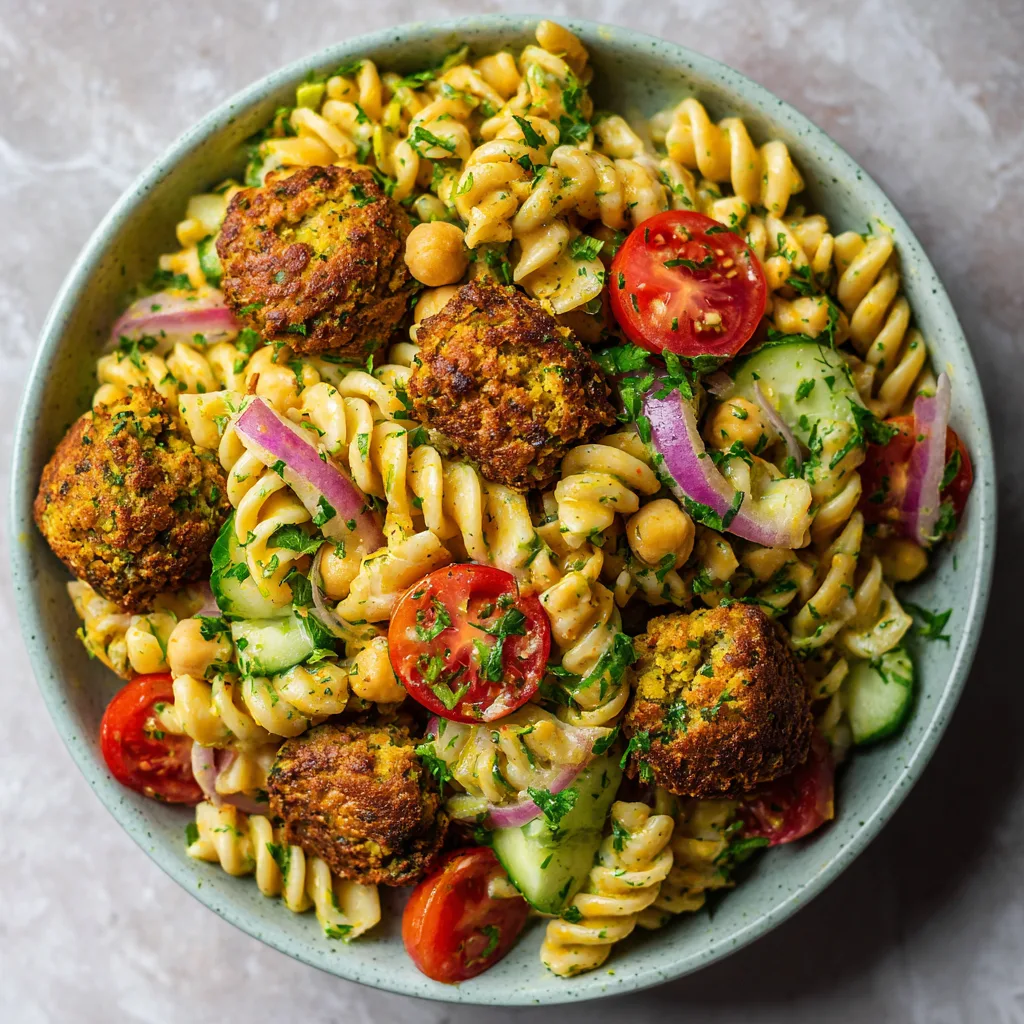
While this salad is a complete meal on its own, it can also serve as the centerpiece of a larger Mediterranean spread. If you are hosting a dinner, serve the salad alongside a platter of warm pita bread and a variety of dips like smoky baba ganoush or a classic smooth hummus. The contrast between the cold pasta salad and warm, soft bread creates a multi-textured dining experience that is always a crowd-pleaser.
For a beverage pairing, look for something crisp and acidic to cut through the richness of the tahini. A dry Sauvignon Blanc or a chilled Rosé works beautifully for a weekend lunch. For a non-alcoholic option, a sparkling water infused with fresh mint and cucumber slices echoes the fresh herbs in the falafel and keeps the meal feeling light and refreshing. Whether served as a solo lunch or a communal feast, this dish proves that healthy eating can be both visually stunning and deeply satisfying.