
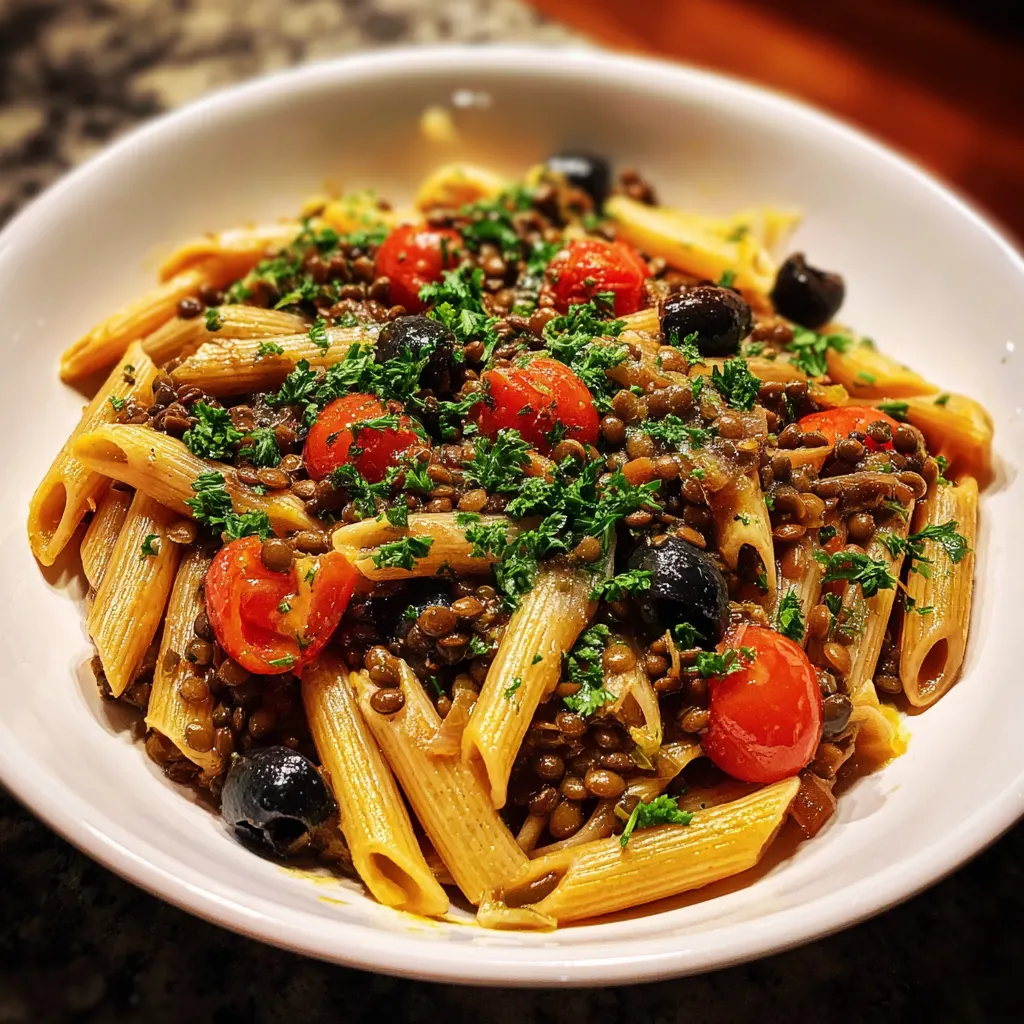
The Ultimate Mediterranean Lentil and Olive Pasta: A Nutrient-Dense Plant-Based Masterpiece
The Mediterranean diet has long been celebrated as the gold standard for longevity and heart health, emphasizing whole grains, healthy fats, and plant-based proteins. Among the countless recipes inspired by this region, Mediterranean Lentil and Olive Pasta stands out as a nearly perfect meal. It bridges the gap between comforting Italian soul food and the rigorous nutritional requirements of a modern, health-conscious lifestyle. By combining the earthy, peppery notes of protein-rich lentils with the briny, sophisticated punch of cured olives, this dish offers a complex flavor profile that satisfies the palate while fueling the body.
Ingredients You’ll Need
-
Pasta: 12 oz (340g) of whole wheat penne, fusilli, or rigatoni.
-
Lentils: 1.5 cups of cooked brown or green lentils (or one 15oz can, rinsed and drained).
-
Olives: 1/2 cup Kalamata olives, pitted and halved.
-
Aromatics: 1 medium yellow onion (diced) and 4 cloves of garlic (minced).
-
Tomatoes: 1 can (14.5 oz) fire-roasted diced tomatoes or 2 cups fresh cherry tomatoes.
-
Greens: 2 cups fresh baby spinach or chopped kale.
-
Oil & Acid: 3 tbsp extra virgin olive oil and the juice of half a lemon.
-
Herbs & Spices: 1 tsp dried oregano, 1/2 tsp red pepper flakes, salt, and black pepper to taste.
-
Garnish: Fresh parsley and optional vegan feta or parmesan.
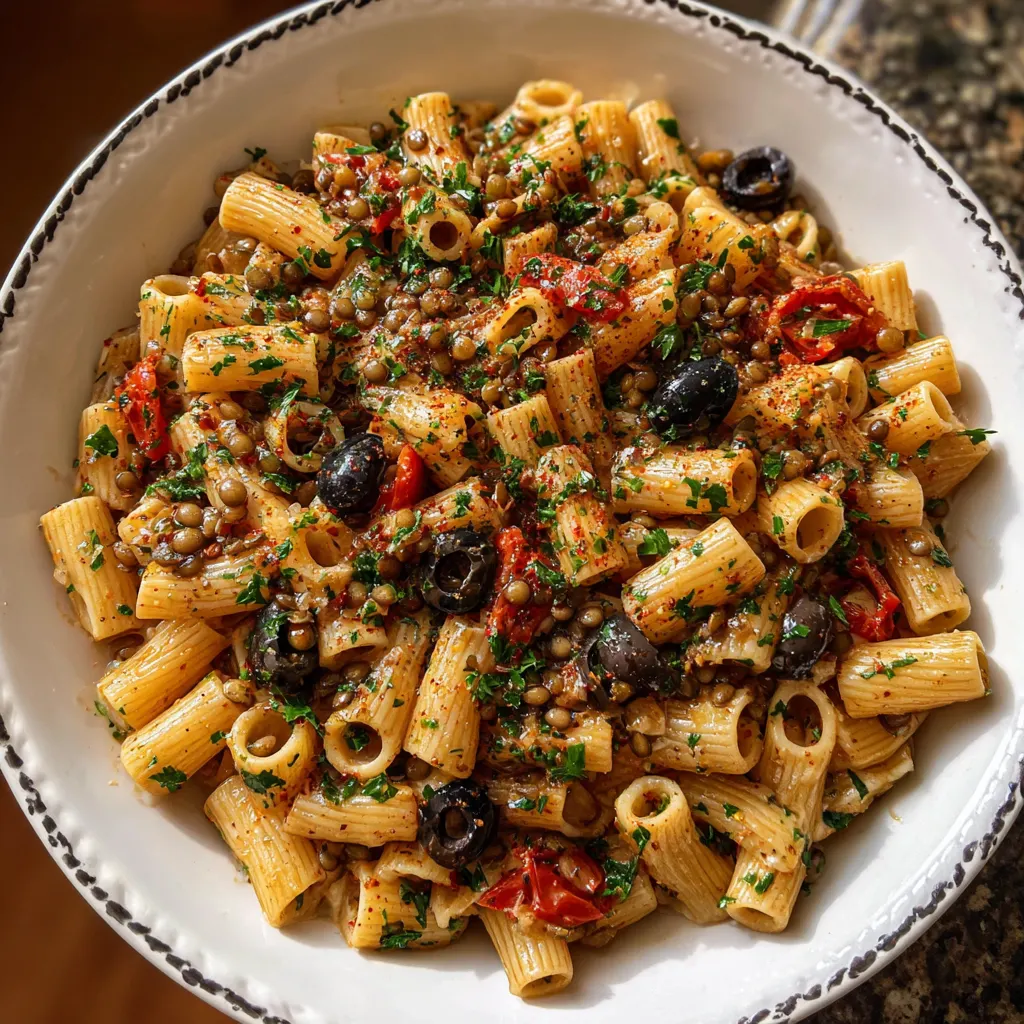
Step-by-Step Preparation
-
Boil the Pasta: Bring a large pot of salted water to a boil. Cook your chosen pasta according to package instructions until al dente. Reserve 1/2 cup of the starchy pasta water before draining.
-
Sauté the Base: While the pasta cooks, heat the olive oil in a large skillet over medium heat. Add the onion and sauté for 5 minutes until translucent. Stir in the minced garlic and red pepper flakes, cooking for another 60 seconds until fragrant.
-
Simmer the Sauce: Add the diced tomatoes (with juices), dried oregano, and cooked lentils to the skillet. Let the mixture simmer for 8–10 minutes, allowing the flavors to meld and the sauce to thicken slightly.
-
Incorporate Brine and Greens: Stir in the halved olives and the fresh spinach. Continue to cook for 2 minutes until the spinach is wilted and the olives are heated through.
-
Toss and Emulsify: Add the cooked pasta to the skillet. Pour in the reserved pasta water and lemon juice. Toss everything vigorously over low heat until the sauce coats the pasta in a glossy, savory sheen.
-
Final Flourish: Season with salt and pepper. Garnish with a generous handful of fresh parsley and a drizzle of high-quality olive oil before serving.
The Nutritional Powerhouse of Plant-Based Protein
One of the most compelling reasons to integrate this dish into your weekly rotation is the incredible nutritional profile of lentils. Unlike refined pasta dishes that can lead to energy crashes, the inclusion of lentils provides a steady release of glucose. Lentils are a “superfood” in the truest sense, packed with folate, iron, and manganese. When paired with pasta, they create a high-fiber synergy that promotes digestive health and long-lasting satiety.
Furthermore, the “meatiness” of the lentils serves as an excellent substitute for ground beef or sausage. For those transitioning to a plant-based diet, the texture of small green or brown lentils provides a bite that is remarkably similar to traditional Bolognese, but without the saturated fats and cholesterol. This makes the dish an ideal candidate for “Meatless Mondays” or for anyone looking to reduce their environmental footprint through conscious eating.
Flavor Profiles: Balancing the Brine and the Earth
The magic of this recipe lies in the balance of its contrasting flavors. Lentils have a naturally mild, earthy flavor that acts as a canvas for the more aggressive ingredients. The Kalamata olives are the stars here, providing “umami”—the savory fifth taste—that is often missing in vegetarian cooking. Their saltiness is balanced by the acidity of the lemon juice and the brightness of the tomatoes, creating a multidimensional experience in every forkful.
To elevate the dish further, the choice of olive oil is paramount. In Mediterranean cooking, extra virgin olive oil is treated more like a seasoning than a cooking fat. Using a robust, peppery oil to finish the dish enhances the herbal notes of the oregano and parsley. If you prefer a bit of heat, the red pepper flakes provide a back-of-the-throat warmth that cuts through the richness of the olives, ensuring the dish never feels overly heavy.
Customization and Dietary Adaptations
This Mediterranean pasta is infinitely adaptable to suit various dietary needs and seasonal availability. If you are following a gluten-free diet, the sauce pairs beautifully with chickpea or brown rice pasta. For those who want an extra boost of micronutrients, you can easily fold in roasted red peppers, artichoke hearts, or capers to lean further into the Mediterranean “Puttanesca” style.
Seasonality also plays a role in how you might approach this recipe. In the summer, swapping canned tomatoes for vine-ripened cherry tomatoes will result in a lighter, sweeter sauce. In the winter, using kale instead of spinach adds a heartier texture that stands up well to the earthy lentils. Regardless of the variations, the core trio of lentils, olives, and pasta remains a reliable foundation for a quick, 30-minute meal that tastes like it spent hours simmering on a stove in a coastal village.
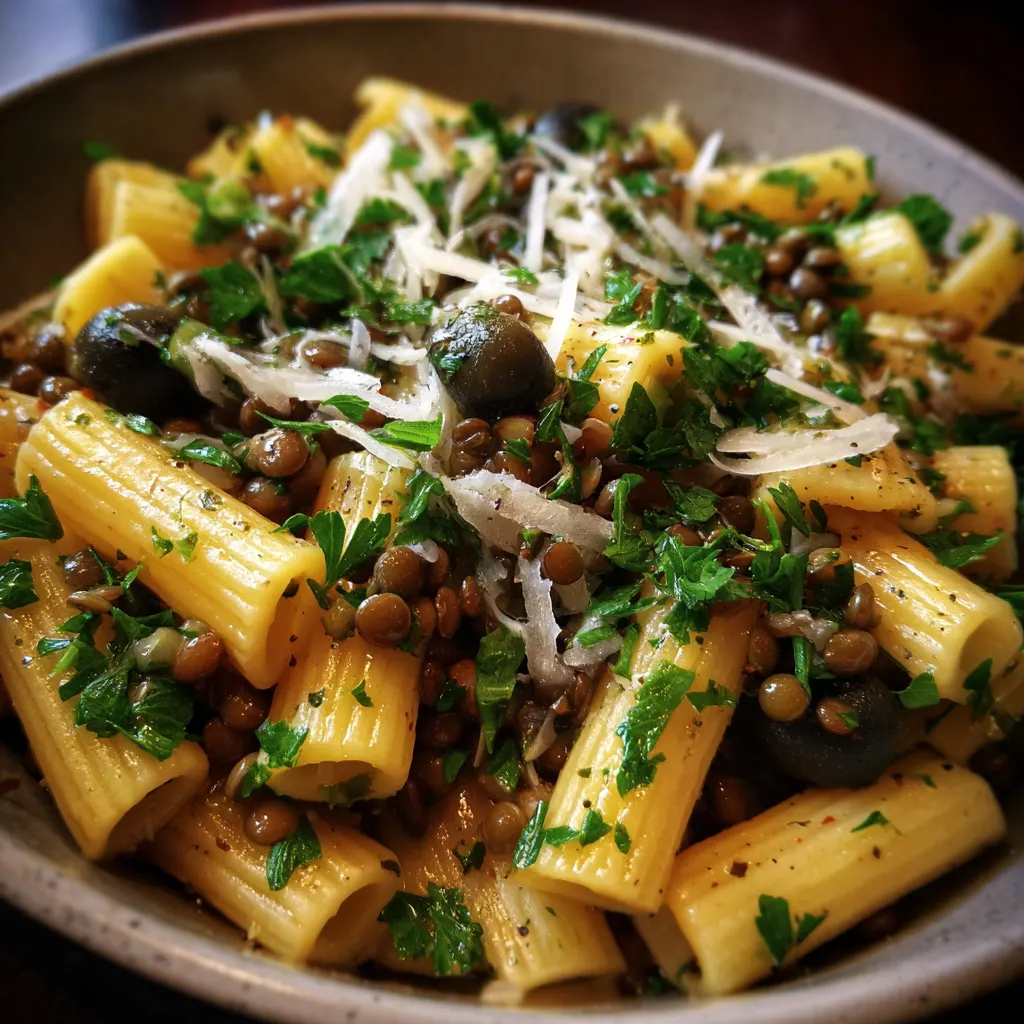
The Art of the Perfect Leftover
One of the hidden benefits of Mediterranean Lentil and Olive Pasta is that it actually tastes better the next day. As the dish sits, the lentils continue to absorb the garlic, herbs, and olive brine, deepening the overall flavor profile. This makes it an exceptional option for meal prepping. Unlike creamy pasta dishes that can separate or become oily when reheated, this oil-and-tomato-based sauce maintains its integrity beautifully.
To reheat, simply add a splash of water or a drizzle of olive oil to the pan to loosen the sauce. You can even enjoy it cold as a pasta salad, perhaps adding a few extra fresh cucumbers or a dollop of hummus on the side for a refreshing lunch. By mastering this single recipe, you gain a versatile tool in your culinary arsenal that promises health, flavor, and simplicity in every serving.