
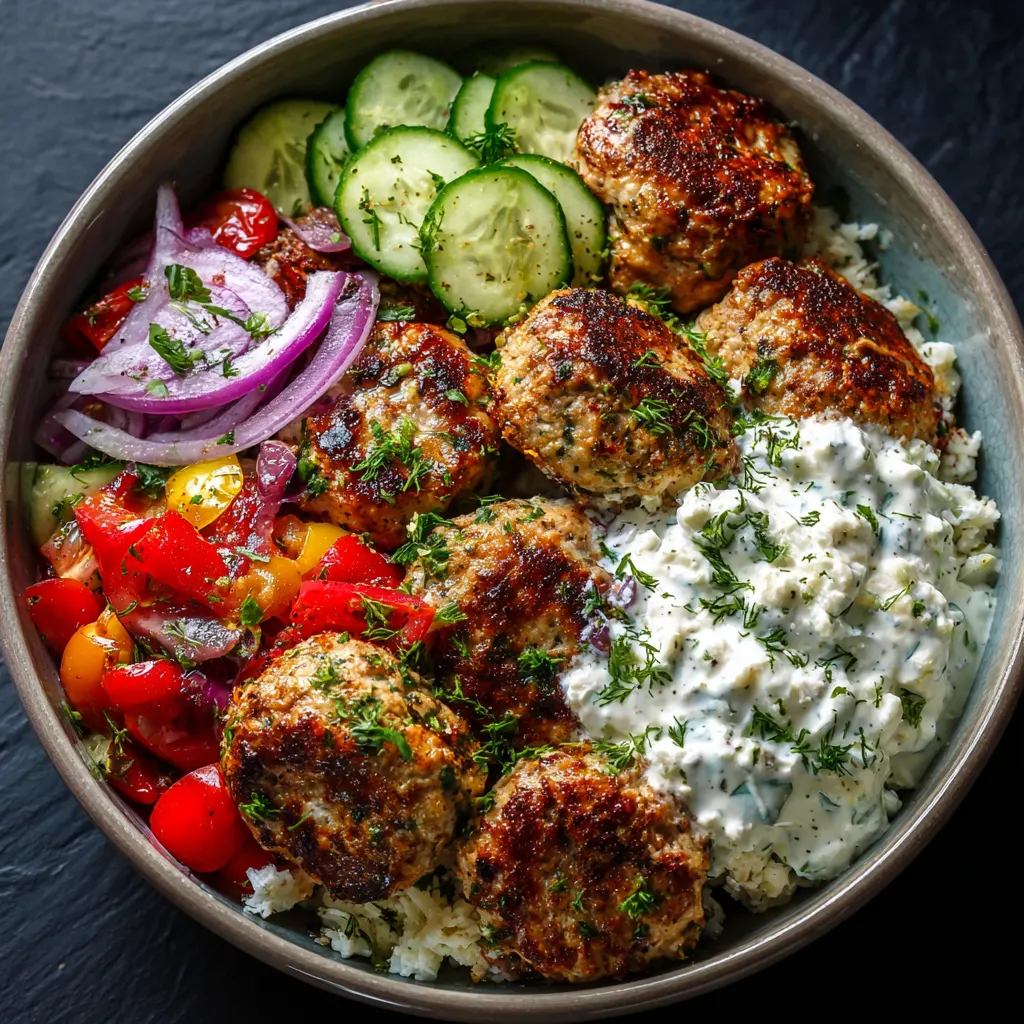
Greek Chicken Meatball Power Bowls: The Ultimate Mediterranean Meal Prep
The Greek Chicken Meatball Power Bowl has become a staple in the modern kitchen for a simple reason: it perfectly balances vibrant Mediterranean flavors with the nutritional density required for a high-energy lifestyle. These bowls are a masterclass in texture and color, combining juicy, herb-infused chicken meatballs with crisp vegetables, chewy grains, and creamy sauces. Whether you are looking for a satisfying weeknight dinner or a reliable meal-prep solution that stays fresh for days, this recipe offers a customizable framework that caters to health-conscious foodies and busy families alike. By focusing on fresh ingredients and bold spices, you can transform a simple chicken breast into a gourmet experience that rivals your favorite Mediterranean bistro.
The Ultimate Greek Chicken Meatball Power Bowl Recipe
For the Chicken Meatballs:
-
1 lb ground chicken (preferably a mix of breast and thigh)
-
1/2 cup panko breadcrumbs (or almond flour for a gluten-free version)
-
1 large egg, lightly beaten
-
2 cloves garlic, minced
-
1/4 cup fresh parsley, finely chopped
-
1 teaspoon dried oregano
-
1/2 teaspoon ground cumin
-
1/2 cup crumbled feta cheese
-
Zest of one lemon
-
Salt and black pepper to taste
-
1 tablespoon olive oil (for browning)
For the Power Bowl Base:
-
2 cups cooked quinoa or brown rice
-
2 cups baby spinach or shredded kale
-
1 English cucumber, diced
-
1 cup cherry tomatoes, halved
-
1/4 red onion, thinly sliced
-
1/2 cup Kalamata olives, pitted
-
1/2 cup hummus (store-bought or homemade)
-
1/2 cup Tzatziki sauce
Step-by-Step Instructions:
-
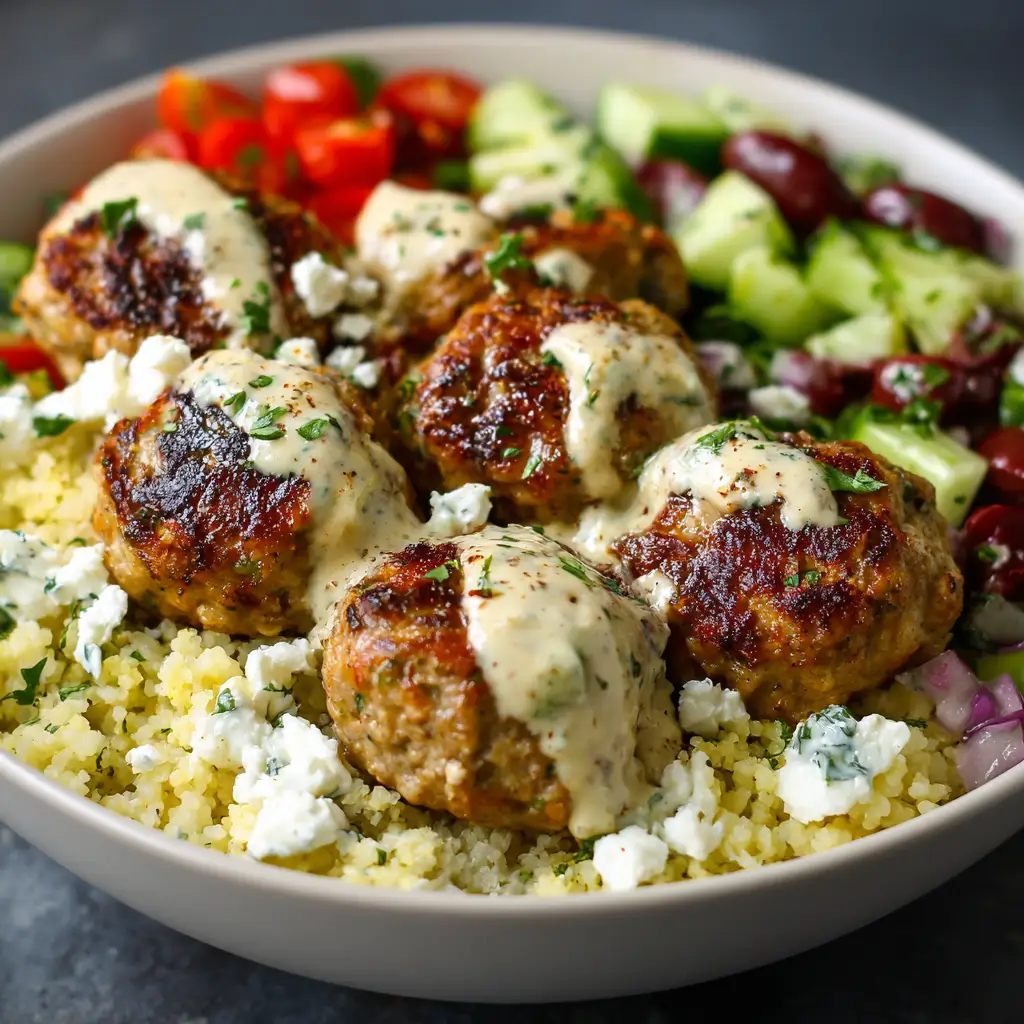
Prepare the Meatballs: In a large mixing bowl, combine the ground chicken, breadcrumbs, egg, garlic, parsley, oregano, cumin, lemon zest, and crumbled feta. Season with salt and pepper. Mix gently with your hands or a spatula until just combined—be careful not to overwork the meat, as this can make the meatballs tough.
-
Form and Cook: Roll the mixture into approximately 12–15 golf-ball-sized meatballs. In a large skillet over medium-high heat, add the olive oil. Working in batches, brown the meatballs on all sides for about 8–10 minutes total, or until the internal temperature reaches 165°F (74°C). Alternatively, you can bake them at 400°F (200°C) on a parchment-lined tray for 15–18 minutes.
-
Prepare the Grains and Greens: While the meatballs cook, divide your cooked quinoa or rice into four bowls. Top each portion with a handful of fresh spinach or kale.
-
Assemble the Toppings: Arrange the diced cucumbers, tomatoes, red onions, and olives over the grains. Add 3–4 cooked meatballs to each bowl.
-
Finish and Serve: Add a generous dollop of hummus and a drizzle of Tzatziki sauce to each bowl. Garnish with extra fresh herbs or a squeeze of lemon juice if desired. Serve immediately or pack into airtight containers for later use.
Mastering the Juicy Greek Chicken Meatball
The heart of this power bowl lies in the meatballs. Ground chicken is notoriously leaner than beef or pork, which means it can dry out quickly if not handled with care. To ensure your meatballs remain succulent and flavorful, the secret is in the moisture-locking ingredients. Adding crumbled feta directly into the meat mixture provides pockets of creaminess and salt, while the lemon zest adds a bright acidity that cuts through the richness of the poultry.
Texture is also a critical factor. Using a binder like panko breadcrumbs or almond flour creates a tender “crumb” within the meatball, preventing it from becoming a dense, rubbery sphere. If you find your mixture is too sticky to roll, refrigerate the meat for 20 minutes before forming the balls; this firms up the fats and makes the process much cleaner. Whether you choose to pan-fry for a crispy exterior or bake for a lower-fat alternative, ensuring you don’t overcook them is the key. Using a meat thermometer is the most reliable way to achieve that perfect juicy finish without guesswork.
Beyond the basics, the spice profile is what defines the “Greek” identity of this dish. Dried oregano and fresh parsley are non-negotiable, providing that earthy, floral aroma. If you want to elevate the flavor further, consider adding a pinch of ground cinnamon or nutmeg—common additions in traditional Greek keftedes—to add a subtle warmth that complements the savory garlic and lemon.
Building a Nutritious Power Base: Grains and Greens
A “Power Bowl” is defined by its ability to provide sustained energy, which comes from the combination of complex carbohydrates and fiber. Quinoa is the gold standard for this recipe because it is a complete protein, meaning it contains all nine essential amino acids. Its slightly nutty flavor and fluffy texture absorb the juices from the meatballs and the tang of the Tzatziki perfectly. However, if you prefer a heartier bite, farro or brown rice are excellent alternatives that offer plenty of fiber to keep you full until your next meal.
The green component of the bowl serves as the nutritional foundation. While spinach is a classic choice for its mild flavor and high iron content, you can experiment with massaged kale or even a spicy arugula to add more dimension. Massaging kale with a little bit of olive oil and lemon juice for a minute or two breaks down the tough fibers, making it much more palatable and easier to digest.
To keep the bowl vibrant, the vegetable toppings should be as fresh as possible. The “Greek Salad” trio—cucumber, tomato, and red onion—provides the essential crunch and hydration. For those who find raw red onion too pungent, soaking the slices in ice water for ten minutes before serving removes the “bite” while retaining the crispness. These vegetables provide a cooling contrast to the warm meatballs, creating a temperature play that is characteristic of high-end Mediterranean bowls.
The Art of the Sauce: Tzatziki and Beyond
No Mediterranean bowl is complete without a sauce to tie all the components together. Tzatziki is the traditional accompaniment, a yogurt-based sauce that is both refreshing and probiotic-rich. To make a truly authentic Tzatziki, you must grate your cucumber and then squeeze out every drop of excess moisture using a kitchen towel. This prevents the sauce from becoming watery and ensures a thick, dip-like consistency that clings to the meatballs.
Hummus adds a different layer of texture—a dense, earthy creaminess that provides healthy fats and additional plant-based protein. While a classic chickpea hummus is standard, a roasted red pepper or garlic-infused version can add a new flavor profile to your bowl. For those who want to skip the dairy, a lemon-tahini dressing made from tahini, lemon juice, garlic, and a splash of warm water serves as a perfect creamy substitute for Tzatziki.
If you want to take your power bowl to the professional level, consider adding “flavor multipliers.” Quick-pickled red onions, a sprinkle of za’atar seasoning, or a drizzle of high-quality extra virgin olive oil can transform the dish. These small additions provide the acidic highlights and aromatic finishes that make the meal feel like it was prepared by a chef rather than just assembled in a home kitchen.
Meal Prep Strategies and Customization
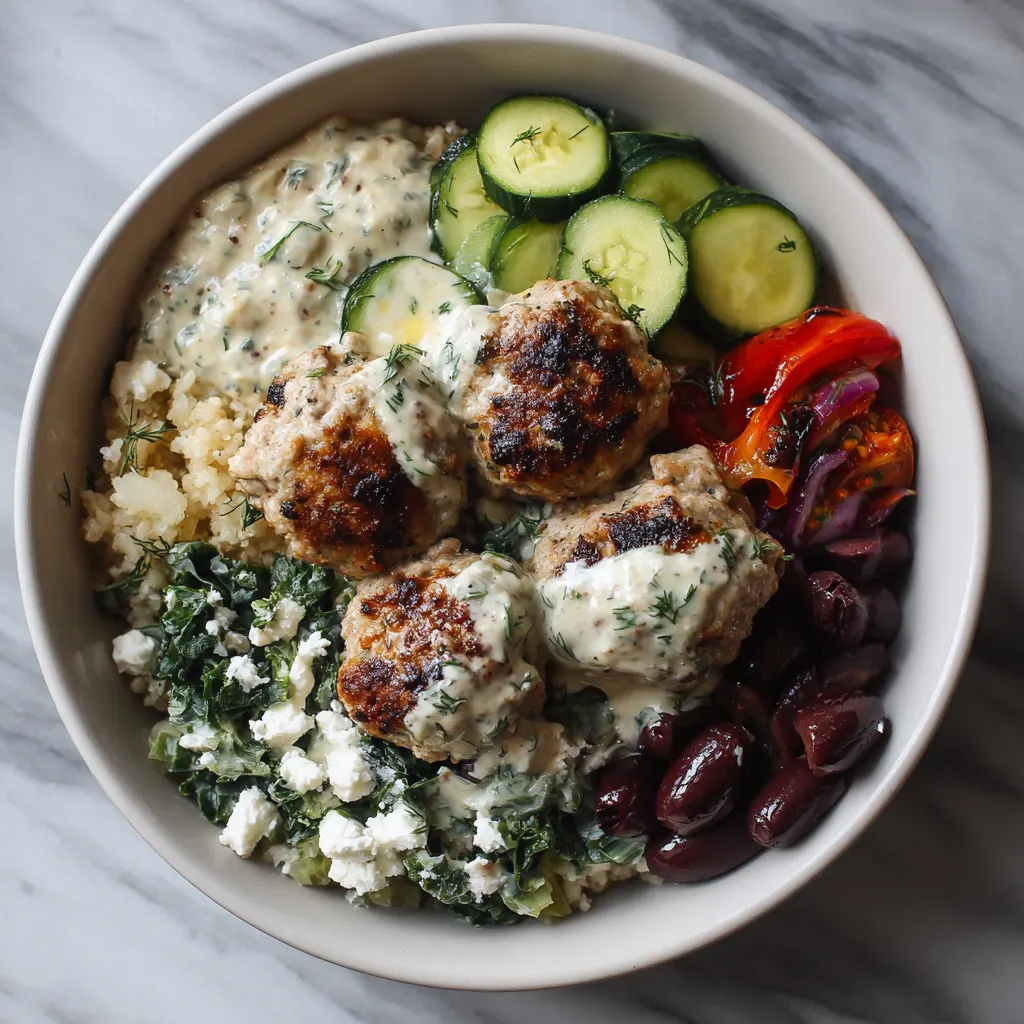
One of the greatest strengths of the Greek Chicken Meatball Power Bowl is its versatility and longevity. If you are preparing these for the week ahead, the key to success is strategic layering. Keep the “wet” ingredients—like the Tzatziki and hummus—in small separate containers or tucked into a corner away from the greens to prevent wilting. The meatballs and grains can be stored together, as they both benefit from a quick 30-second reheat, whereas the vegetables should always remain cold.
Customization allows this recipe to fit almost any dietary preference. For a low-carb or Keto version, simply swap the quinoa for cauliflower rice or double up on the greens. For those following a Whole30 or Paleo diet, omit the feta and breadcrumbs (use almond flour instead) and replace the hummus with a dollop of guacamole or an olive tapenade.
When it comes to variety, you can easily swap the protein. If you’re tired of chicken, the same spice profile works beautifully with ground turkey or even lean ground lamb for a more traditional Greek flavor. The power bowl is less of a rigid recipe and more of a template for healthy eating; as long as you maintain the balance of protein, complex carbs, fresh fiber, and healthy fats, you will have a meal that is as nourishing as it is delicious. By mastering this one dish, you unlock a world of Mediterranean flavors that make healthy eating feel like an indulgence rather than a chore.