

The Ultimate Greek Zucchini Feta Fritters Bowl: A Mediterranean Masterpiece
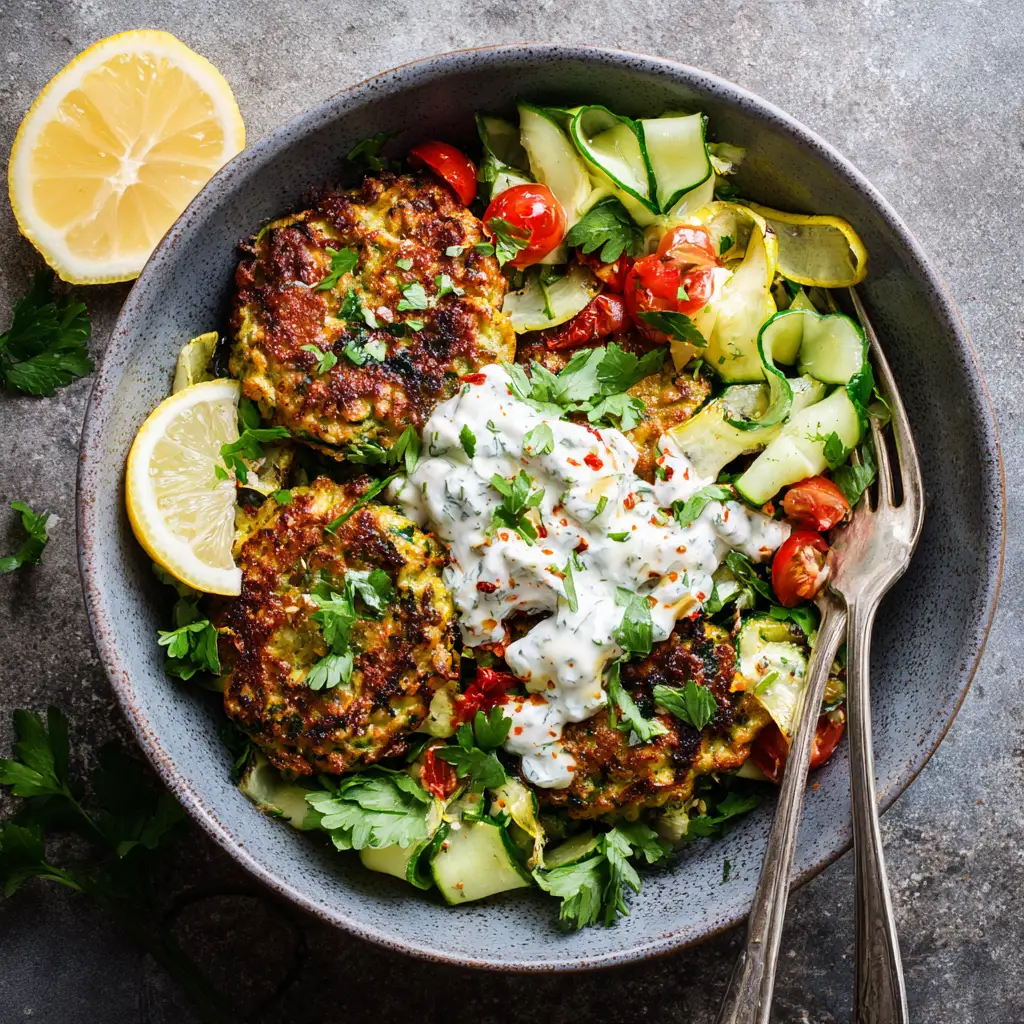
The Mediterranean diet has long been celebrated for its vibrant colors, heart-healthy ingredients, and the perfect balance of indulgence and nutrition. At the heart of this culinary tradition lies the Greek zucchini fritter, known locally as Kolokithokeftedes. These crispy, herb-scented patties offer a delightful contrast of textures—crunchy on the outside and creamy on the inside—making them the ideal centerpiece for a modern grain bowl. By pairing these traditional fritters with a refreshing array of fresh vegetables, tangy feta, and cooling tzatziki, you create a meal that is not only visually stunning but also packed with the complex flavors of the Aegean. This Greek Zucchini Feta Fritters Bowl is a versatile powerhouse, perfect for an impressive weeknight dinner or a sophisticated meal-prep option that never feels like a compromise.
The Recipe
Ingredients
For the Zucchini Feta Fritters:
-
2 lbs medium zucchini (about 3-4), grated
-
1 tsp salt (for draining)
-
2 large eggs, lightly beaten
-
1/2 cup Greek feta cheese, crumbled
-
3 green onions, finely sliced
-
2 tbsp fresh dill, chopped
-
1 tbsp fresh mint, chopped
-
1 clove garlic, minced
-
1/2 tsp black pepper
-
1/2 cup all-purpose flour (or gluten-free blend)
-
1/2 tsp baking powder
-
Olive oil for pan-frying
For the Bowl Assembly:
-
2 cups cooked quinoa, farro, or brown rice
-
1 cup cherry tomatoes, halved
-
1 English cucumber, diced
-
1/4 red onion, thinly sliced
-
1/2 cup Kalamata olives, pitted
-
1/2 cup homemade or store-bought Tzatziki
-
Fresh lemon wedges for serving
-
Extra virgin olive oil for drizzling
Step-by-Step Instructions
-
Prep the Zucchini: Place the grated zucchini in a colander over a bowl and sprinkle with 1 teaspoon of salt. Let it sit for at least 20 minutes to draw out the moisture. This is the most critical step for a crispy fritter.
-
Squeeze Dry: Using a clean kitchen towel or cheesecloth, wrap the salted zucchini and squeeze forcefully until no more liquid comes out. You should be left with a very dry ball of zucchini shreds.
-
Mix the Batter: In a large mixing bowl, combine the beaten eggs, crumbled feta, green onions, dill, mint, garlic, and pepper. Fold in the dried zucchini. Gradually add the flour and baking powder, stirring until a thick, cohesive batter forms.
-
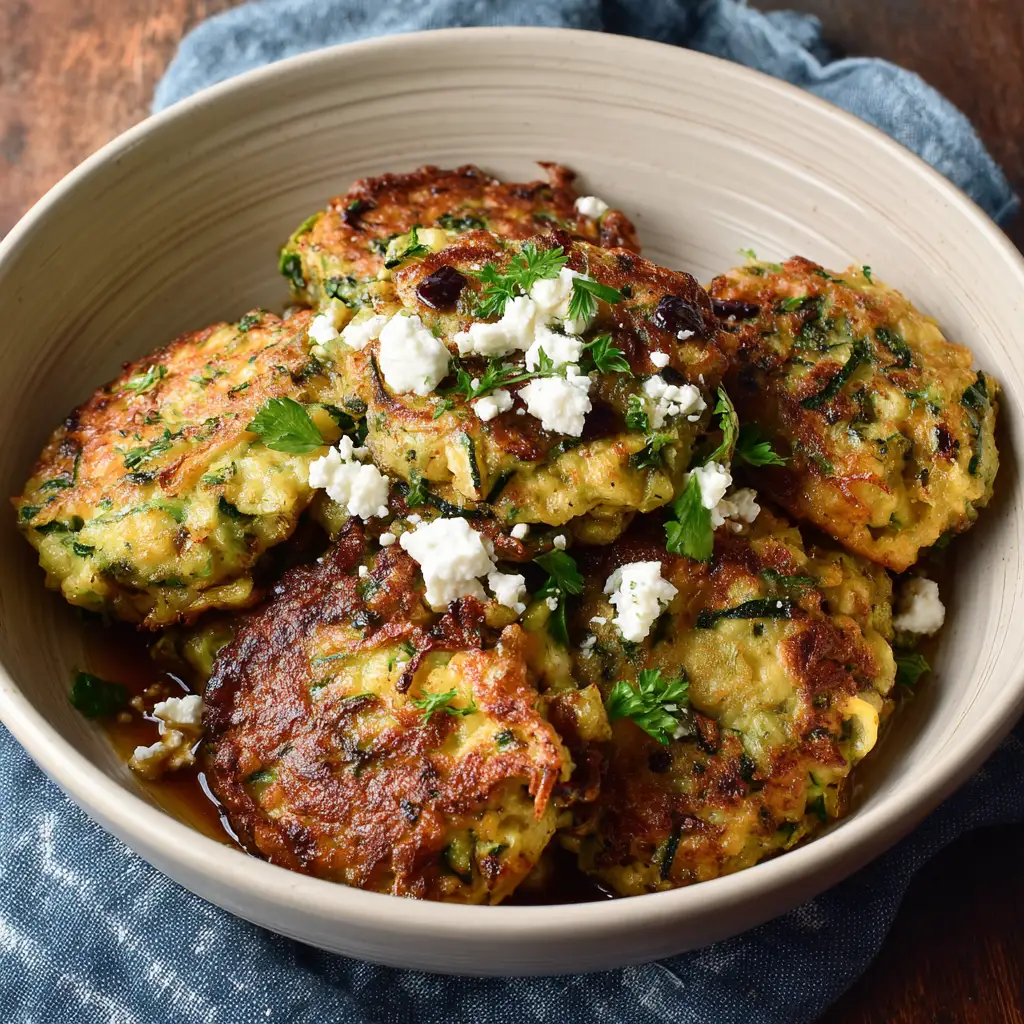
Fry the Fritters: Heat a thin layer of olive oil in a large non-stick skillet over medium heat. Drop rounded tablespoons of the mixture into the pan, flattening them slightly with a spatula. Fry for 3–4 minutes per side until deeply golden brown and crisp. Transfer to a wire rack to maintain crunch.
-
Assemble the Bowls: Divide your chosen grain among four bowls. Top each bowl with 3–4 warm zucchini fritters.
-
Add Fresh Elements: Arrange the tomatoes, cucumbers, red onion, and olives around the fritters.
-
Final Touches: Add a generous dollop of tzatziki to each bowl. Drizzle with extra virgin olive oil and serve with a fresh lemon wedge to brighten the flavors.
Mastering the Texture: The Secret to Crispy Kolokithokeftedes
The difference between a soggy vegetable patty and a world-class Greek fritter lies entirely in moisture management. Zucchini is composed of approximately 95% water. If that moisture isn’t aggressively removed before cooking, it will turn to steam in the pan, resulting in a limp, mushy texture. The salting process is essential because it breaks down the cellular structure of the vegetable, allowing the water to escape.
Beyond the squeeze, the choice of fat and temperature is paramount. While some recipes suggest butter or neutral oils, authentic Greek fritters demand high-quality olive oil. Olive oil provides a fruity depth that complements the feta and herbs, while its smoke point is perfectly suited for the medium-heat pan-frying required to cook the interior without burning the exterior.
Furthermore, the addition of baking powder is a modern trick that adds a slight lift to the batter. This creates tiny air pockets within the fritter, allowing the heat to penetrate more evenly and resulting in a lighter, fluffier internal crumb. When these techniques are combined, the fritter achieves a “shatter-crisp” shell that holds up beautifully even when nestled against the moist vegetables and sauces of a grain bowl.
Building Your Bowl: From Ancient Grains to Fresh Accoutrements
A truly exceptional Greek Zucchini Feta Fritters Bowl is a study in contrast. While the fritters provide the warm, savory base, the surrounding components must offer brightness and acidity to cleanse the palate. Selecting the right grain is the first step in building a sturdy foundation. Quinoa is a popular choice for its high protein content and nutty flavor, but farro offers a chewy, satisfying texture that mimics the rustic feel of traditional Greek cooking. For a lighter, lower-carb version, cauliflower rice or a simple bed of chopped Romaine lettuce works equally well.
The “Greek Salad” components—tomatoes, cucumbers, and red onions—are non-negotiable. However, the quality of these ingredients determines the success of the dish. Opt for vine-ripened cherry tomatoes for their concentrated sweetness and English cucumbers for their thin skins and lack of bitter seeds.
To elevate the bowl further, consider the “extras.” Pickled red onions can provide a sharper acidic punch than raw ones. A sprinkle of dried oregano over the vegetables adds an earthy, floral aroma that ties the entire Mediterranean theme together. The tzatziki acts as the glue for the dish; its cool, garlicky yogurt base tempers the saltiness of the feta and the richness of the fried fritters, ensuring every bite is balanced and refreshing.
A Balanced Powerhouse: Health Benefits and Modern Meal Prep
One of the reasons the Greek Zucchini Feta Fritters Bowl has gained such traction in wellness circles is its impressive nutritional profile. Zucchini is a low-calorie vegetable rich in Vitamin A and antioxidants like lutein and zeaxanthin, which support eye health. By incorporating eggs and feta, the fritters provide a solid dose of vegetarian protein and calcium, while the inclusion of whole grains ensures a high-fiber meal that promotes sustained energy levels and digestive health.
This recipe is also a dream for those who practice weekly meal prepping. While fried foods are often best enjoyed fresh, these fritters are remarkably resilient. They can be stored in an airtight container for up to four days and reheated in an air fryer or toaster oven to regain their signature crunch.
To maximize efficiency, you can prep the vegetable components and the tzatziki ahead of time. Keep the “wet” ingredients (like tomatoes and cucumbers) in separate containers from the “dry” grains to prevent the bowl from becoming soggy. When you’re ready to eat, simply reheat the fritters and assemble. This modular approach to eating allows for a gourmet, restaurant-quality lunch in the middle of a busy workday, proving that healthy eating can be both delicious and convenient.
Creative Variations and Serving Inspiration
While the classic zucchini and feta combination is timeless, the “bowl” concept invites endless customization to suit various dietary needs and flavor preferences. For those seeking a vegan alternative, the eggs can be replaced with a “flax egg” (ground flaxseed mixed with water), and the feta can be swapped for a high-quality almond-based vegan cheese. The flour can easily be substituted with chickpea flour, which not only makes the dish gluten-free but also adds an extra layer of protein and a slightly nuttier flavor profile.
If you want to turn this bowl into a high-protein feast for athletes, adding grilled chicken souvlaki or roasted chickpeas provides a hearty boost without overshadowing the fritters. For a summer twist, consider adding seasonal fruits like peaches or pomegranate arils, which offer a surprising sweetness that plays beautifully against the salty feta.
The way you serve the bowl can also change the experience. For a casual family dinner, serve the components “deconstructed” on a large platter, allowing everyone to build their own bowl. For a formal luncheon, use wide, shallow pasta bowls to showcase the vibrant colors of the Mediterranean. Regardless of how you choose to customize it, the Greek Zucchini Feta Fritters Bowl remains a testament to the idea that simple, fresh ingredients, when prepared with care and tradition, can create a meal that is truly extraordinary.