
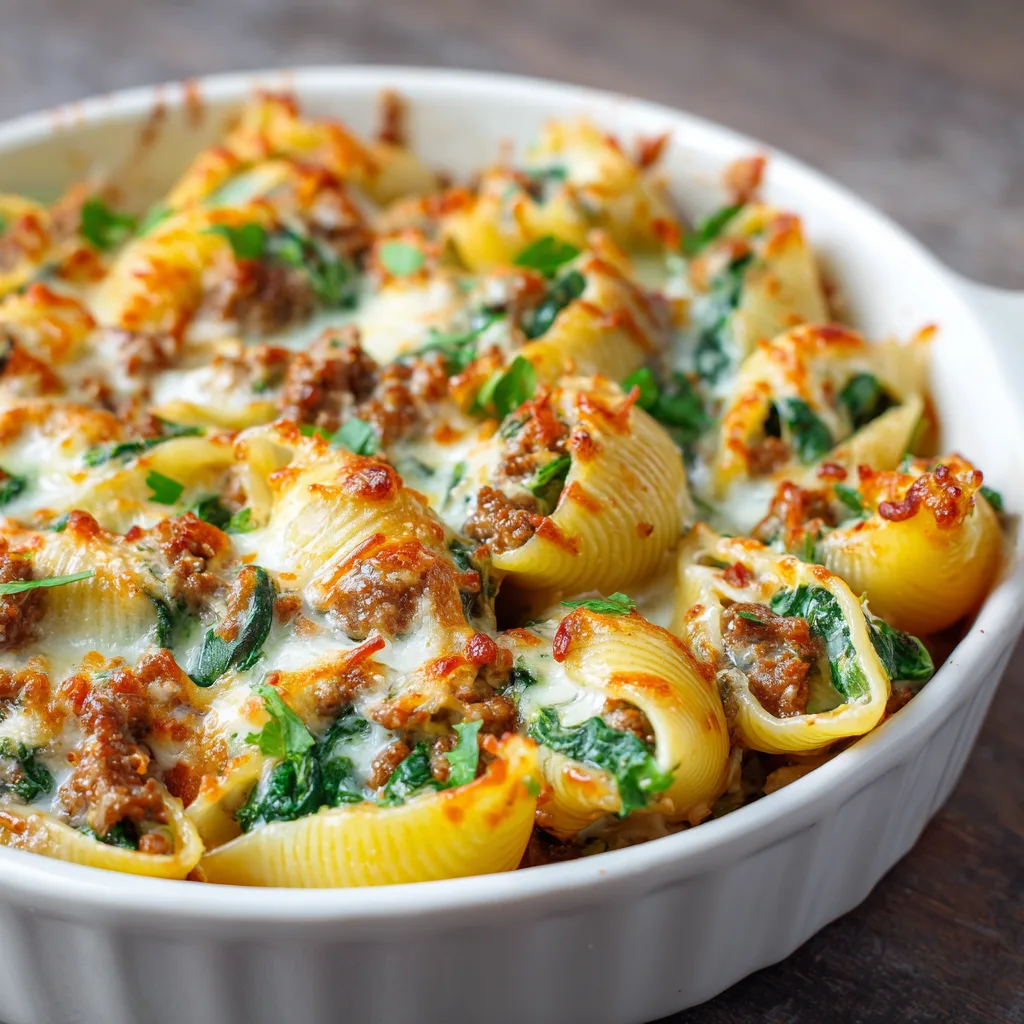
Few dishes capture the heart of Italian-American comfort food quite like stuffed pasta shells. They are a labor of love that delivers immense satisfaction, transforming simple ingredients into a rich, decadent casserole perfect for holidays, Sunday dinners, or meal prepping for busy weeknights. This recipe elevates the classic ricotta-spinach filling by seamlessly incorporating savory ground beef into a velvety-smooth, cheesy blend, nestled in jumbo shells and baked in a blanket of bright marinara. The result is a deeply flavored dish where every bite offers perfectly cooked pasta, richly seasoned meat, and a burst of creamy, herbaceous cheese.
Ingredients
| Component | Quantity | Notes |
| For the Pasta | ||
| Jumbo Pasta Shells (Conchiglioni) | 1 box (12 oz) | About 24-30 shells; cook a few extra in case of breakage. |
| Salt | To taste | For boiling water. |
| For the Meat Sauce | ||
| Ground Beef (85/15 or 90/10) | 1 pound | Lean beef is preferred to minimize grease, or drain well. |
| Yellow Onion | ½ cup, finely diced | |
| Garlic | 3 cloves, minced | |
| Olive Oil | 1 tablespoon | Optional, if using lean ground beef. |
| Marinara Sauce | 3 cups (approx. 24 oz jar) | Use good quality store-bought or homemade sauce. |
| Italian Seasoning | 1 teaspoon | |
| Salt and Black Pepper | To taste | |
| For the Creamy Spinach Filling | ||
| Whole Milk Ricotta Cheese | 15 ounces (about 1 ¾ cups) | Use whole milk for maximum creaminess. |
| Frozen Chopped Spinach | 10 ounces, thawed | Crucial: Thaw and squeeze completely dry. |
| Parmesan Cheese | ½ cup, grated | Freshly grated is highly recommended. |
| Mozzarella Cheese | 1 cup, shredded | Part of the main topping. |
| Large Egg | 1 | Acts as a binder. |
| Dried Oregano | 1 teaspoon | |
| Ground Nutmeg | ¼ teaspoon | Optional, but enhances the ricotta flavor. |
| Salt and Black Pepper | To taste | |
| For the Topping | ||
| Mozzarella Cheese | 1 ½ cups, shredded | |
| Parmesan Cheese | ¼ cup, grated | For final sprinkling. |
| Fresh Parsley or Basil | For garnish | Chopped, for serving. |
Step-by-Step Instructions
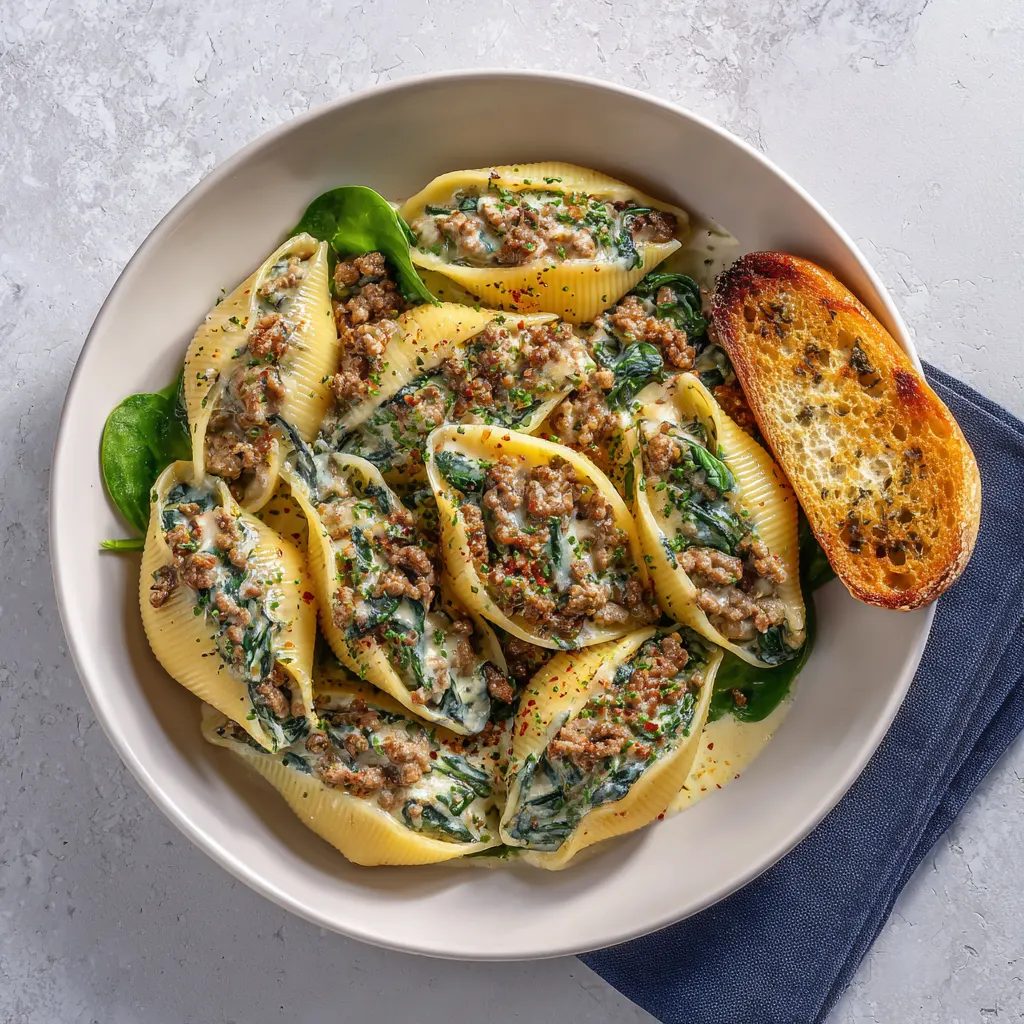
1. Prepare the Pasta and Preheat:
Preheat your oven to 375°F (190°C). Cook the jumbo pasta shells in a large pot of heavily salted, boiling water. Cook until just al dente, or 2-3 minutes shy of the package directions. They will finish cooking in the oven. Drain the shells and rinse immediately with cold water to stop the cooking process and prevent sticking. Set aside.
2. Make the Meat Sauce Base:
In a large skillet, brown the ground beef over medium heat, breaking it up into small pieces. If using higher-fat beef, drain the excess grease. Add the diced onion and sauté until softened, about 3-5 minutes. Stir in the minced garlic and Italian seasoning and cook until fragrant, about 1 minute. Stir in the marinara sauce, season with salt and pepper, and bring to a gentle simmer. Remove from heat and set aside.
3. Prepare the Creamy Filling:
In a large mixing bowl, combine the ricotta cheese, the completely squeezed and drained spinach, ½ cup of grated Parmesan cheese, 1 cup of shredded mozzarella, the large egg, oregano, nutmeg (if using), salt, and pepper. Mix until all ingredients are thoroughly combined and the texture is uniform.
4. Assemble the Casserole:
Spread about 1 ½ cups of the prepared meat sauce evenly over the bottom of a 9×13 inch baking dish (or equivalent oven-safe casserole dish).
Carefully take each cooled pasta shell and fill it with a generous scoop of the creamy spinach-ricotta mixture—about 2 heaping tablespoons per shell. Arrange the stuffed shells in a single layer over the sauce in the baking dish.
Pour the remaining meat sauce evenly over the top of the stuffed shells.
5. Bake to Perfection:
Sprinkle the top of the casserole generously with the remaining 1 ½ cups of shredded mozzarella and the final ¼ cup of Parmesan cheese. Cover the baking dish tightly with aluminum foil.
Bake for 30 minutes. Remove the foil and bake uncovered for an additional 10-15 minutes, or until the sauce is bubbly, the internal filling is heated through, and the cheese is melted and lightly golden brown.
Let the dish rest for 5–10 minutes before serving. Garnish with fresh chopped parsley or basil.
The Art of the Filling: Achieving Maximum Creaminess
The secret to truly remarkable stuffed shells lies in a filling that is both rich in flavor and flawless in texture. Many home cooks overlook two crucial preparation steps that guarantee the filling maintains its luxurious creaminess and doesn’t become watery or grainy during baking.
The Ricotta and Spinach Dynamic
The most common mistake when making a spinach-ricotta filling is failing to properly remove moisture from the spinach. Even frozen chopped spinach, once thawed, holds a significant amount of water. If this water is mixed into the ricotta, it will release steam in the oven, resulting in a soggy, runny filling and a watery sauce base.
Technique for Dry Spinach:
-
Thaw: Thaw a 10-ounce package of frozen chopped spinach completely.
-
Squeeze: Place the thawed spinach into a fine-mesh strainer and press firmly with a spoon. For best results, transfer the spinach to a clean kitchen towel or several layers of cheesecloth. Twist and squeeze the fabric over the sink until no more liquid comes out. You should be left with a compact ball of almost dry spinach.
Once the spinach is dry, the quality of the ricotta takes center stage. Using whole milk ricotta cheese is essential for a truly creamy texture. Part-skim ricotta has a higher water content and can become slightly grainy when baked. The small addition of an egg acts as the necessary binding agent, preventing the cheese mixture from completely collapsing as it bakes and giving it a lighter, more cohesive body.
Integrating the Beef for Richness
While many classic recipes reserve the meat for the surrounding sauce, integrating a portion of the seasoned ground beef directly into the filling adds depth and ensures a savory element in every bite.
Start by preparing your meat mixture thoroughly:
-
Drain Grease: Regardless of whether you mix the beef into the sauce or the filling, browning the beef and draining off excess fat is non-negotiable. This prevents a greasy final casserole and ensures the seasonings—onion, garlic, and Italian herbs—can shine through without being masked by oil.
-
Cool Slightly: If you plan to mix a portion of the beef into the ricotta filling (as is often done for enhanced flavor), allow the beef to cool for a few minutes before combining it with the egg and cheese. Adding hot meat can start to cook the egg prematurely, which can lead to a slightly curdled texture in the finished filling.
Perfecting the Layers: Sauce, Shells, and Assembly
The success of a baked pasta dish relies on careful preparation of each structural component, particularly the pasta itself. Improperly cooked shells can ruin the entire texture, while inadequate sauce coverage can lead to dry edges.
The Al Dente Rule for Baked Pasta
Jumbo pasta shells are meant to be a vessel for the filling, and they must maintain their structure through the stuffing and baking process.
-
Undercook: Always boil the shells until they are al dente, meaning they have a firm bite, or, ideally, slightly under al dente. Look for a cook time that is 2 to 3 minutes less than the package directions.
-
Rinse and Cool: As soon as the shells are drained, they must be rinsed in cold water. This stops the cooking process immediately, washes off excess surface starch (preventing them from sticking together), and cools them down, making them much easier and safer to handle for stuffing.
-
The Insurance Policy: Always boil a few extra shells. Jumbo shells can sometimes tear or break during the cooking or stuffing process, and having spares prevents you from finishing with an incomplete batch.
Mastering the Casserole Environment
The distribution of the sauce is key to moisture and flavor absorption during the bake. The layering process should create a moist, steamy environment while the shells are covered, followed by a crisp, cheesy finish once uncovered.
-
The Base Layer: A generous layer of sauce (at least one-third to one-half of the total sauce mixture) must cover the bottom of the baking dish. This prevents the shells from sticking to the pan and provides the necessary moisture for the pasta to steam and finish cooking.
-
The Cover: Once the shells are placed, the remaining sauce should be spooned over the top. This ensures every piece of pasta is exposed to moisture.
-
Topping and Protection: The final layer of mozzarella and Parmesan should be distributed evenly. Baking the dish covered for the initial 30 minutes traps steam, keeping the pasta and filling moist and ensuring the internal temperature is reached before the cheese starts to brown. Removing the foil for the last 10-15 minutes allows the cheese to melt fully, bubble, and achieve that perfect, golden-brown crust.
Flavor Variations and Customizations
One of the greatest attributes of this ground beef creamy spinach shells recipe is its adaptability. It serves as an excellent foundational recipe that can be customized to suit dietary needs, flavor preferences, or simply what you have available in the pantry.
Protein Swaps for Lightness or Spice
While ground beef provides a hearty, traditional flavor, switching the protein can completely change the profile of the dish:
-
Ground Turkey or Chicken: For a lighter, lower-fat option, substitute lean ground turkey or chicken. Be sure to season it aggressively, as poultry can be milder in flavor than beef. A dash of smoked paprika or poultry seasoning can compensate.
-
Italian Sausage: For a spicy and more robust flavor, substitute sweet or hot Italian sausage for half of the ground beef. The fennel and spices in the sausage blend beautifully with the tomato and creamy cheese.
-
Vegetarian: For a meatless option, replace the ground beef with sautéed mushrooms (cremini or portobello), cooked lentils, or plant-based ground meat substitute.
Cheese and Herb Enhancements
The cheese blend defines the “creamy” aspect of this dish. Don’t limit yourself to just ricotta and mozzarella:
-
Extra Creaminess: Stir in 4 ounces of softened cream cheese or mascarpone into the ricotta mixture for an unbelievably rich filling.
-
Flavor Depth: Swap out some of the mozzarella for Fontina, Provolone, or a high-quality Italian five-cheese blend. A pinch of crushed red pepper flakes in the meat sauce adds a subtle warmth and balances the richness of the cheese.
-
Herbs and Spices: While Italian seasoning is standard, adding a bay leaf to the simmering meat sauce or a bit of finely chopped fresh basil and oregano into the filling mixture elevates the dish with garden-fresh flavor.
The “Unstuffed” Skillet Option
If time is short and the tedious process of stuffing shells is unappealing, the ingredients can be adapted into a delicious one-pan skillet meal, capturing all the same flavors with minimal fuss:
-
Preparation: Cook the medium-sized pasta shells.
-
Sauce Adjustment: Follow the steps for browning the ground beef, onion, and garlic. Instead of using only marinara, whisk in a tablespoon of flour to the cooked meat, then add beef broth and tomato sauce/diced tomatoes. Simmer until thickened.
-
The Cream Element: Stir in a half cup of heavy cream or half-and-half at the end, along with the wilted spinach and Parmesan cheese, to create a true creamy sauce.
-
Assembly: Toss the cooked medium shells directly into the skillet with the sauce until fully coated and serve immediately, topped with fresh basil. This variation is significantly faster, often ready in under 40 minutes.
Prep Ahead and Storage: A Make-Ahead Meal
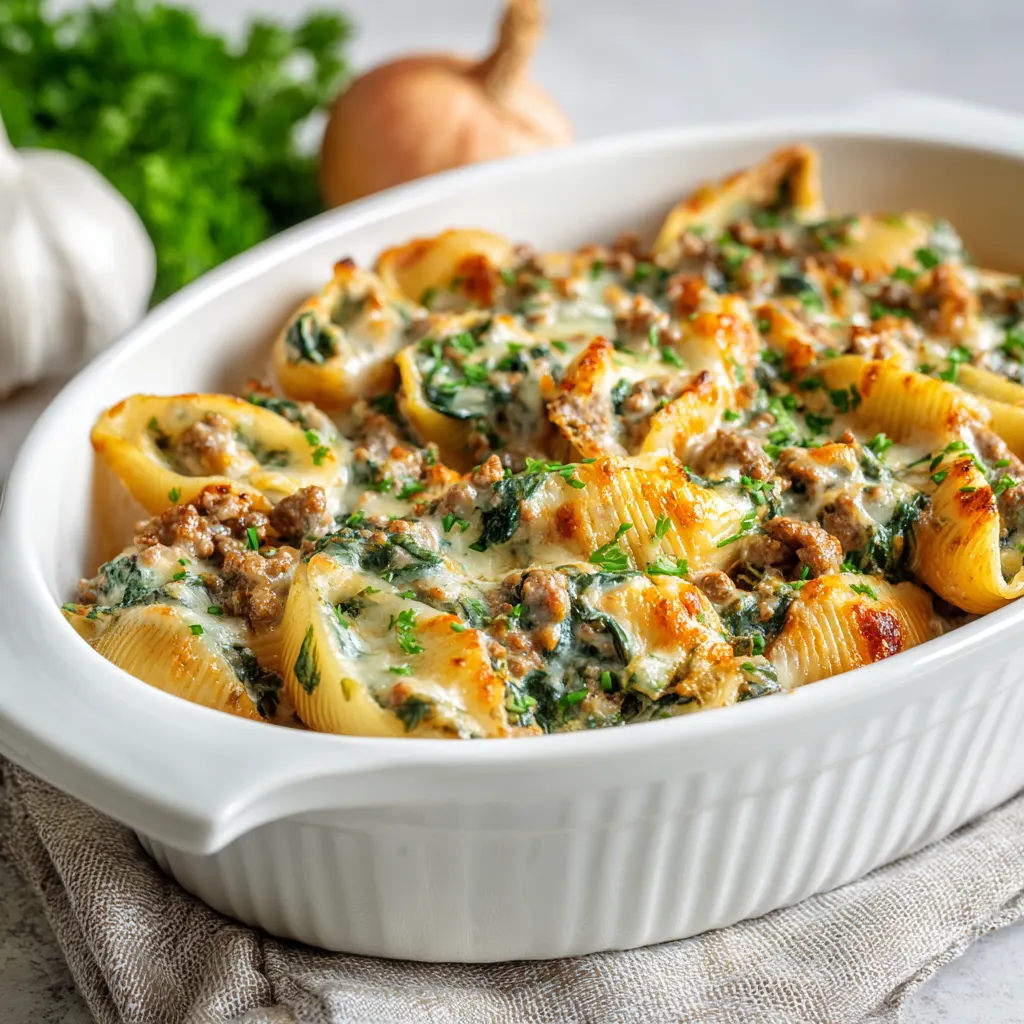
One of the great advantages of a baked pasta casserole is its flexibility as a make-ahead meal. Whether you need a dish ready for entertaining or easy freezer-friendly dinners, this recipe holds up exceptionally well.
Preparing in Advance
You can prepare and assemble the entire casserole up to 24 hours before baking, making it ideal for busy schedules.
-
Assembly: Follow all steps—cooking the shells, preparing the filling and sauce, and assembling the layers in the baking dish.
-
Storage: Cover the baking dish tightly with two layers of plastic wrap followed by aluminum foil. Refrigerate immediately.
-
Baking from Cold: When ready to bake, remove the plastic wrap and replace the foil. Add an additional 10–15 minutes to the covered bake time since the dish is starting cold. The new covered baking time would be approximately 40–45 minutes, followed by the uncovered time to brown the cheese.
Freezing for Long-Term Storage
Stuffed shells freeze beautifully, making large-batch cooking highly efficient.
-
Pre-Baked Freezing (Recommended): Assemble the entire casserole, but do not bake it and do not add the final topping of mozzarella cheese. Cover the dish tightly with plastic wrap and foil. Label and date it. Freeze for up to 3 months.
-
Baking from Frozen: Transfer the frozen casserole directly to a cold oven, then set the temperature to 375°F (190°C). Bake, still covered, for 1 hour to 75 minutes, or until the center is piping hot. Remove the foil, top with mozzarella and Parmesan, and bake uncovered for 15–20 minutes until melted and bubbly.
-
Post-Baked Freezing: You can also freeze leftovers in smaller, individual containers after they have cooled completely.
Reheating and Serving Suggestions
Leftovers store well in an airtight container in the refrigerator for 3 to 4 days.
-
Reheating: To prevent drying out, reheat individual portions in the microwave or a small oven dish covered with foil. If reheating the entire dish, add a splash of water or extra marinara sauce around the edges of the pan before covering and warming in the oven.
Pairing the Meal:
This dish is hearty and rich, so it pairs best with simple, fresh accompaniments:
-
Green Salad: A light, crisp salad with a bright vinaigrette provides a necessary contrast to the richness of the beef and cheese.
-
Crusty Bread: Essential for sopping up the remaining sauce on the plate. Garlic bread or breadsticks are perfect additions.
-
Steamed Vegetables: Simple steamed or lightly roasted green beans, asparagus, or broccoli provide a healthy green side without competing with the main dish’s flavor profile.