
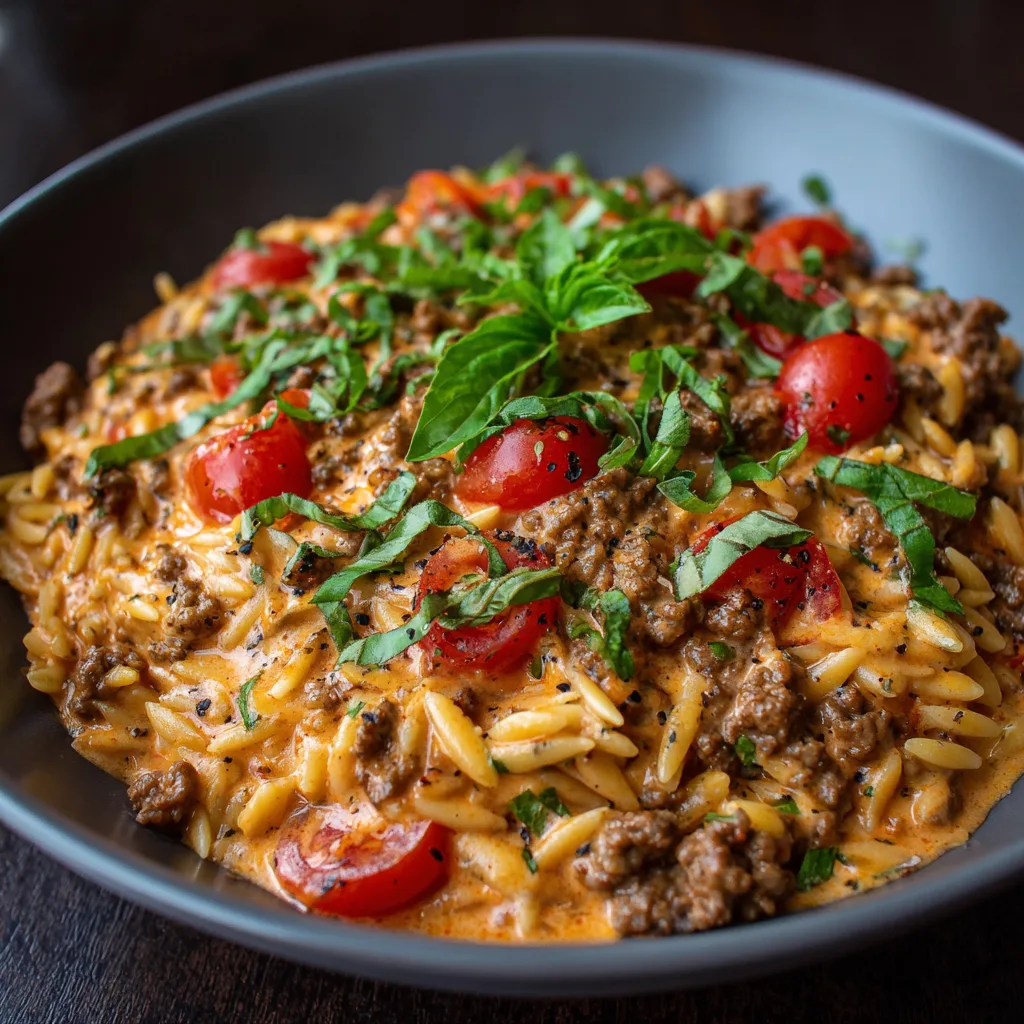
The secret to a truly great weeknight dinner lies in simplicity, speed, and flavor that feels anything but rushed. This Ground Beef Creamy Tomato Basil Orzo delivers on all fronts, combining the hearty satisfaction of a meat sauce with the luxurious, velvety texture of a fine Italian risotto, all achieved in a single pot. By cooking the rice-shaped orzo pasta directly in the tomato-broth mixture, it releases its starch, naturally thickening the sauce to a rich, luscious consistency, which is then perfected by a swirl of heavy cream and fresh basil. It is a comforting, robust, and aromatic meal that consistently earns its place in the rotation of family favorites.
Ingredients
| Component | Quantity | Notes |
| Aromatics & Meat | ||
| Olive Oil | 1 Tbsp | |
| Lean Ground Beef (90/10 recommended) | 1 lb | |
| Yellow Onion, finely chopped | 1 medium | |
| Garlic, minced | 3-4 cloves | |
| Spices & Tomato Base | ||
| Tomato Paste | 2 Tbsp | |
| Dried Italian Seasoning | 1 tsp | Use a blend of dried basil, oregano, and thyme. |
| Crushed Red Pepper Flakes (optional) | 1/2 tsp | |
| Kosher Salt & Black Pepper | To taste | About 1 tsp salt and 1/2 tsp pepper initially. |
| Canned Tomato Sauce (or crushed tomatoes) | 1 (15 oz) can | |
| Liquid & Pasta | ||
| Beef Broth (low sodium) | 3 cups | Or chicken stock/broth. |
| Uncooked Orzo Pasta (risoni) | 1 cup | |
| Creamy Finish & Garnish | ||
| Heavy Cream | 1/2 cup | Or half-and-half. |
| Freshly Grated Parmesan Cheese | 1/2 cup | Plus more for serving. |
| Fresh Basil Leaves, chopped | 1/4 cup | Plus more for garnish. |
Step-by-Step Instructions
-
Brown the Beef: In a large Dutch oven or deep, heavy-bottomed skillet, heat the olive oil over medium-high heat. Add the ground beef and cook, breaking it up with a wooden spoon, until it is fully browned. Drain off any excess grease, especially if using a higher-fat blend, then return the pot to the heat.
-
Sauté Aromatics: Add the chopped onion and cook until softened, about 3 to 4 minutes. Stir in the minced garlic, tomato paste, Italian seasoning, and red pepper flakes (if using). Cook for 1 minute, stirring constantly, until the herbs are fragrant and the tomato paste has darkened slightly, concentrating its flavor.
-
Simmer the Sauce: Pour in the tomato sauce and beef broth. Season generously with salt and black pepper. Bring the mixture to a rapid simmer, stirring well to combine all ingredients.
-
Add and Cook the Orzo: Once simmering, stir in the orzo pasta. Reduce the heat to low to maintain a gentle simmer. Cook, uncovered, for about 10–12 minutes, or until the orzo is al dente and most of the liquid has been absorbed. You must stir frequently, especially towards the end of the cooking time, to prevent the starchy orzo from sticking to the bottom of the pot.
-
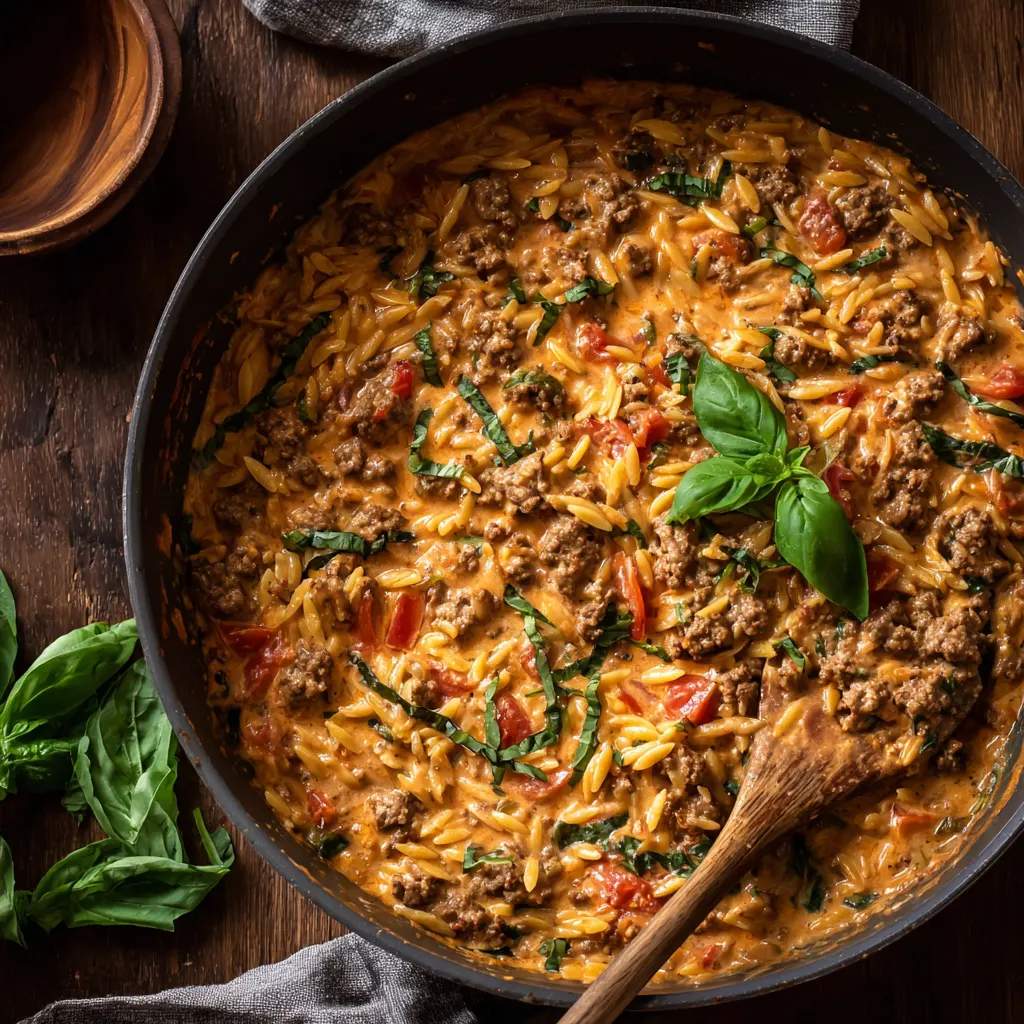
Create the Creaminess: Remove the pot from the heat. Stir in the heavy cream and the Parmesan cheese until they are melted and fully incorporated. The sauce should be thick, creamy, and resemble a rich risotto.
-
Finish and Serve: Stir in the fresh basil leaves. Taste the dish and adjust seasoning with additional salt and pepper if needed. Serve immediately, topped with extra grated Parmesan cheese and a few torn leaves of fresh basil for color and aroma.
The Magic of the One-Pot Method: Achieving Risotto-Level Creaminess
The hallmark of this ground beef orzo dish is its incredible creaminess, which is achieved through a technique derived from classic Italian risotto—all without the rigorous stirring effort. The success of this recipe hinges on mastering the one-pot method, transforming simple ingredients into a complex, comforting sauce.
The Role of Orzo Starch
Orzo, though shaped like rice, is pasta (made from semolina). Like other pasta, it contains starch, which is released when it cooks in liquid. Unlike traditional pasta dishes where orzo is boiled separately, here it cooks directly in the seasoned beef broth and tomato sauce. This allows the released starch molecules to bind with the fats and liquids in the sauce, creating a thick, natural emulsion. The result is a sauce that is not just wet, but truly velvety and cohesive.
Heat Management and Stirring
Crucial to preventing a gummy texture or burnt bottom is proper heat management. After adding the orzo, the mixture should maintain a gentle simmer, not a vigorous boil. A high boil will evaporate the liquid too quickly, leaving the pasta undercooked and potentially scorching the starches on the bottom of the pot. Stirring is mandatory, particularly after the 8-minute mark. Frequent, gentle stirring not only keeps the orzo from sticking but actively encourages the release of starch, ensuring maximum creaminess. If the orzo is cooked but the sauce is too thick, simply add a splash more broth or cream; if it’s too loose, continue to simmer gently for a couple of minutes, uncovered, until the desired consistency is reached.
The Final Emulsion
While the starch provides the body, the addition of heavy cream (or half-and-half) and Parmesan cheese at the very end provides the characteristic rich mouthfeel and beautiful color. By removing the pot from the heat before adding the cream and cheese, you prevent the dairy from curdling and allow the heat to gently melt and disperse the fats, guaranteeing a silky smooth finish. This technique seals the dish with a final layer of richness that elevates it beyond a simple pasta and meat sauce.
Optimizing Flavor: The Components of a Rich, Savory Base
While the one-pot method ensures texture, the foundation of this dish’s deep flavor relies on treating each core ingredient—the beef, the aromatics, and the tomato base—with respect. Achieving an “optimized” taste involves intentional steps that build complexity.
The Maillard Reaction in Beef Browning
The depth of flavor starts with the ground beef. Using a lean blend (85/15 or 90/10) is recommended to minimize excess grease while still providing enough fat for flavor. The key step is browning. When added to a hot pan, the meat should be allowed to sit for a few minutes undisturbed before breaking it up. This contact time with the heat is essential for the Maillard reaction—the chemical process that turns simple amino acids and sugars into hundreds of rich flavor compounds, creating that savory, deeply caramelized crust. Skipping this step results in boiled, gray-looking meat and a less impactful sauce.
Layering Aromatics and Toasting Spices
After the beef is browned, the flavor base is built with chopped onion and minced garlic. Adding tomato paste and the dried Italian seasoning before the liquid is crucial. This step, known as toasting the spices, activates the essential oils in the dried herbs, greatly intensifying their aroma and flavor. Cooking the tomato paste briefly (about 60 seconds) helps to caramelize its sugars and deepen its inherent tomato flavor, removing any metallic taste from the can.
The Herb Factor: Basil’s Two Stages
The use of basil is essential to the dish’s name and signature flavor. To maximize its impact, it is used in two stages:
-
Dried Herbs (Base): Included in the Italian seasoning mix, the dried basil provides a steady, savory herbaceous background flavor that infuses the sauce while simmering.
-
Fresh Basil (Finish): Chopped fresh basil is stirred in after the pot is off the heat. Fresh herbs are delicate; adding them late preserves their bright, peppery, slightly sweet flavor and vibrant green color, providing a necessary counterpoint to the rich, savory sauce.
Culinary Flexibility: Variations and Dietary Adaptations
Part of the appeal of Creamy Tomato Basil Orzo is its adaptability. Whether you are accommodating a dietary restriction or simply looking to experiment with a new flavor profile, the structure of this one-pot meal is highly forgiving.
Protein and Vegetable Swaps
-
Alternative Proteins: Ground beef can easily be swapped with ground turkey or chicken for a lighter meal, or Italian sausage (sweet or hot) for a spicier, more fennel-forward sauce. If using very lean ground turkey, consider adding an extra tablespoon of olive oil or butter to ensure the aromatics are properly sautéed.
-
Adding Greens: Fresh baby spinach or chopped kale can be stirred into the pot during the last few minutes of cooking. The residual heat will wilt the greens perfectly, adding nutrients and color without altering the cooking time significantly.
-
Hearty Vegetable Additions: Sliced mushrooms, diced zucchini, or chopped bell peppers can be added along with the onion and sautéed until tender before the tomato paste is added.
Beyond Orzo: Pasta and Grain Substitutions
While orzo is key to the texture, other small pasta shapes (like ditalini, small shells, or elbow macaroni) work well, though they may require slight adjustments to the cooking time or liquid volume. For those seeking a gluten-free option, this recipe can be successfully converted:
-
Gluten-Free Orzo: Many brands offer gluten-free orzo made from rice or corn, which can be used as a direct 1:1 substitute.
-
Arborio or Short-Grain Rice: To make a true “orzotto” (similar to a creamy risotto), use Arborio rice. This will require closer attention and more frequent stirring than the pasta version, and you may need to increase the liquid (broth) by 1/2 cup to ensure the rice is cooked through.
Dairy-Free Modifications
For those avoiding dairy, the creaminess can still be achieved effectively:
-
Cream Substitute: Replace heavy cream with full-fat coconut milk (for a subtle sweetness) or a good-quality dairy-free unsweetened creamer.
-
Cheese Substitute: Omit the Parmesan or use a dairy-free grated parmesan replacement. Alternatively, stir in 3 to 4 ounces of dairy-free cream cheese at the end for an extra-thick, tangy creaminess.
Serving Suggestions, Pairing, and Smart Storage
Once the Ground Beef Creamy Tomato Basil Orzo is finished, presentation and strategic pairings can complete the meal. Knowing how to properly store and reheat leftovers also maximizes the convenience of this one-pot wonder.
The Perfect Plate and Side Companions
This is a rich, hearty dish, and it pairs best with sides that offer lightness, acidity, and texture contrast.
-
Acidic Salad: A simple green salad dressed with a bright lemon vinaigrette (olive oil, lemon juice, salt, pepper) is the perfect accompaniment. The acidity cuts through the richness of the cream and beef.
-
Crusty Bread: Serve alongside a loaf of crusty French or Italian bread. This is perfect for soaking up the luxurious, creamy sauce left at the bottom of the bowl.
-
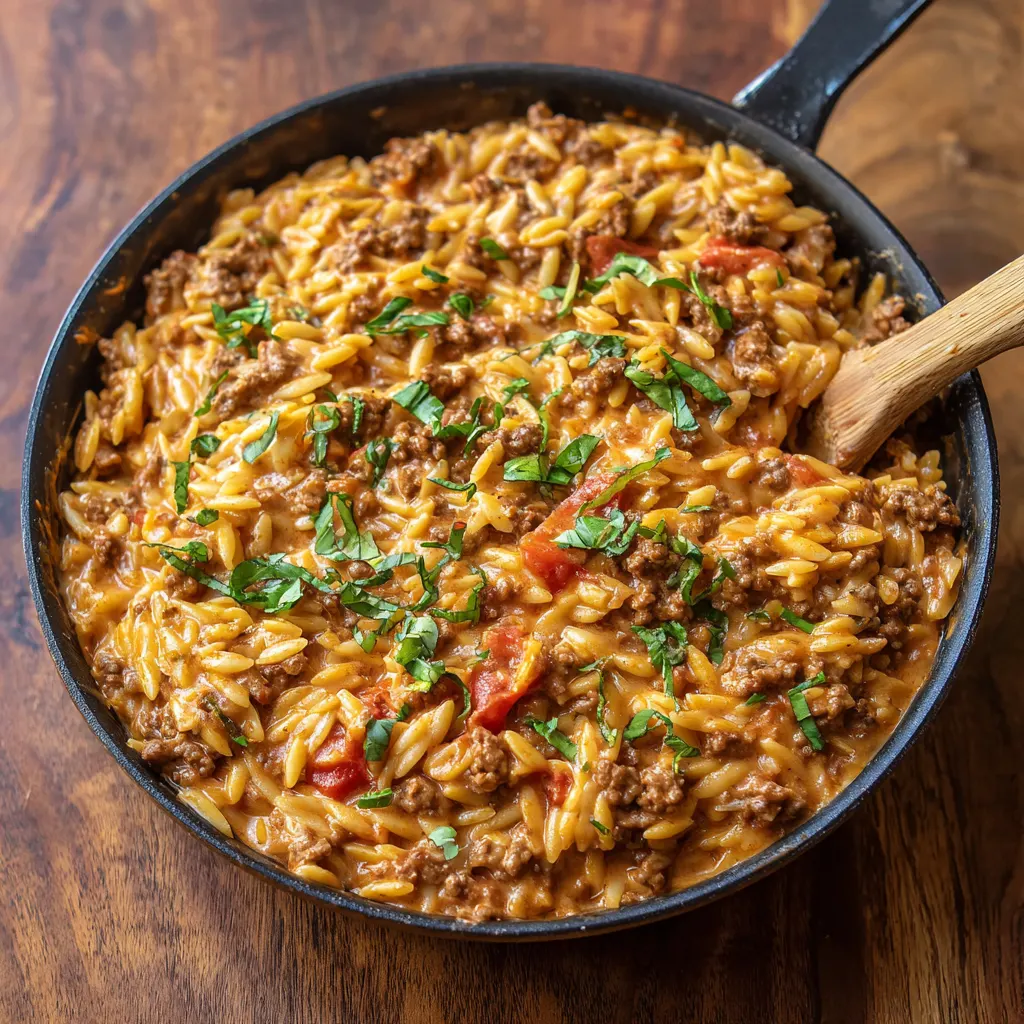
Garnish: Never skip the final garnish. A light dusting of finely grated Parmesan (freshly grated melts better and tastes superior) and a scattering of fresh basil or parsley elevates the visual appeal and adds a final burst of fresh flavor.
Pairing with Beverages
For an enhanced dining experience, consider beverage pairings:
-
Wine: The combination of rich beef, creamy dairy, and acidic tomato calls for a versatile wine. Medium-bodied Italian reds, like a Chianti or Sangiovese, are classic choices that complement the tomato and herb notes. Alternatively, a crisp, dry Rosé or a unoaked, robust white like a Pinot Grigio can provide a refreshing contrast to the dish’s heartiness.
-
Non-Alcoholic: Sparkling water with a slice of lemon or a light, unsweetened iced tea works well to cleanse the palate between bites of the decadent orzo.
Storing and Reheating Leftovers
This dish is excellent for meal prep, but a key consideration for orzo is its tendency to continue absorbing liquid long after cooking.
-
Storage: Store cooled leftovers in an airtight container in the refrigerator for up to 3–4 days.
-
Reheating: When reheating on the stovetop (preferred method) or in the microwave, the dish will likely be very thick, resembling a stiff casserole or “orzotto.” To restore the creamy sauce consistency, stir in a splash of liquid—either beef broth, water, or a tablespoon of heavy cream—during the reheating process until the desired texture is achieved. Avoid freezing the leftovers, as the pasta texture can become soft and mushy upon thawing.