
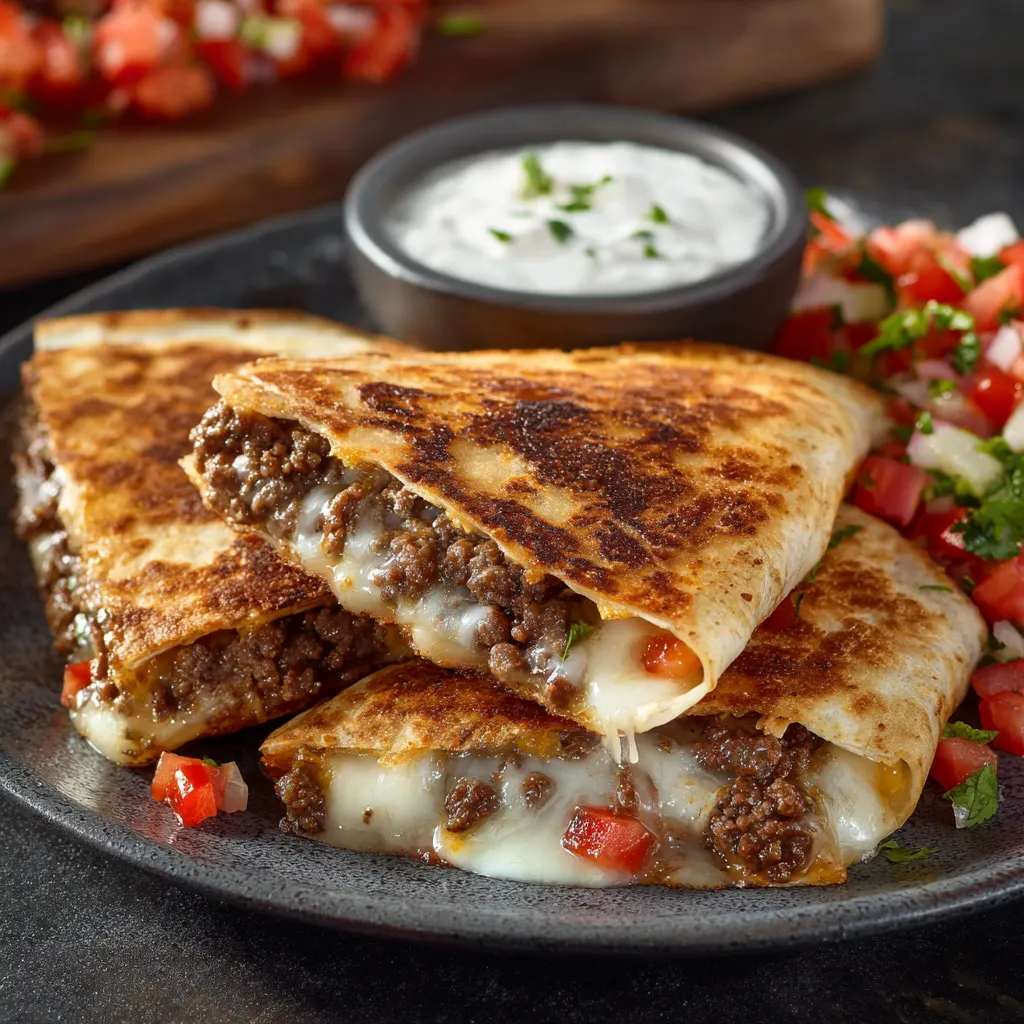
Ground Beef Baja Quesadilla Melt
The Ground Beef Baja Quesadilla Melt is an exceptional culinary fusion—a perfect marriage of hearty American comfort food and the vibrant, sun-drenched flavors of Mexican Pacific coast cuisine. It takes the familiar, satisfying structure of a classic beef quesadilla and elevates it with a distinctive “Baja” zest, typically characterized by fresh lime, robust spices, and a creamy, tangy sauce. This dish is designed for quick weeknight indulgence, delivering a crispy, golden-brown shell giving way to a rich, savory ground beef filling and a river of melted, gooey cheese. It’s a complete meal experience: crunchy texture, savory umami, and a bright, refreshing finish.
Ingredients
For the Baja Ground Beef Filling
-
1 lb (450g) lean ground beef (85% or 90% preferred)
-
1 tbsp olive oil
-
1 small yellow onion, finely diced
-
2 cloves garlic, minced
-
2 tbsp tomato paste
-
1 tbsp chili powder
-
1 tsp ground cumin
-
½ tsp dried oregano
-
½ tsp smoked paprika
-
½ tsp salt (or to taste)
-
¼ tsp black pepper
-
¼ cup water or beef stock
For the Baja Cream Sauce
-
½ cup sour cream or Mexican crema
-
2 tbsp fresh lime juice
-
1 tbsp finely chopped fresh cilantro
-
¼ tsp salt
-
Dash of hot sauce (optional)
For the Melt Assembly
-
8 (8-inch) flour tortillas
-
2 cups shredded Monterey Jack cheese, Colby Jack, or a Mexican blend
-
3 tbsp unsalted butter or a mix of butter and oil, for frying
For Serving (Fresh Toppings)
-
Pico de Gallo or fresh diced tomato and onion
-
Extra fresh cilantro, chopped
-
Lime wedges
Step-by-Step Instructions
1. Prepare the Baja Ground Beef Filling
-
Heat the olive oil in a large skillet over medium-high heat. Add the diced onion and sauté for 3–4 minutes until softened. Add the minced garlic and cook for 1 minute until fragrant.
-
Add the ground beef to the skillet. Cook, breaking it up with a spatula, until it is fully browned and no longer pink.
-
Carefully drain off any excess grease from the pan.
-
Stir in the tomato paste, chili powder, cumin, oregano, smoked paprika, salt, and pepper. Cook, stirring constantly, for 1–2 minutes to toast the spices.
-
Pour in the water or beef stock, scrape up any browned bits from the bottom of the pan, and simmer for 3–4 minutes until the liquid has mostly reduced and the filling is thick and savory. Remove from heat and set aside.
2. Mix the Baja Cream Sauce
-
In a small bowl, combine the sour cream (or crema), fresh lime juice, chopped cilantro, and salt. Add a dash of hot sauce if desired.
-
Stir until thoroughly combined. Taste and adjust seasoning if necessary. Refrigerate until ready to serve.
3. Assemble and Cook the Quesadilla Melts
-
Preheat a separate large, clean skillet or griddle over medium heat.
-
Melt 1 teaspoon of butter (or butter/oil mix) in the pan, ensuring it coats the surface.
-
Place one flour tortilla in the pan. Sprinkle cheese over one half of the tortilla.
-
Spoon about 1/4 cup of the warm beef filling over the cheese layer. Top the beef with a little more cheese. Optional: Add a small spoonful of Pico de Gallo or diced tomato here, but be careful not to overfill.
-
Using a spatula, fold the unfilled half of the tortilla over the filling to create a half-moon shape. Press down gently.
-
Cook for 3–4 minutes per side, or until the tortilla is golden-brown and crispy, and the cheese is fully melted and gooey.
-
Transfer the finished melt to a cutting board. Repeat with the remaining tortillas, adding more butter/oil as needed for each batch.
4. Finish and Serve
-
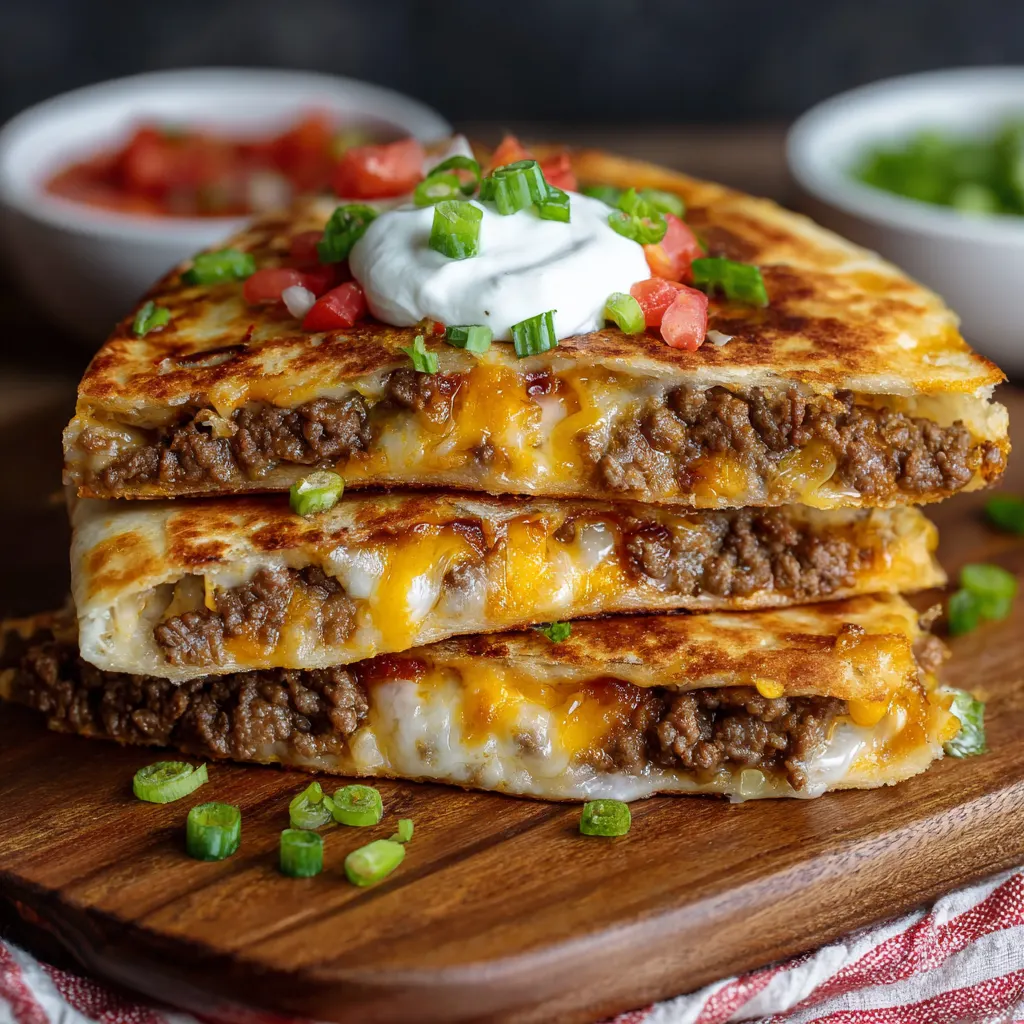
Allow the quesadilla melts to rest for one minute, then slice each into two or three triangular wedges.
-
Serve immediately with a generous dollop of the Baja Cream Sauce on top or on the side for dipping. Garnish with fresh cilantro and lime wedges.
Unpacking the “Baja” Experience: The Flavor Profile
The distinction between a standard ground beef quesadilla and a “Baja” melt lies entirely in the nuanced flavor architecture. Baja California, Mexico, shares a unique border influence with Southern California, resulting in cuisine that is brighter, fresher, and often relies less on heavy sauces and more on citrus, herbs, and mild heat.
The core of the Baja flavor in this recipe is built on two complementary pillars: the savory spice rub and the vibrant fresh elements.
The Spice Blend: Earthy and Aromatic
While basic taco seasoning often focuses solely on chili powder, the Baja spice blend incorporates the rich, earthy depth of cumin and the slightly floral notes of dried oregano. This trio—chili powder for color and warmth, cumin for savory complexity, and oregano for herbaceous lift—forms the foundation of the beef filling. Adding a touch of smoked paprika infuses a subtle, smoky dimension, mimicking the effect of slow cooking or grilling often found in coastal Mexican street food. Crucially, the step of toasting the dry spices in the hot pan with the tomato paste—a technique known as rehogar or blooming—is essential. This process wakes up the flavor compounds in the spices, preventing a dusty mouthfeel and ensuring the beef filling is intensely flavorful, not just salty or hot.
The Bright Contrast: Citrus and Cilantro
True Baja cuisine demands a counterpoint to the richness of the meat and cheese. This is achieved through the signature fresh components:
-
The Baja Cream Sauce: This is the dish’s signature cooling element. By blending sour cream or Mexican crema with generous amounts of fresh lime juice and cilantro, the sauce transforms into a tangy, herbaceous condiment that cuts through the fattiness of the beef and cheese. The acidity of the lime is non-negotiable; it delivers that unmistakable Pacific coastal freshness that defines the “Baja” style.
-
Pico de Gallo: Serving the melt with a topping or side of fresh Pico de Gallo (diced raw tomato, onion, cilantro, and jalapeño) or simply fresh diced tomatoes adds a clean, watery crunch. The fresh texture prevents the final dish from becoming monotonous and provides an instantaneous burst of garden-fresh flavor with every bite. The final squeeze of a lime wedge just before eating is the ultimate finishing touch, providing olfactory aromatics and a final acidic pop.
The Quest for the Perfect Melt: Techniques for Crispy Perfection
The “Melt” in the title is not merely descriptive; it dictates a specific textural goal: a crispy, golden-brown exterior giving way to a molten, stringy interior. Achieving this perfect balance requires attention to three technical details: moisture control, heat regulation, and fat selection.
1. The Critical Art of Moisture Control
The biggest culprit behind a soggy quesadilla is excess moisture. This can come from two sources: the beef filling and the fresh additions.
-
Draining the Beef: Using lean ground beef (85/15 or 90/10) minimizes the fat content. Regardless, after browning, the beef must be drained thoroughly. Residual fat and liquid will seep into the tortilla, turning a crispy crust into a limp, oily failure.
-
Fresh Vegetable Management: If using wet ingredients like Pico de Gallo or salsa inside the melt, they should be used sparingly and placed between layers of cheese. The cheese acts as a barrier, protecting the tortilla from the moisture. For maximum crispness, it is always recommended to serve high-moisture toppings on the side for dipping, rather than folding them into the melt.
2. Mastering Heat and Fat Selection
The texture of the exterior depends entirely on the cooking medium and the heat level.
-
Medium Heat is Mandatory: A common mistake is cooking quesadillas on high heat, which causes the tortillas to burn before the cheese has a chance to fully melt. Medium or even medium-low heat is ideal. This allows the cheese to slowly liquefy and the tortilla to brown evenly, resulting in a deep golden color and a superior crunch.
-
Butter vs. Oil: While oil (like avocado or vegetable oil) provides consistent, clean crispness, butter delivers superior flavor and a richer, more professional golden finish. A combination of butter and oil—using oil for the high smoke point and butter for flavor—is an excellent technique. Use just enough fat to thinly coat the pan, avoiding pooling which can result in a greasy texture.
3. The Cheese Factor: Selecting for Gooeyness
For a perfect melt, the choice of cheese matters. The best cheeses for melting (high moisture, moderate fat content) include:
-
Monterey Jack: Excellent melt factor, mild flavor, and highly popular in Mexican-American dishes.
-
Low-Moisture Mozzarella: Adds stretchiness and gooiness without excessive oil separation.
-
Cheddar: Sharpness adds flavor, but use a mild or medium cheddar, as sharp varieties can become granular when melted.
A blend of two or more cheeses often yields the best results, combining the superior melt of one (like Jack) with the flavor complexity of another (like Cheddar). Avoid pre-shredded cheeses if possible, as the anti-caking agents they contain can interfere with a smooth, homogeneous melt.
Customization and Creative Variations
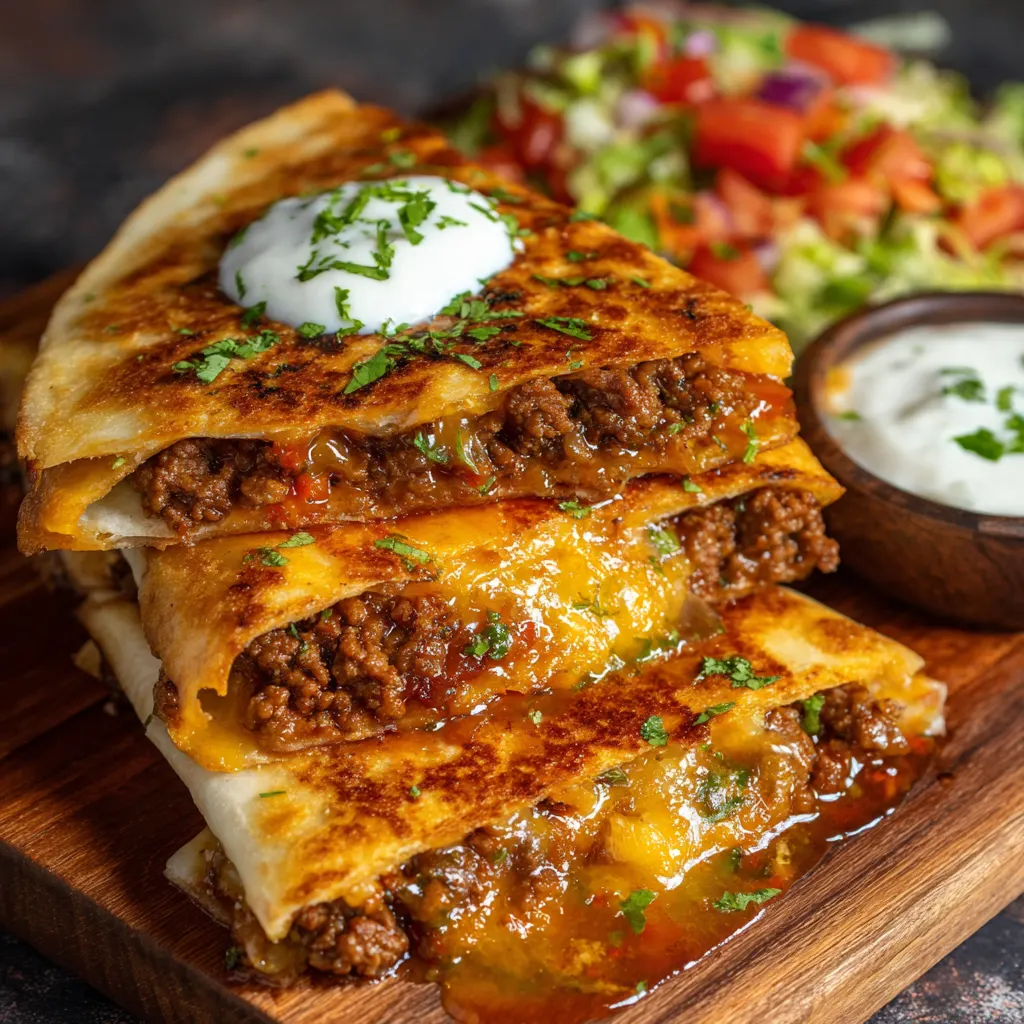
The robust flavor base of the Ground Beef Baja Quesadilla Melt makes it an ideal canvas for culinary creativity, allowing for tailored variations to suit dietary needs or flavor preferences.
Dietary and Protein Substitutions
-
Leaner Protein Options: For a lighter take, substitute the ground beef with ground chicken or turkey. These absorb the Baja spice blend beautifully, but require a little extra oil or liquid during cooking to prevent dryness. Alternatively, shredded rotisserie chicken tossed in the spice mix works as a fantastic time-saver.
-
Plant-Based Baja Melt: The heartiness of the quesadilla is easily replicated using plant-based grounds or lentils. Browned lentils seasoned with the chili powder, cumin, and tomato paste provide a texture and depth surprisingly similar to ground beef. For a complete vegetarian dish, black beans, corn, and sautéed bell peppers tossed in the spice blend also create a satisfying and flavorful filling.
Flavor Upgrades and Adjustments
-
Spice Level: To dial up the heat, introduce finely diced jalapeños or serrano peppers into the beef filling alongside the onions, or add a pinch of cayenne pepper or chili flakes to the spice mix. For a unique heat profile, incorporate a touch of chipotle powder for its smoky, earthy kick.
-
The “Secret” Ingredient: To add an unexpected layer of depth, consider stirring in a teaspoon of Worcestershire sauce or a splash of red wine vinegar into the beef filling just before the liquid reduces. These minor additions increase the savoriness and complexity of the meat’s profile.
-
Beyond the Tortilla: While the classic melt is served on flour tortillas, experimenting with whole wheat or even crispy corn tortillas can change the experience. Corn tortillas, however, should be cooked in more oil to prevent cracking and may yield a chewier, less “melt”-like texture.
Serving, Pairing, and Presentation
The Ground Beef Baja Quesadilla Melt is a standout main dish, but its full potential is realized when paired with thoughtful side dishes and beverages that enhance the overall Baja experience.
Perfect Sides for Balance
Since the melt itself is rich, savory, and cheesy, the best sides are those that offer contrasting textures and cooling elements.
-
The Staple Starches: Traditional sides like Mexican Rice (Arroz Mexicano) or Cilantro-Lime Rice provide a hearty base. The lime rice, in particular, echoes the citrus notes of the Baja sauce, unifying the flavors of the plate.
-
Refreshing Textures: Black Beans or Refried Beans are classic pairings, offering protein and fiber. Alternatively, a simple Chopped Southwestern Salad with corn, black beans, and a light lime vinaigrette offers the necessary crunch and freshness.
-
Dips and Sauces: Beyond the dedicated Baja Cream Sauce, a trio of dipping options is highly recommended: traditional Guacamole (creamy and rich), Salsa Verde (tangy and bright), and the aforementioned Pico de Gallo (chunky and fresh).
Beverage Pairings
The spice and richness of the quesadilla melt demand a beverage that can refresh the palate and cut through the fat.
-
Beer: A crisp, light Mexican lager (like a Modelo or Corona) provides the perfect effervescence and clean finish. For something with a little more backbone, a hoppy Pale Ale can stand up to the robust spices.
-
Cocktails: The quintessential pairing is a perfectly balanced Margarita—the acidity of the lime and the coolness of the tequila complement the Baja flavors flawlessly. A non-alcoholic option like a refreshing Horchata (cinnamon-rice drink) or a simple iced agua fresca provides a sweet, creamy contrast.
Presentation for Impact
Presentation elevates this humble comfort food to a restaurant-quality meal. Always allow the melt to rest for about sixty seconds after removing it from the pan. This allows the internal components to settle, preventing the hot filling from rushing out when sliced. Cutting the melt into three clean, even wedges and fanning them out slightly on the plate maximizes visual appeal. A final dusting of finely chopped cilantro or a small pile of Pico de Gallo placed strategically on top of the wedges, along with the Baja sauce drizzled across the plate, delivers the final touch. Serve warm, and ensure those lime wedges are within easy reach.