
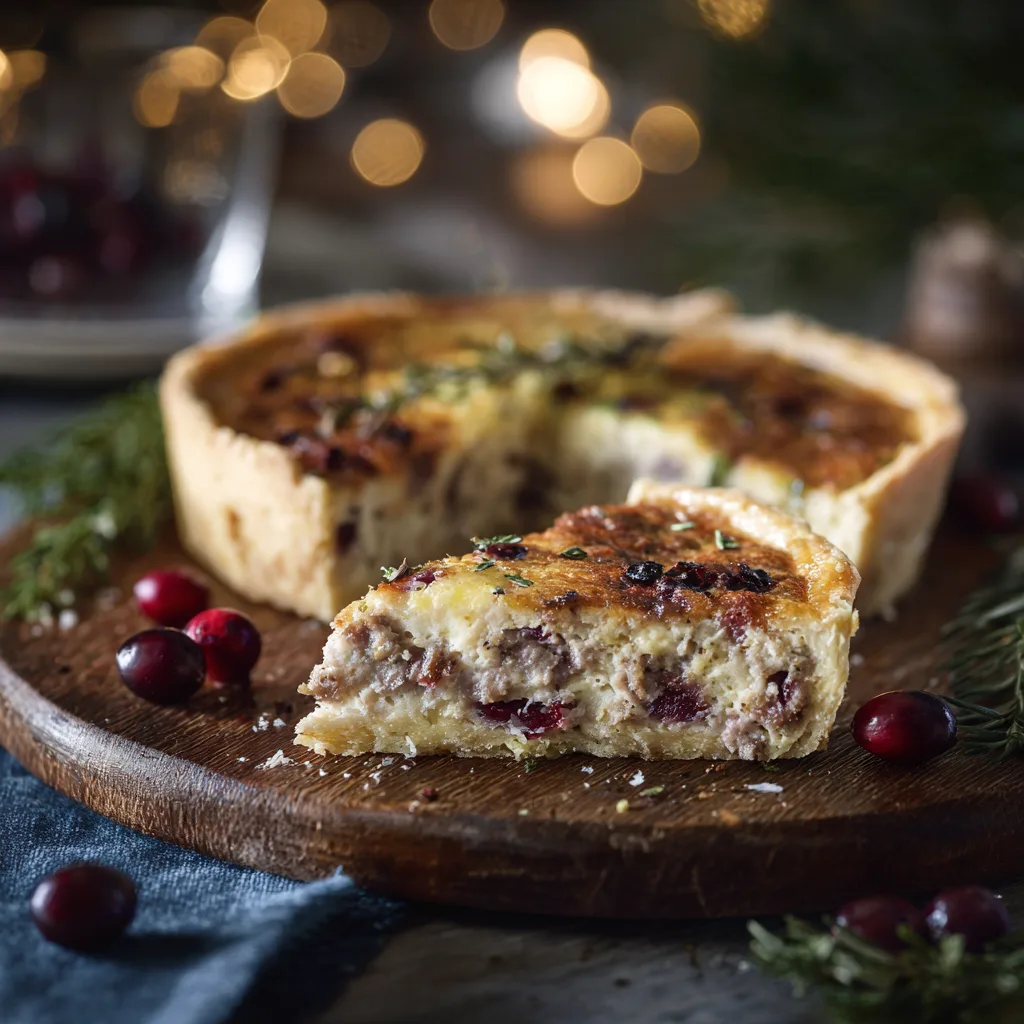
The Christmas Sausage and Cranberry Quiche is the quintessential holiday brunch dish—elegant in presentation, rich in flavor, and perfectly balanced between savory sausage, creamy custard, and the sweet-tart pop of dried cranberries. It offers a warmth and complexity that elevates a simple breakfast into a festive occasion, making it ideal for Christmas morning or a New Year’s gathering. Best of all, it is incredibly simple to prepare, with many steps easily completed the day before, allowing you to enjoy a stress-free morning with family and friends. This recipe provides a deep-dish, crowd-pleasing quiche that will quickly become a cherished tradition.
Ingredients
For the Quiche:
-
1 (9-inch) deep-dish pie crust (frozen, refrigerated, or homemade)
-
1/2 pound (8 oz) bulk breakfast sausage (sage-flavored is highly recommended)
-
1/4 cup finely chopped yellow onion (optional, but adds depth)
-
3/4 cup dried cranberries (Craisins)
-
1 1/2 cups shredded Monterey Jack cheese (or a preferred substitute, see notes)
-
3 large eggs, lightly beaten
-
1 1/2 cups half-and-half (or light cream, 10%)
-
1/4 teaspoon ground black pepper
-
1/4 teaspoon salt (adjust based on the saltiness of the sausage)
-
Pinch of dried sage (optional, if not using sage-flavored sausage)
-
Fresh parsley or sage leaves for garnish (optional)
Step-by-Step Instructions
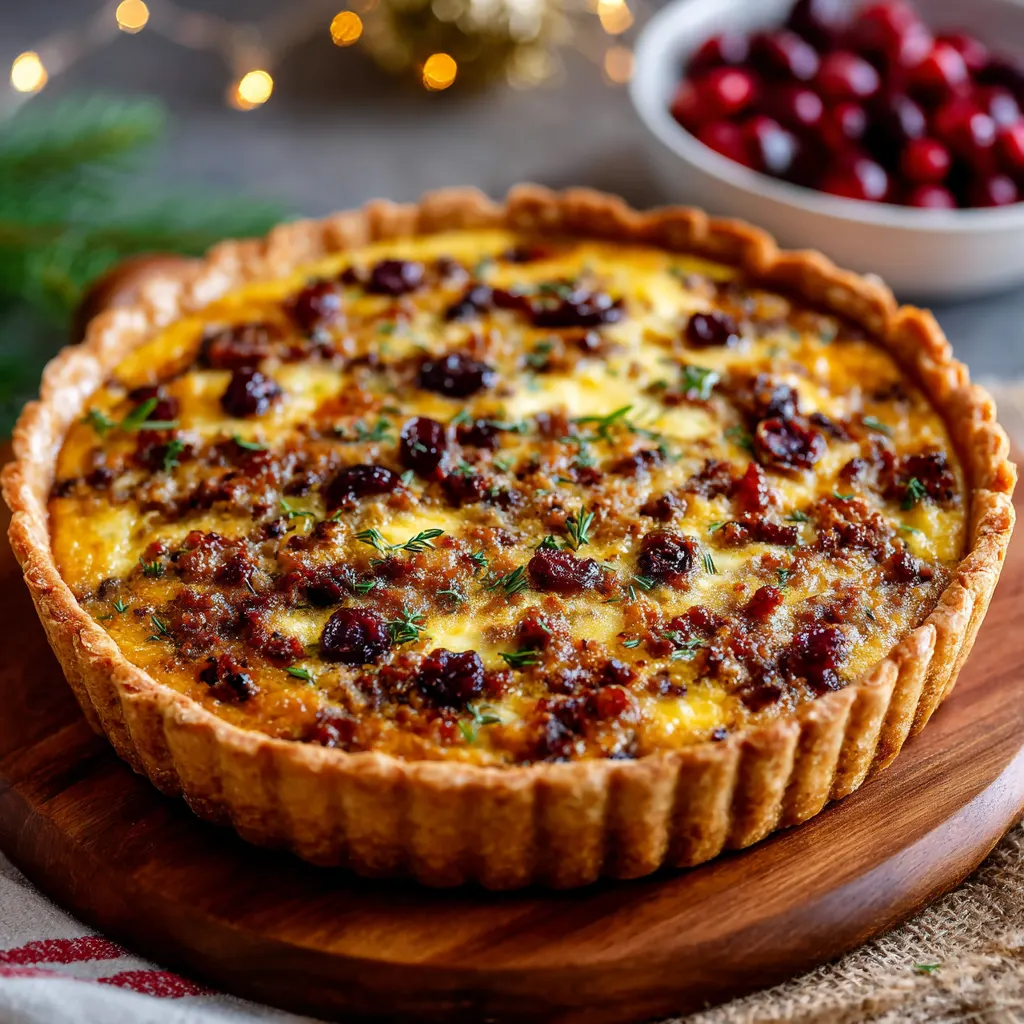
1. Prepare the Crust (Blind-Bake): Preheat the oven to 400°F (200°C). If using a frozen crust, let it sit at room temperature for 10 minutes. Place the pie shell on a baking sheet. Bake for 7 to 10 minutes until lightly set and slightly golden. This critical step helps prevent a “soggy bottom.” Remove from the oven and set aside to cool slightly. Reduce the oven temperature to 375°F (190°C).
2. Cook the Filling: Crumble the sausage into a large skillet. If using, add the chopped onion. Cook over medium-high heat, stirring frequently, until the sausage is completely browned and the onion is softened. This typically takes 5–7 minutes. Drain the sausage and onion mixture very thoroughly of all excess grease. Transfer the drained mixture back to the skillet (off the heat) and stir in the dried cranberries and any extra sage or seasoning. The warmth of the sausage will slightly soften the cranberries, helping their flavors meld.
3. Prepare the Custard: In a medium bowl, whisk together the eggs, half-and-half, salt, and pepper until they are well-blended but not frothy.
4. Assemble the Quiche: Sprinkle an even layer of the shredded Monterey Jack cheese across the bottom of the pre-baked pie shell. Layer the cooked sausage and cranberry mixture evenly over the cheese. This layering ensures the cheese acts as a barrier to moisture and helps prevent the heavier sausage from sinking or the crust from becoming soggy. Finally, gently pour the egg and half-and-half mixture over the top of the sausage and cheese layers, filling the crust.
5. Bake and Set: Bake the quiche at 375°F (190°C) for 40 to 50 minutes. The quiche is done when the edges are set, the top is lightly golden, and a knife inserted near the center comes out clean. If the crust edges brown too quickly, loosely cover them with strips of foil.
6. Cool and Serve: Remove the quiche from the oven and let it stand for 10 minutes before slicing. This resting period is crucial, as it allows the custard to finish setting completely, ensuring clean, firm wedges. Garnish with fresh parsley or sage, slice, and serve warm or at room temperature.
Mastering the Flaky Crust and Preventing Soggy Bottoms
The key to a truly outstanding quiche lies in the integrity of its foundation: a crisp, flaky crust. The enemy of any quiche is the dreaded “soggy bottom,” a common issue resulting from the moisture in the filling saturating the dough. Achieving a perfect crust for your Christmas Sausage & Cranberry Quiche involves two primary techniques: blind-baking and meticulous filling preparation.
The Necessity of Blind-Baking
Blind-baking, or par-baking, the crust is the single most effective way to guarantee a crisp foundation. When you bake the empty crust for a brief period before adding the filling, you allow the crust’s structure to set and the starches to dry out and slightly brown. The instructions above recommend a 7- to 10-minute bake at a high heat (400°F or 200°C). For best results, chill your prepared crust before baking. If you notice the crust puffing up, use pie weights or dried beans placed on parchment paper inside the shell during the initial bake, removing them for the last few minutes to set the bottom.
Moisture Control in the Filling
Even a par-baked crust can succumb to a filling that is too wet. The main sources of excess moisture in this recipe are the sausage grease and the egg custard.
-
Drain the Sausage: When cooking the ground sausage, it is vital to cook it thoroughly and then drain every drop of rendered fat. Transfer the cooked sausage and onion mixture to a paper towel-lined plate or colander to blot and wick away any remaining moisture before it enters the quiche.
-
Cheese as a Barrier: The assembly process is strategic. Placing a layer of shredded cheese (Monterey Jack, Swiss, or Gruyere work well) directly onto the pre-baked crust acts as an impermeable barrier. As the quiche bakes, the cheese melts and forms a protective layer, shielding the pastry from the liquid custard and the residual moisture from the sausage and cranberries, thus keeping the crust delightfully flaky.
By implementing these steps—blind-baking the shell and aggressively removing moisture from the savory components—you ensure that the final result is a structurally sound quiche with a perfect, crisp crust that contrasts beautifully with the creamy interior.
Ingredient Swaps and Flavor Deepening
While the core recipe provides a winning combination, the versatility of quiche allows for customization to suit any preference or pantry availability. Optimizing the Christmas Quiche means understanding how to swap ingredients without compromising the final texture or holiday flavor profile.
Sausage Selection and Savory Base:
The standard recommendation is a mild or sage-flavored bulk breakfast sausage, which provides a classic, festive aromatic base. However, you can easily switch up the protein:
-
For a Bolder Flavor: Use spicy Italian sausage or swap half the breakfast sausage for crumbled, cooked bacon or diced, cured ham.
-
For a Lighter Option: Use ground chicken or turkey sausage, adjusting the seasonings (salt, pepper, sage) as needed, since these are often milder.
-
Aromatics: A tablespoon of finely minced fresh rosemary added to the sausage mixture will intensify the holiday feel, complementing the sage and cranberries beautifully. For a richer, more complex taste, consider a tablespoon of red onion marmalade spread on the crust before the cheese layer (as is common in elevated British-style quiches).
Customizing the Cheese and Dairy:
The choice of cheese significantly impacts the quiche’s overall melt and taste. Monterey Jack is popular for its mild, creamy quality and excellent melt factor.
-
Stronger Profile: Swap Monterey Jack for sharp white cheddar, Swiss, or Gruyère. These harder cheeses add a nuttier, more intense savory note that stands up well to the sausage.
-
Creamier Texture: For an exceptionally creamy result, use light cream (10% or 18% fat) instead of Half-and-Half, or slightly increase the egg count from 3 to 4, which creates a firmer, richer custard.
-
Alternative Berries: While dried cranberries are standard, feel free to incorporate a small amount of chopped dried cherries or a splash of orange zest into the filling for an extra layer of brightness, provided the amount is kept small to maintain the quiche’s structure.
The Crust Alternative: Going Crustless
For a lighter, gluten-free option, or if you simply wish to skip the pastry work, this recipe is easily converted into a crustless quiche (or frittata-style bake). Simply grease a 9-inch pie plate well, or use a square baking dish, and proceed with layering the filling and pouring in the custard. The baking time may need to be slightly adjusted (potentially less time, or a lower temperature) until the center is set.
Timing is Everything: Make-Ahead & Storage Tips
The Christmas season is often a chaotic time, and any recipe that minimizes last-minute work is a true gift. The Christmas Sausage & Cranberry Quiche excels as a make-ahead meal, allowing hosts to assemble key components or even the entire dish in advance.
Smart Day-Before Preparation (The Ultimate Time-Saver):
Nearly every component of the quiche can be prepared 24 hours in advance, streamlining the final assembly process:
-
Prep the Crust: Blind-bake the pie shell completely and allow it to cool fully. Store it loosely covered at room temperature.
-
Cook the Filling: Cook the sausage and onion, drain the grease meticulously, and mix in the dried cranberries. Store the cooled sausage mixture and the shredded cheese separately in airtight containers in the refrigerator.
-
Mix the Custard: Whisk the eggs, half-and-half, and seasonings together. Store the custard mixture in a separate airtight container in the refrigerator.
By having the three main elements (crust, filling, and custard) ready to go, assembly on the morning of service takes less than five minutes.
Baking in Advance:
For maximum convenience, the entire quiche can be baked, cooled, and stored up to two days before serving.
-
Refrigeration: Allow the fully baked quiche to cool completely at room temperature, then cover it tightly with plastic wrap or foil. It can be stored in the refrigerator for up to 3 days. To reheat, cover loosely with foil and bake at 350°F (175°C) for 15–20 minutes, or until warmed through. Alternatively, slices can be reheated individually in a microwave or a toaster oven for a crisper crust.
-
Freezing for Long-Term Storage: Quiche freezes beautifully. Bake the quiche as instructed and let it cool completely. Wrap the entire quiche (still in its pie plate) tightly in several layers of plastic wrap, followed by a layer of aluminum foil. Freeze for up to 1 month. To serve, unwrap the quiche, place it on a baking sheet, and thaw overnight in the refrigerator. Bake, covered with foil, at 350°F (175°C) for about 25–30 minutes until hot in the center.
Serving Suggestions and Holiday Pairings
The rich, comforting nature of the Christmas Sausage & Cranberry Quiche makes it an excellent centerpiece for both informal family breakfasts and elegant holiday brunches. The key to rounding out the meal is to pair the quiche with complementary textures and temperatures.
Classic & Complementary Side Dishes:
-
Fresh and Bright: The richness of the egg and sausage calls for something light and acidic. A simple, crisp green salad tossed in a bright vinaigrette (like lemon or champagne vinegar) cuts through the fat and cleanses the palate.
-
Sweet Counterpoint: A platter of fresh, seasonal fruit is essential. Include winter favorites such as sliced oranges, pears, grapes, or a berry mix. A dollop of plain Greek yogurt or a side of cranberry sauce or chutney can also enhance the sweet-tart dynamic.
-
Simple Carbohydrates: While the crust provides a base, a light accompaniment is always welcome. Consider serving alongside toasted English muffins, flaky croissants, or a simple basket of holiday-spiced scones.
Beverage Pairings for Festive Occasions:
The quiche pairs well with both hot and cold beverages, making it suitable for any time of day.
-
The Morning Essential: A robust, high-quality coffee or a classic English breakfast tea is the perfect warm pairing.
-
Brunch Cocktails: For a festive adult beverage, serve the quiche alongside a traditional Mimosa (champagne and orange juice) or a Bellini (prosecco and peach puree). For a non-alcoholic option, a sparkling cranberry juice spritzer with a lime wedge mirrors the quiche’s signature cranberry note.
Presentation and Ambiance:
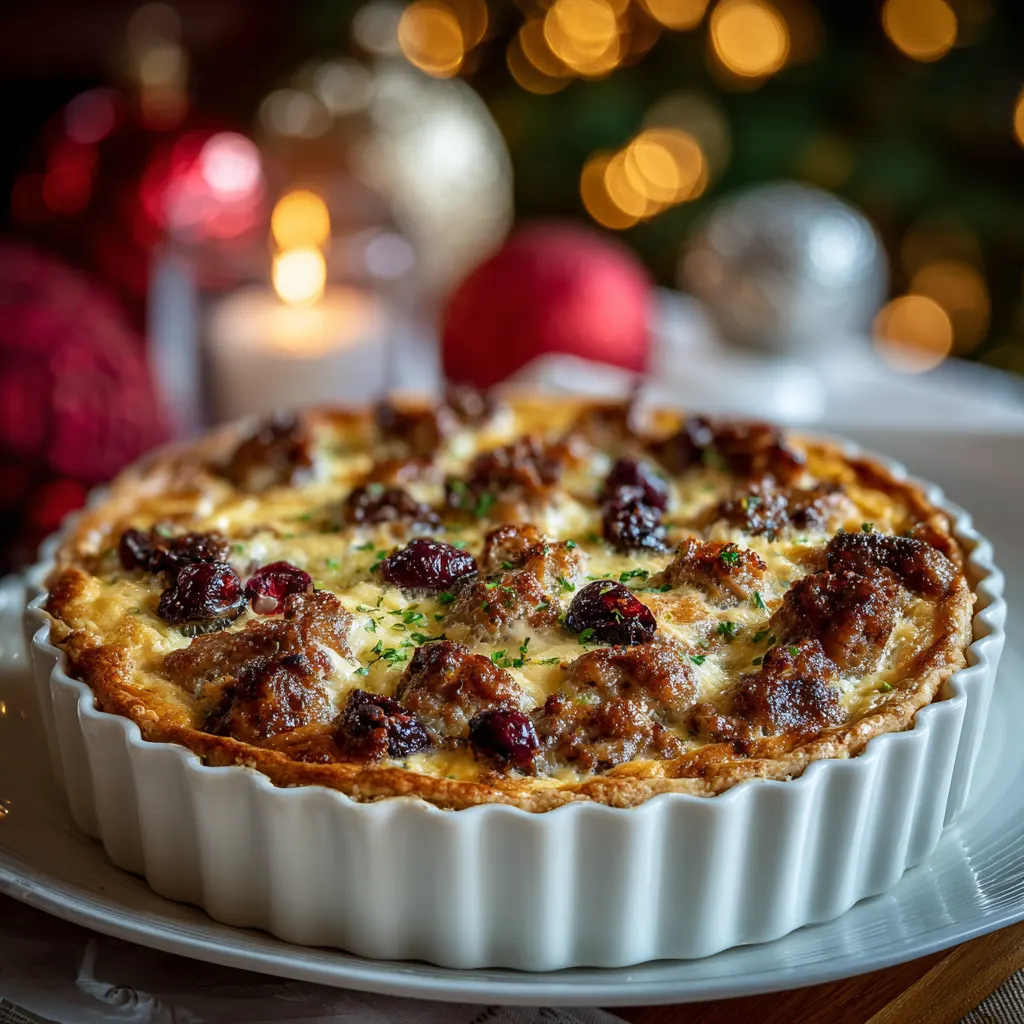
To highlight the quiche as a holiday dish, focus on presentation. Serve the quiche on a decorative platter, garnished with the suggested fresh parsley or sage leaves. If you used a decorative pie plate, leave it in place. Serving the quiche slightly warm or at room temperature allows its complex flavors to fully emerge. When sliced, the vibrant crimson of the cranberries creates a beautiful contrast against the golden custard and flaky crust, ensuring a dish that is as visually stunning as it is delicious.