
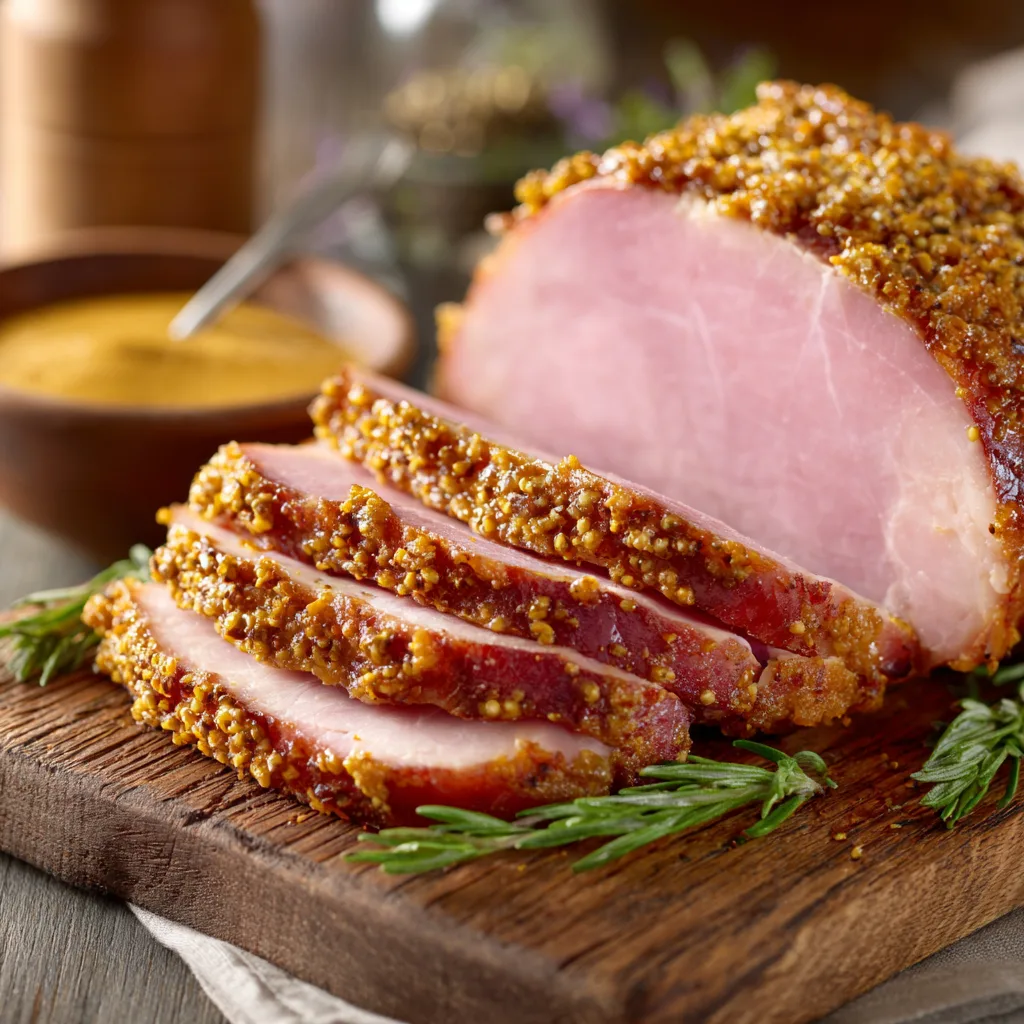
The maple mustard glazed ham stands as a timeless centerpiece, delivering a complexity of flavors—the salty, smoky depth of the cured ham harmoniously contrasted by a tangy, sweet, and caramelized crust. This recipe transforms a simple, fully-cooked ham into a holiday or special occasion showstopper, ensuring every slice is coated in a rich, deeply flavored glaze that seals in moisture and elevates the entire meal. By focusing on quality ingredients and precise timing, you can easily achieve a perfect balance of sweet Canadian maple and piquant mustard, resulting in slices that are both moist and exquisitely crusted.
Ingredients
For the Ham:
-
1 (8 to 10-pound) bone-in, fully-cooked spiral-sliced ham
-
1/2 cup water, apple juice, or cider (for the roasting pan)
-
Whole cloves (optional, for scoring)
For the Maple Mustard Glaze:
-
1/2 cup pure maple syrup (Grade A Dark or Very Dark for best flavor)
-
1/2 cup packed dark brown sugar
-
1/3 cup Dijon mustard (or stone-ground mustard for texture)
-
2 tablespoons apple cider vinegar or orange juice (for brightness)
-
1/2 teaspoon ground ginger
-
1/4 teaspoon ground cloves (or a pinch of cinnamon/allspice)
Step-by-Step Instructions
-
Prepare the Ham and Oven: Remove the ham from its packaging and let it stand at room temperature for about one hour before cooking to take the chill off. Preheat the oven to 325°F (160°C). Place the ham, flat-side down, in a large roasting pan. Pour 1/2 cup of water, apple juice, or cider into the bottom of the pan to help maintain moisture.
-
Scoring (Optional): If your ham is not spiral-sliced and has a thick layer of fat, use a sharp knife to score the fat in a diamond pattern, making sure not to cut into the meat. For an aromatic touch, stud the center of each diamond with a whole clove.
-
Initial Baking: To prevent drying, wrap the ham tightly with heavy-duty aluminum foil. For added protection, you may place a piece of parchment paper directly over the ham before wrapping in foil. Bake the ham for approximately 12 to 14 minutes per pound, or until a meat thermometer inserted into the thickest part (avoiding the bone) registers 120°F (49°C). For a 10-pound ham, this is roughly 2 hours to 2 hours 20 minutes.
-
Prepare the Glaze: While the ham is baking, combine the maple syrup, brown sugar, Dijon mustard, apple cider vinegar (or orange juice), ground ginger, and ground cloves in a small saucepan. Heat over medium-low heat, stirring constantly, until the sugar has completely dissolved and the mixture is smooth and slightly thickened (about 2-3 minutes of simmering). Remove from heat and set aside.
-
Glaze and Crust: Once the ham reaches 120°F, remove it from the oven. Carefully unroll and pull back the foil to expose the ham (watch out for hot steam). Increase the oven temperature to 400°F (200°C). Pour or brush about two-thirds of the prepared glaze evenly over the ham, ensuring it drips into the spiral cuts.
-
Final Bake: Return the uncovered ham to the 400°F oven. Bake for an additional 15 to 30 minutes, or until the glaze is caramelized, deeply golden, and slightly crusty, and the internal temperature reaches 135°F to 140°F (57°C to 60°C). Baste the ham one or two times during this final period with the remaining glaze.
-
Rest and Serve: Remove the ham from the oven and transfer it to a cutting board. Tent it loosely with foil and allow it to rest for 10 to 15 minutes before carving. This resting period allows the juices to redistribute, guaranteeing a tender, juicy slice. Serve the slices with any remaining pan drippings spooned over the top or reserved as a dipping sauce.
Mastering the Maple-Mustard Glaze
The exquisite flavor of this ham lies almost entirely in the quality and balance of its glaze. While the core components are simple—maple and mustard—small adjustments can significantly alter the final profile and crust texture.
Glaze Component Deep Dive:
-
The Maple: Always use pure maple syrup. Pancake syrup, which is often corn syrup and artificial flavorings, lacks the depth and purity of flavor required and may burn more easily. Darker grades of maple syrup offer a more robust flavor that stands up well to the smoky ham and sharp mustard.
-
The Mustard: Dijon mustard is the standard choice, offering a smooth texture and sharp, tangy bite that cuts through the sweetness. For a more rustic appearance and a textural element to the crust, substitute or combine Dijon with whole-grain or stone-ground mustard. Coarse mustard seeds caramelize beautifully and add a nice pop.
-
Balancing the Glaze: To achieve that perfect, non-cloying sweetness, most recipes introduce an acidic component. Apple cider vinegar or fresh orange juice not only brighten the flavor but also help the sugars liquefy and caramelize correctly. The inclusion of brown sugar ensures a thick, sticky base that adheres perfectly to the ham’s surface, creating the desired crust.
-
Spices for Complexity: Ground ginger and cloves are classic additions that provide warmth and an unmistakable holiday aroma. Be mindful when adding spices; a little goes a long way. For an even more complex crust, some cooks incorporate a teaspoon of Worcestershire sauce or a small dash of soy sauce to boost the savory umami notes.
Achieving the Perfect Crust:
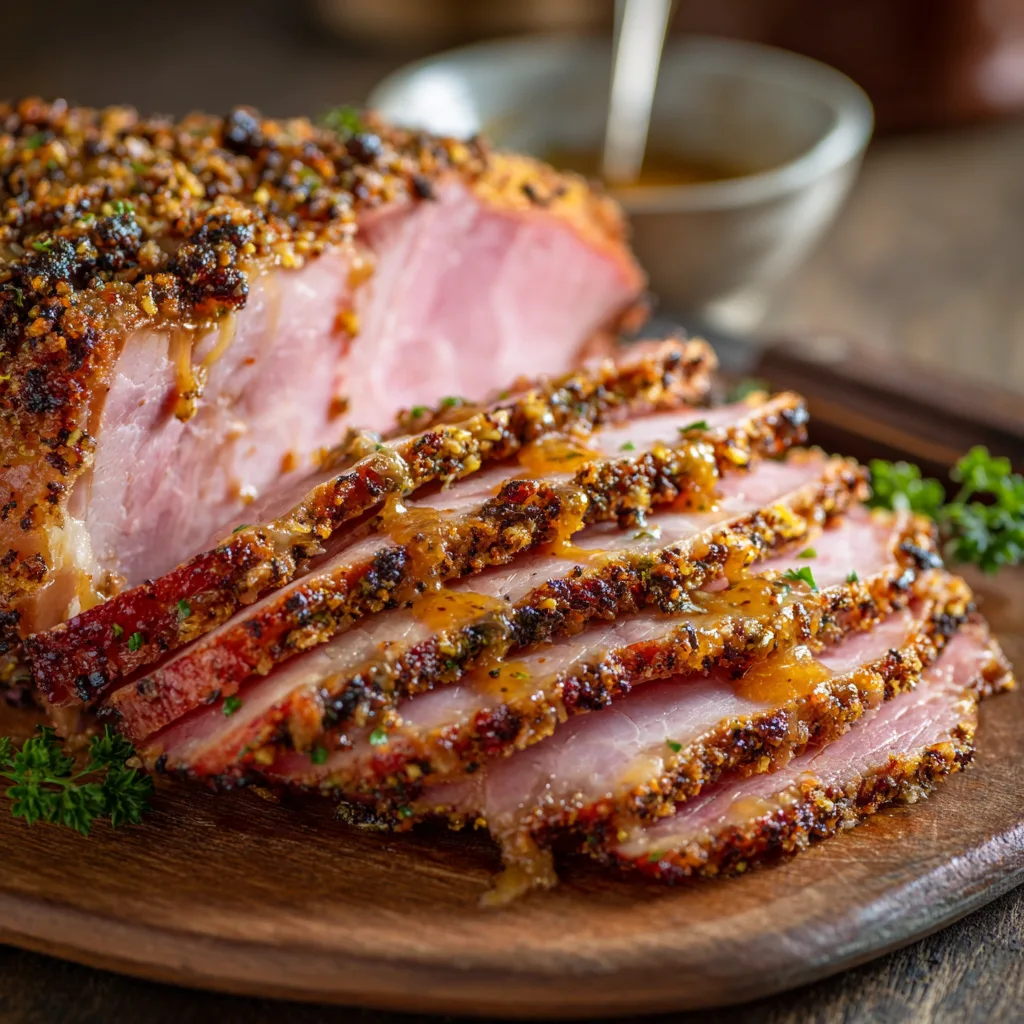
The key to the “crusted” ham is the final, high-heat bake. By increasing the oven temperature to 400°F (200°C) after the ham is nearly warmed through, you rapidly caramelize the glaze. Ensure the ham is fully uncovered during this stage, allowing the direct heat to transform the liquid glaze into a sticky, glossy, and slightly crunchy crust. Basting during this final stage helps build up the thickness of the glaze, but avoid over-basting, which can prevent proper crust formation.
Alternative Cooking Methods and Quick Slices
While baking a whole ham in the oven is the traditional route, this maple mustard glaze is versatile enough to be adapted for other cooking methods, particularly for those cooking a smaller cut or seeking a quicker weeknight meal.
Slow Cooker Method (For Glazed Ham)
The slow cooker is an excellent way to guarantee a tender, moist ham, especially a boneless variety.
-
Preparation: Stir together the glaze ingredients, optionally substituting some liquid for brown sugar (e.g., using brown sugar, Dijon mustard, and maple syrup only). Place the ham in the slow cooker and rub the mustard-sugar mixture all over. Pour the maple syrup over the top.
-
Cooking: Cover and cook on low for 4–5 hours, or until heated through.
-
Glazing: If you desire the signature crust, transfer the ham to a foil-lined baking sheet in the final 30 minutes. Brush with the cooking sauce and broil briefly until the glaze caramelizes, watching closely to prevent burning. Slice and serve with the reserved pan sauce.
Skillet Method (For Ham Steaks)
If you only need a few maple mustard ham slices, ham steaks offer a fast, flavorful solution, ready in under 30 minutes.
-
Prep: Whisk together the maple mustard glaze (often using a higher proportion of mustard/vinegar and adding a tablespoon of melted butter to the glaze for richness).
-
Sear: Heat a large skillet (cast iron works well) over medium-high heat. Place the ham steak in the pan and sear for 3–4 minutes per side. If the ham steak is thick, reduce heat to medium.
-
Glaze and Finish: Brush the glaze generously over one side of the ham steak and flip it onto the skillet. Brush the second side with glaze. Cook, turning and basting frequently, until the glaze has thickened, caramelized, and formed a sticky crust on both sides (about 5-7 minutes total glazing time). Serve immediately.
Serving Suggestions and Leftover Wisdom
A stunning Maple Mustard Glazed Ham provides a feast in itself, but the right accompaniments complete the plate. Furthermore, the sheer size of most hams means leftovers are inevitable—and highly prized.
Perfect Pairings:
The sweet, salty, and tangy profile of the ham pairs exceptionally well with classic comfort sides.
-
Potatoes: Creamy scalloped potatoes, cheesy au gratin potatoes, or simple roasted potatoes seasoned with herbs.
-
Vegetables: Green beans sautéed with garlic, orange-glazed carrots (to echo the citrus in the glaze), or roasted asparagus.
-
Bread: Warm, buttery dinner rolls or fluffy biscuits are essential for soaking up any extra glaze and drippings.
-
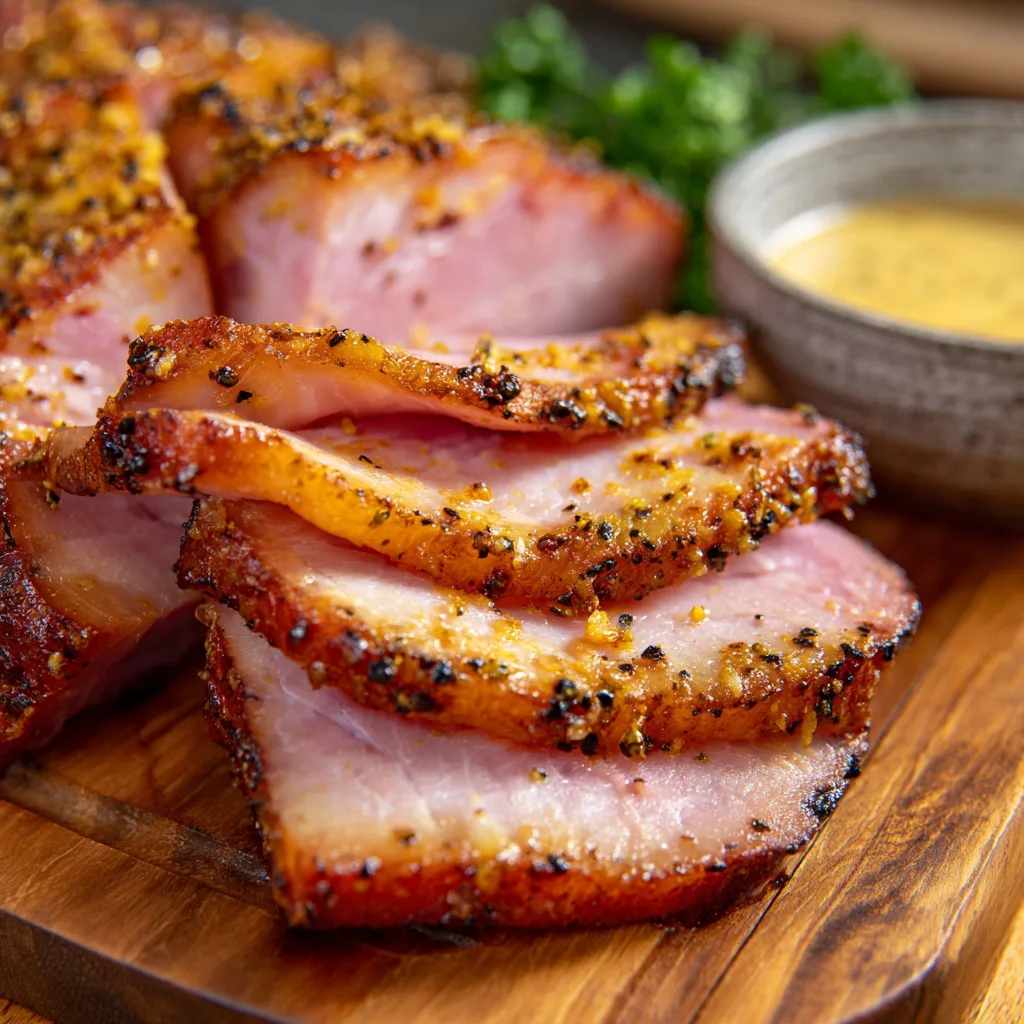
Sauce: Serve a small bowl of the reserved pan drippings—the highly concentrated mix of ham juices and caramelized glaze—as an optional side sauce. Whole-grain mustard or a simple fruit chutney also provides a fresh counterpoint.
Maximizing Leftovers:
Leftover ham, properly stored, remains delicious for 4 to 5 days in the refrigerator in an airtight container. The bone itself should be saved for future use.
-
The Bone: The ham bone is the foundation for an incredible split pea soup, ham and bean soup, or a flavorful stock. Freeze the bone in an airtight bag for up to two months if not using immediately.
-
Ham Slices:
-
Sandwiches: Thinly sliced ham is perfect for warm ham-and-cheese sliders (especially on Hawaiian rolls) or classic deli sandwiches.
-
Breakfast: Cube it and toss it into omelets, breakfast scrambles, or serve fried alongside eggs.
-
Casseroles and Soups: Dice the ham for use in casseroles like Cheesy Ham and Scalloped Potato Casserole, or fold into savory crepes or pot pies.
-
Freezing: Leftover slices can be frozen for up to two months. It is best to slice or dice the ham first, portion it into airtight bags (vacuum-sealed is ideal), and thaw it overnight in the refrigerator when ready to use. Reheat frozen ham slowly to maintain moisture.
-