
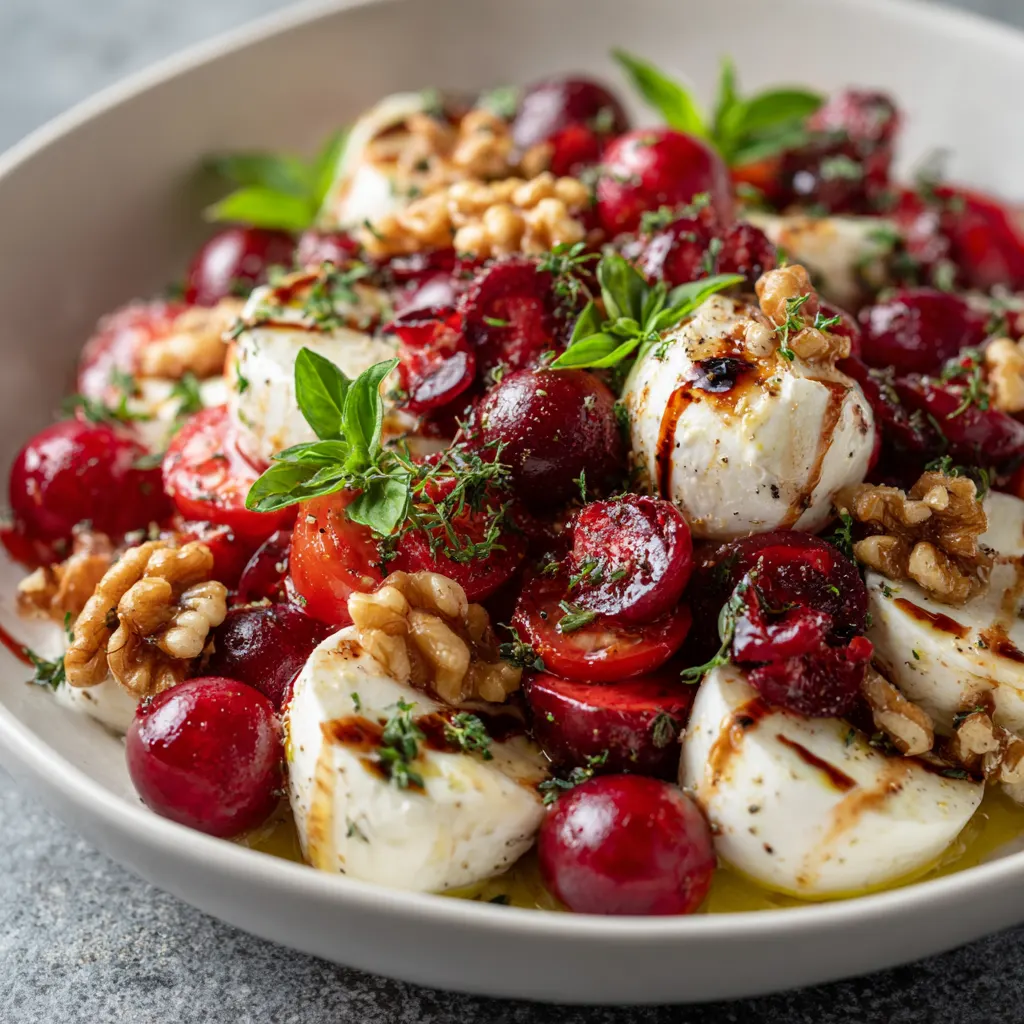
The Caprese salad, with its iconic trifecta of fresh mozzarella, ripe tomatoes, and fragrant basil, is a perennial celebration of summer simplicity. However, culinary evolution encourages delightful seasonal variation. The Cranberry Walnut Caprese Salad takes the refreshing base of the classic Italian dish and infuses it with the rich, autumnal flavors and textures of tart cranberries and earthy, toasted walnuts. The result is a vibrant, elegant, and perfectly balanced salad that transcends the summer months, offering a comforting crunch, creamy texture, and a burst of sweet and savory notes that make it ideal for holiday gatherings or an elevated weeknight meal. This fusion dish retains the aesthetic appeal of a traditional Caprese while introducing a complex depth that is both innovative and deeply satisfying.
The Essential Components
This recipe balances the creamy, fresh elements of a classic Caprese with the warm, rich textures of a winter salad.
For the Salad:
-
8 ounces fresh mozzarella cheese (bocconcini or pearls, drained)
-
2 cups cherry or grape tomatoes, halved
-
4 cups mixed greens (baby spinach, arugula, or a spring mix)
-
1/2 cup dried cranberries (craisins)
-
1/2 cup walnuts, roughly chopped and toasted
-
1/2 cup fresh basil leaves, torn or thinly sliced (chiffonade)
-
Salt and freshly ground black pepper, to taste
For the Balsamic Glaze Vinaigrette:
-
1/4 cup extra virgin olive oil
-
2 tablespoons balsamic vinegar
-
1 tablespoon maple syrup or honey (optional, for added sweetness)
-
1 teaspoon Dijon mustard
-
1 small clove garlic, minced (optional)
-
1/4 teaspoon sea salt
-
1/8 teaspoon black pepper
Step-by-Step Preparation
1. Toast the Walnuts (The Flavor Foundation): Preheat a small, dry skillet over medium heat. Add the chopped walnuts and toast them for 3 to 5 minutes, stirring frequently until fragrant and lightly browned. Remove immediately from the pan and let them cool completely. This crucial step intensifies their flavor and crunch.
2. Prepare the Balsamic Vinaigrette: In a small bowl, whisk together the balsamic vinegar, olive oil, maple syrup (or honey), Dijon mustard, minced garlic, salt, and pepper until the mixture is fully emulsified and smooth. Alternatively, for a richer glaze, gently simmer 1/4 cup of balsamic vinegar in a saucepan until it reduces by half and thickens slightly (about 5-7 minutes). Allow it to cool before use.
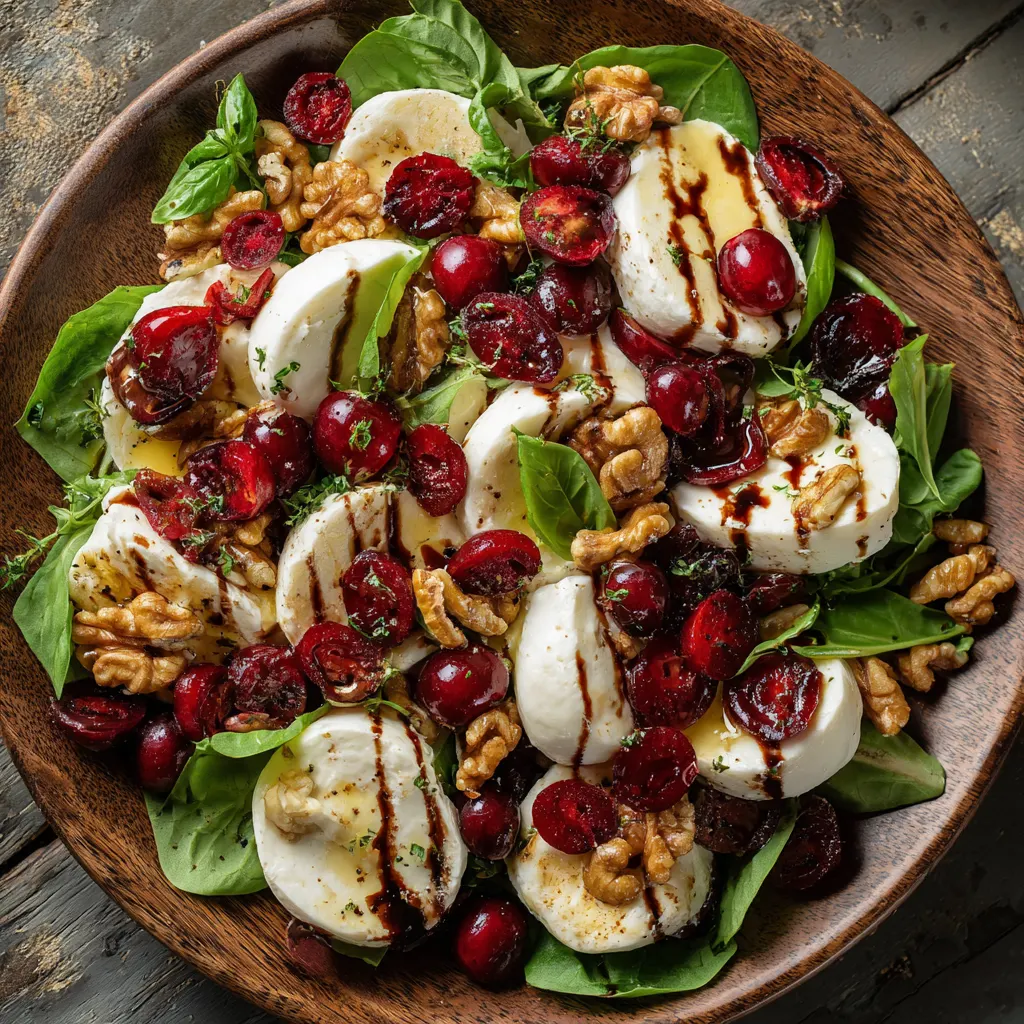
3. Assemble the Core Caprese Elements: In a large mixing bowl, combine the mixed greens, halved cherry tomatoes, and fresh mozzarella pearls (or cubes of sliced mozzarella). Add the dried cranberries and the cooled, toasted walnuts.
4. Dress and Serve: Just before serving, drizzle the prepared balsamic vinaigrette lightly over the salad mixture. Toss gently to ensure all ingredients are coated without bruising the greens or basil. Add the fresh basil leaves last. Plate the salad and finish with an additional light sprinkle of salt and freshly ground black pepper. If using a thicker balsamic glaze, drizzle it artistically over the assembled salad after plating. Serve immediately to maintain the freshness of the ingredients.
The Anatomy of Flavor and Texture
The success of the Cranberry Walnut Caprese Salad lies in the masterful interplay between its textures and flavor profiles, transforming a simple side into a dynamic culinary experience. Each ingredient is selected not just for taste, but for its essential role in the overall sensory balance.
The creamy component is delivered by the fresh mozzarella. Unlike drier, saltier cheeses, mozzarella offers a neutral, milk-sweet canvas that absorbs the surrounding flavors. Using bocconcini (small balls) or pearls ensures that a bite of smooth, cool cheese can be enjoyed alongside every other ingredient, providing a necessary counterpoint to the tartness and crunch.
The tart and sweet depth is introduced by the dried cranberries. These jewels of flavor are concentrated and chewy, offering a vibrant contrast to the mild cheese and tomatoes. When paired with the subtle, natural acidity of the tomatoes, the cranberries elevate the salad’s profile, making it suitable for heavier meals.
The earthy crunch comes from the walnuts. Toasting them is non-negotiable, as it releases their volatile oils, deepening their savory flavor and transforming their texture from dull to crisp. The walnuts provide a vital textural contrast to the soft cheese and greens, anchoring the salad with a robust, nutty finish. Alternative nuts like pecans or almonds can be used, but walnuts possess a unique earthiness that complements the balsamic glaze best.
Finally, the fresh and bright element is the fresh basil. Its peppery, slightly anise-like aroma is the signature of any Caprese dish. It must be added at the last minute to prevent wilting and should be torn or chiffonaded (thinly sliced) to ensure its volatile oils are released just before consumption.
Perfecting Preparation Techniques
While assembling this salad appears straightforward, several key techniques maximize the quality of the ingredients and the overall flavor delivery. Mastering these preparation steps is what distinguishes a good salad from a spectacular one.
The Power of the Balsamic Glaze
The dressing is the binding agent that unites the divergent flavors. While a simple balsamic vinaigrette (as listed in the main recipe) is excellent, incorporating a homemade balsamic reduction or glaze provides a depth of flavor that a standard vinaigrette cannot match. A true balsamic glaze is created by gently simmering quality balsamic vinegar until it reduces into a thick, syrupy consistency. This process concentrates the sweetness and mellows the harsh acidity of the vinegar, resulting in a complex, sweet-and-sour drizzle. When drizzled over the finished salad, the glaze clings beautifully to the mozzarella and walnuts, offering visual appeal and a rich, concentrated finish.
Maximizing Nut and Seed Potential
Toasting nuts is a simple step that yields exponential flavor rewards. Whether using a dry skillet, a baking sheet in the oven, or even a brief pulse in the microwave, toasting releases essential oils, preventing the walnuts from tasting raw or bitter. Beyond walnuts, adding toasted pumpkin seeds or sunflower seeds can contribute different, yet equally appealing, textures and nutritional profiles. Remember to always toast the nuts before chopping them and to let them cool completely; adding warm nuts to cold greens can cause premature wilting.
Selecting and Preparing Greens
The Caprese base typically uses no greens, but for the Cranberry Walnut Caprese Salad, a bed of greens is highly recommended to handle the weight of the additions and the richness of the dressing. Baby spinach is a sturdy, slightly bitter choice that stands up well to the sweet components, while peppery arugula adds a delightful zest. Regardless of the choice, ensure the greens are washed thoroughly and dried completely, either in a salad spinner or by patting them gently with a kitchen towel. Excess moisture will dilute the dressing and lead to a soggy texture.
Pairing and Presentation
The Cranberry Walnut Caprese Salad is versatile enough to serve as a light lunch, a stunning side dish, or an elegant appetizer. Its presentation is key, leveraging the vibrant colors of the ingredients to create a visually appealing dish.
Presentation Styles
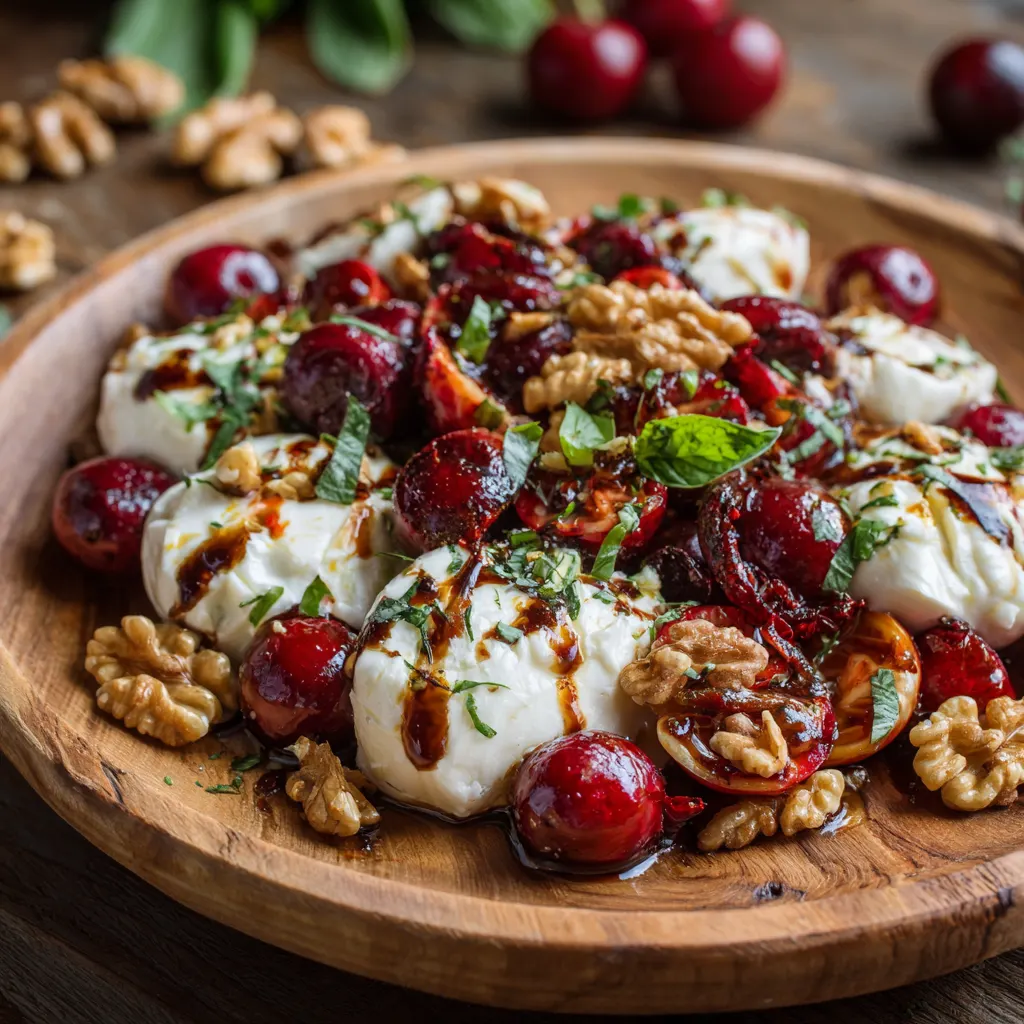
The Layered Platter (Caprese Style): For a more formal presentation, forego the mixed greens and arrange the mozzarella and tomatoes on a large platter. Alternate slices of tomato, mozzarella, and fresh basil, then scatter the dried cranberries and toasted walnuts over the top. This method works best with large slices of fresh mozzarella, rather than pearls. Finish with a dramatic drizzle of a thick balsamic glaze for a sophisticated look.
The Tossed Salad (Greens Base): For casual dining or large gatherings, the tossed method is most practical. Use a large, shallow white or wooden bowl. Toss the greens and other ingredients gently in a separate vessel before plating. Use the serving bowl purely for display. The goal is to show off the varied textures—the ruby-red cranberries, the deep brown walnuts, and the emerald basil—against the white mozzarella and mixed greens.
Optimal Serving Occasions and Pairings
This salad’s flavor profile—rich, sweet, and tart—makes it a natural fit for autumn and winter holidays, particularly Thanksgiving, Christmas, and New Year’s Eve, where it offers a refreshing contrast to heavier roasts and starchy sides.
Main Course Complements:
-
Poultry: The sweetness of the cranberries and balsamic glaze beautifully complements roasted turkey or grilled chicken breast.
-
Pork & Beef: Serve alongside a pork tenderloin or a flank steak seasoned with rosemary to balance the savory protein with the salad’s tang.
-
Fish: For a lighter option, the salad pairs well with pan-seared salmon, where the nutty walnuts echo the richness of the fish.
Wine & Beverage Pairings: Choose wines that can handle the salad’s acidity and sweetness. A crisp, unoaked white wine like Sauvignon Blanc or a dry Italian Pinot Grigio offers a clean palate cleanser. For red wine enthusiasts, a lighter-bodied, fruit-forward Pinot Noir with soft tannins provides a complementary earthiness without overpowering the subtle flavors of the basil and mozzarella.
Variations, Substitutions, and Health Insights
One of the great advantages of a fusion salad is its adaptability. The Cranberry Walnut Caprese offers a robust foundation that can be customized to suit dietary needs, seasonal availability, or simply personal preference, all while maintaining a strong nutritional profile.
Thoughtful Substitutions
-
Cheese Alternatives: While mozzarella defines “Caprese,” Feta cheese (as seen in common cranberry walnut salads) is a popular substitution, offering a saltier, tangier punch that complements the sweet cranberries. Alternatively, goat cheese crumbles provide a soft, earthy creaminess.
-
Nut Swaps: If walnuts are not preferred, toasted pecans or slivered almonds are excellent, easy substitutions that maintain the necessary crunch. For a nut-free version, sunflower or pumpkin seeds work well.
-
Seasonal Fruit Additions: To enhance the autumnal theme, thinly sliced apples (like Honeycrisp or Granny Smith for tartness) or pears (for buttery softness) can be incorporated. For a summery twist, switch to strawberries or blackberries.
-
Greens: If mixed greens feel too light, using exclusively baby spinach or even kale (massaged with a bit of olive oil beforehand) provides a heartier base.
Boosting Nutritional Value
This salad is naturally rich in nutrients, offering a balance of healthy fats, protein, fiber, and antioxidants.
-
Healthy Fats and Omega-3s: Walnuts are a powerhouse of healthy monounsaturated fats and are one of the best plant-based sources of Omega-3 fatty acids, which are beneficial for heart and cognitive health. The olive oil in the dressing further contributes heart-healthy monounsaturated fats.
-
Antioxidants and Vitamins: Cranberries are high in antioxidants, known for their anti-inflammatory properties. Tomatoes are an excellent source of Vitamin C and the powerful antioxidant lycopene.
-
Protein and Calcium: Mozzarella, being a fresh dairy product, provides a good source of protein and calcium essential for bone health.
Adding Substance and Protein
To transform this salad into a main-course meal, protein additions are easily incorporated:
-
Grilled Protein: Sliced, marinated grilled chicken, shrimp, or steak are ideal additions that pair seamlessly with the balsamic dressing.
-
Legumes: A half-cup of cooked quinoa or chickpeas, tossed with the greens, adds complex carbohydrates and plant-based protein, making the salad more satiating and suitable for vegetarian diners.
By understanding the foundational elements and allowing for strategic variation, the Cranberry Walnut Caprese Salad remains a vibrant, nutrient-dense, and deeply satisfying dish throughout the year.