
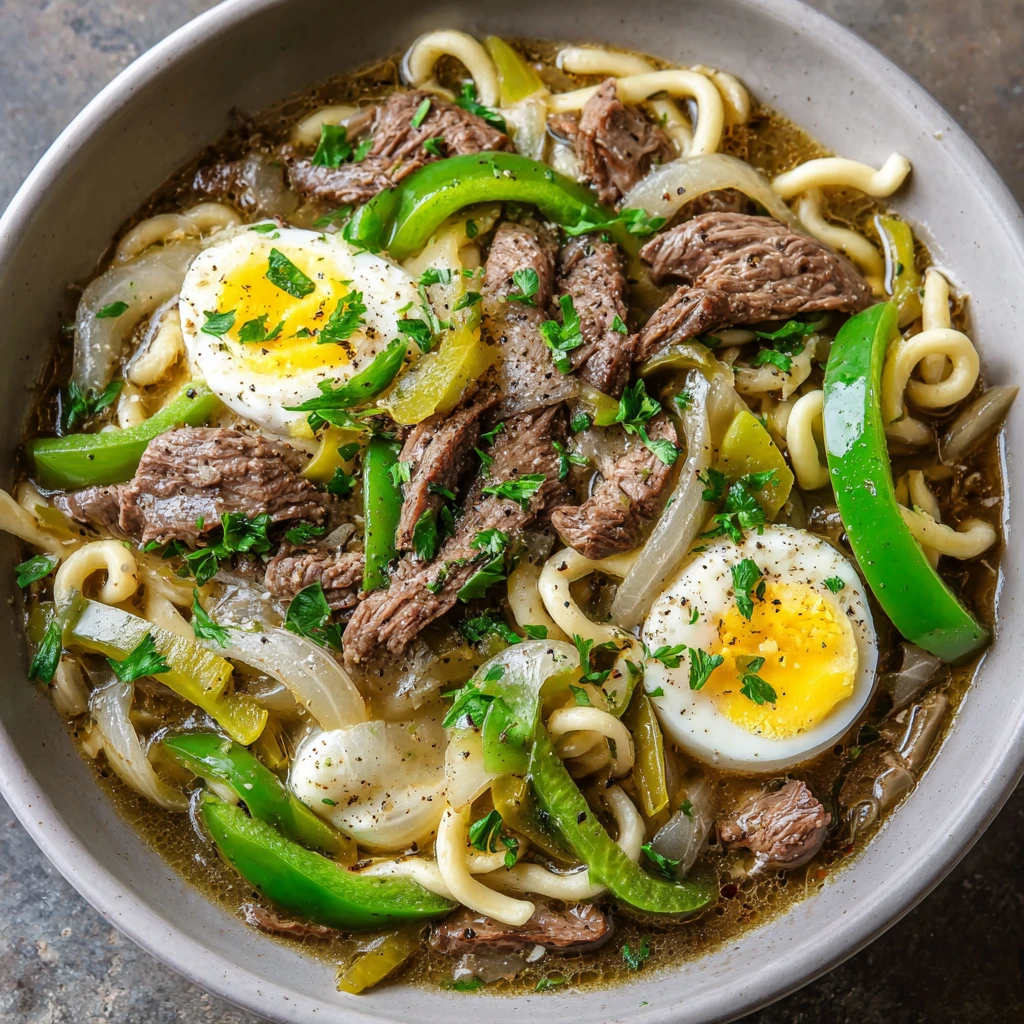
Philly Cheesesteak Pasta Soup
Ingredients
- 1 tablespoon olive oil
- 1 ½ pounds thinly sliced ribeye or sirloin steak, shaved
- 1 large yellow onion, thinly sliced
- 1 large green bell pepper, thinly sliced
- 2 cloves garlic, minced
- 6 cups beef broth
- 2 cups whole milk
- 4 ounces cream cheese, softened and cut into cubes
- 8 ounces medium egg noodles or rotini pasta
- 1 teaspoon dried oregano
- ½ teaspoon black pepper
- 1 teaspoon salt, or to taste
- ½ cup grated Parmesan cheese, plus more for serving (optional)
- 8 ounces provolone cheese, sliced or shredded
- Fresh parsley, chopped, for garnish (optional)
Step-by-Step Instructions
1. Heat olive oil in a large Dutch oven or pot over medium-high heat. Add the shaved steak in batches, cooking until browned. Do not overcrowd the pot.
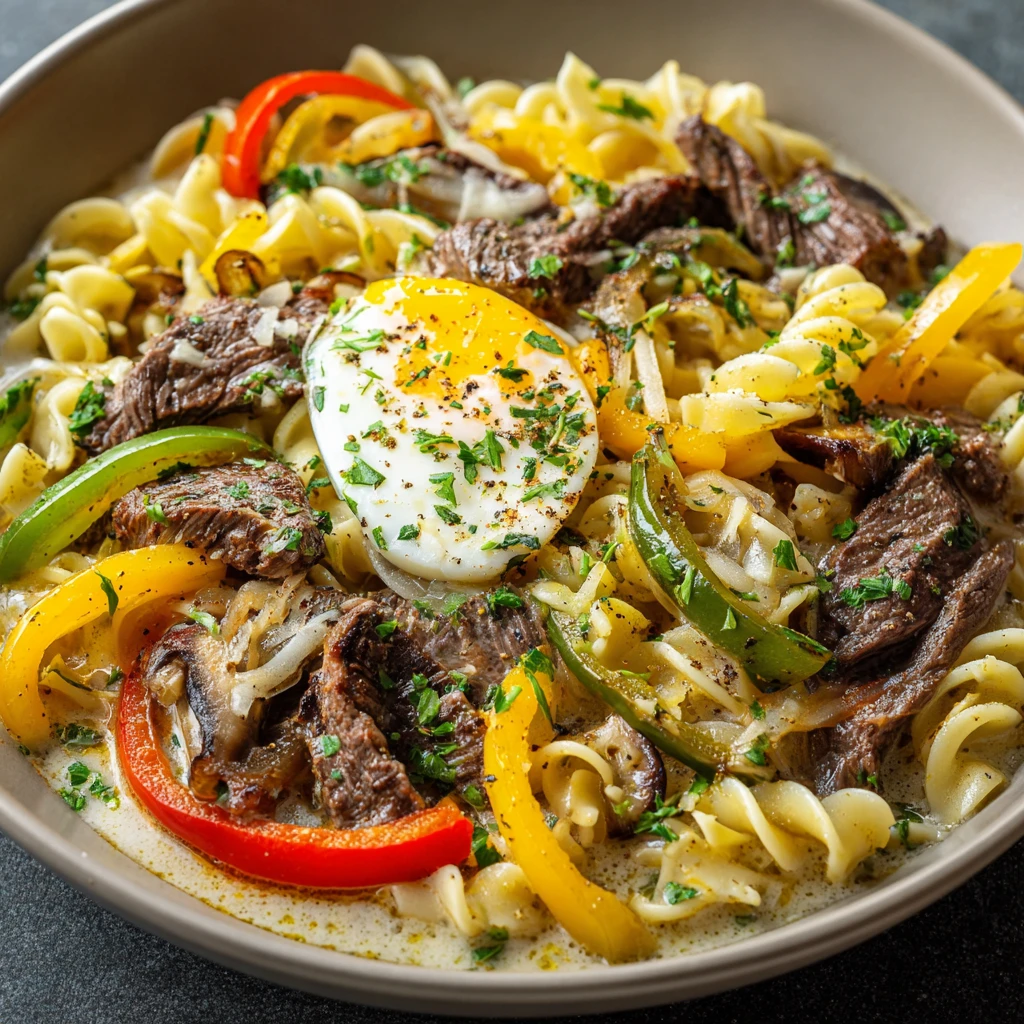
2. Remove the cooked steak from the pot and set aside on a plate. Season lightly with salt and pepper.
3. Reduce heat to medium. Add the sliced onion and green bell pepper to the same pot. Sauté for 8-10 minutes, or until softened and lightly caramelized.
4. Stir in the minced garlic and cook for another minute until fragrant, being careful not to burn it.
5. Pour in the beef broth and whole milk. Add the softened cream cheese, oregano, salt, and pepper. Whisk gently until the cream cheese is fully melted and incorporated into the liquid.
6. Bring the soup to a gentle simmer. Add the egg noodles or pasta, stirring frequently to prevent sticking. Cook according to package directions, about 7-10 minutes, until the pasta is al dente.
7. Return the cooked steak to the pot. Add the provolone cheese and Parmesan cheese (if using). Stir continuously until the cheeses are melted and the soup is creamy and well combined.
8. Taste and adjust seasonings as needed. If the soup is too thick, add a little more milk or broth until desired consistency is reached.
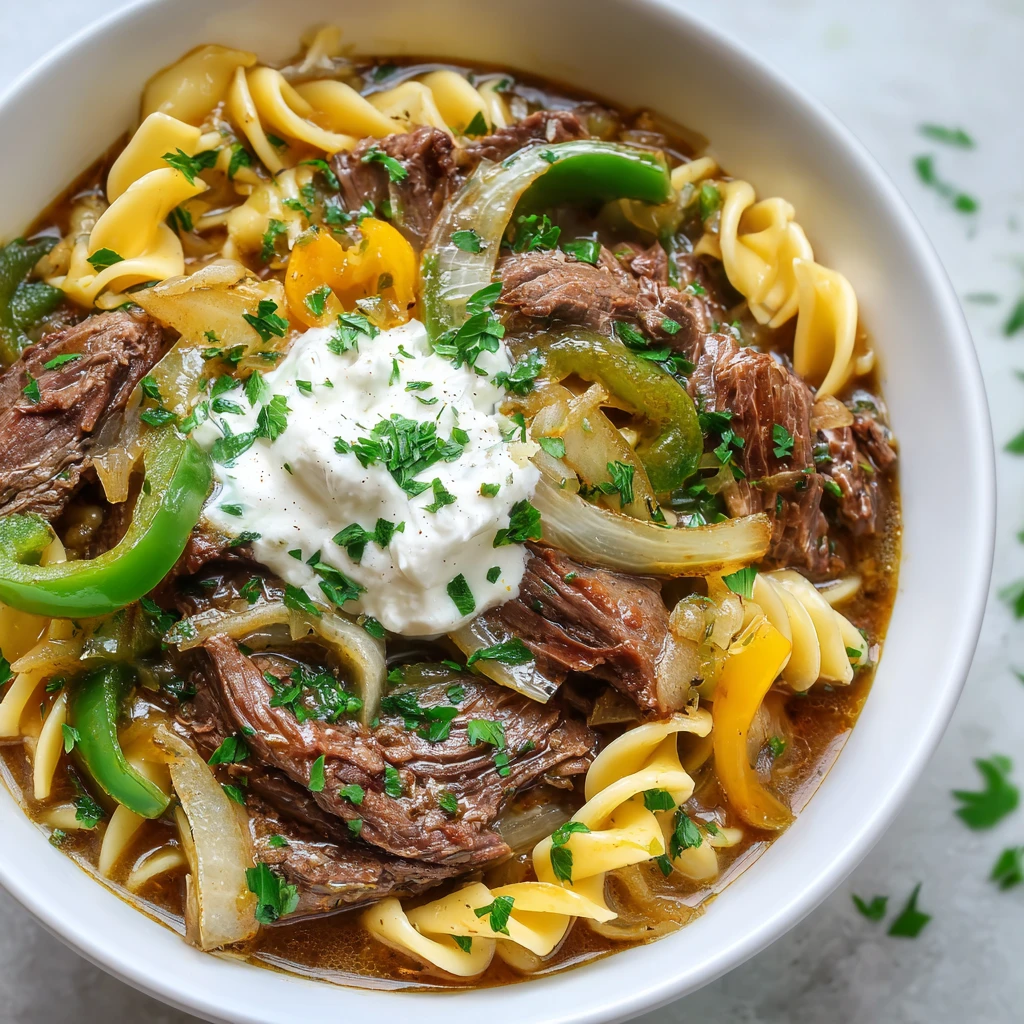
9. Ladle the hot soup into bowls. Garnish with fresh chopped parsley and additional Parmesan cheese, if desired. Serve immediately and enjoy.
The Evolution of a Comfort Classic
Philly Cheesesteak Pasta Soup represents a delightful fusion of two beloved comfort food concepts. It takes the iconic flavors of the classic Philadelphia sandwich and transforms them into a hearty, warming soup. This innovative dish offers a new way to enjoy familiar tastes.
The soup captures the essence of a cheesesteak in every spoonful. It delivers the savory beef, sautéed onions, peppers, and gooey cheese that make the sandwich so popular. This creative adaptation brings a beloved street food experience right to your dinner table in a comforting bowl.
From Street Food to Simmering Pot
The original Philly cheesesteak, born in the streets of Philadelphia, is renowned for its simple yet powerful flavor profile. Thinly sliced steak, grilled onions, and melted cheese served on a crusty roll have captivated palates for generations. Translating this into a soup required careful consideration.
The key was maintaining the integrity of those core flavors while adapting to a liquid format. Adding pasta introduces a familiar soup element, creating a substantial and satisfying meal. It moves beyond a mere appetizer, becoming a standalone main course.
Why This Mashup Works
The combination of Philly cheesesteak flavors with a creamy pasta soup base is unexpectedly harmonious. The richness of the beef broth and milk creates a velvety texture that perfectly complements the savory steak and vegetables. The pasta adds body and makes the soup incredibly filling.
This mashup works because it appeals to our innate desire for comfort. It brings together the indulgence of a cheesesteak with the warmth and coziness of a homemade soup. It’s a culinary hug in a bowl, perfect for chilly evenings or a hearty family dinner.
Mastering the Flavors
Creating an authentic Philly Cheesesteak Pasta Soup relies on understanding and replicating the core flavors of its namesake. Each ingredient plays a vital role in achieving that signature taste. Paying attention to detail during preparation will elevate your soup from good to extraordinary.
The balance of savory, creamy, and slightly tangy notes is crucial. Don’t rush the cooking process, especially when caramelizing vegetables. These steps build layers of flavor that define the final dish.
Choosing Your Beef
The quality and cut of beef are paramount for a true cheesesteak experience. Thinly sliced ribeye or sirloin are traditionally preferred for their tenderness and flavor. Look for “shaved steak” or ask your butcher to thinly slice the meat for you.
Browning the beef in batches ensures a good sear and prevents it from steaming. This crucial step develops rich, savory notes through the Maillard reaction. Seasoning the beef separately also helps enhance its natural taste.
The Art of Sautéing Veggies
Onions and green bell peppers are essential accompaniments to the steak. Sautéing them until they are soft and slightly caramelized brings out their natural sweetness. This process adds depth and a subtle complexity to the soup’s base.
Garlic, added towards the end of the sautéing process, provides a fragrant aromatic foundation. Be careful not to overcook the garlic, as it can become bitter. Its brief cook time ensures a vibrant flavor.
Cheese, Please!
No cheesesteak-inspired dish is complete without ample cheese. Provolone is a classic choice for its mild, nutty flavor and excellent melting properties. Cream cheese contributes to the soup’s luxurious creaminess and body, making it wonderfully rich.
Some variations also include Cheez Whiz for a truly authentic Philly experience, though provolone and cream cheese offer a more gourmet touch. Parmesan cheese adds a salty, umami depth that complements the other cheeses beautifully. Don’t be shy with the cheese; it’s what makes it a cheesesteak soup!
Customization and Variations
One of the great joys of cooking is the ability to adapt recipes to personal preferences and dietary needs. Philly Cheesesteak Pasta Soup is incredibly versatile, allowing for numerous modifications. You can easily adjust ingredients to make it your own.
Whether you’re looking to add a kick, try a vegetarian option, or experiment with different textures, this soup provides a fantastic base. Don’t be afraid to get creative and tailor it to your taste buds.
Vegetarian Twists
To make this soup vegetarian, you can substitute the beef with plant-based alternatives. Sliced portobello mushrooms, seitan, or even plant-based “steak” strips work wonderfully. You can also use vegetable broth instead of beef broth to maintain a full vegetarian profile.
Caramelizing the mushrooms will create a deep umami flavor that mimics the richness of meat. Ensure your chosen meat substitute holds up well in a soup environment and absorbs the broth’s flavors.
Spice It Up
If you enjoy a bit of heat, incorporating some spice can take this soup to the next level. A pinch of red pepper flakes added with the garlic will introduce a subtle warmth. For more intensity, a dash of hot sauce or a finely diced jalapeño can be stirred in.
Consider topping individual bowls with a drizzle of sriracha or a sprinkle of cayenne pepper for those who prefer more spice. This allows everyone to customize their level of heat.
Different Pasta Shapes
While egg noodles or rotini are recommended for their ability to hold the creamy sauce, almost any small to medium-sized pasta shape will work. Elbow macaroni, penne, or even small shells are excellent alternatives. Each shape offers a slightly different texture experience.
Remember that different pasta shapes may have varying cooking times, so adjust accordingly. Always cook the pasta until al dente to prevent it from becoming mushy in the soup.
Serving Suggestions & Perfect Pairings
Philly Cheesesteak Pasta Soup is a meal in itself, but pairing it with the right accompaniments can elevate the dining experience. A thoughtful selection of sides can complement its rich flavors and provide a balanced meal. Consider textures and tastes that enhance rather than overpower the soup.
From crunchy bread to fresh salads, there are many options to make your soup night special. Even beverages can play a role in rounding out the meal.
Crusty Bread & Sides
A thick slice of crusty bread or a warm baguette is an absolute must for dipping into this creamy soup. Garlic bread or cheese bread can add an extra layer of flavor and indulgence. The bread acts as a perfect vehicle for soaking up all the delicious broth.
For a lighter contrast, a simple green salad with a vinaigrette dressing is an excellent choice. The crisp freshness of the salad cuts through the richness of the soup, offering a refreshing counterpoint. Roasted asparagus or broccoli can also add a healthy, vibrant side.
Beverage Choices
When it comes to beverages, consider options that complement the hearty nature of the soup. A crisp, light-bodied beer, such as a pilsner or a lager, can provide a refreshing balance. Its effervescence helps cleanse the palate.
For wine drinkers, a medium-bodied red like a Merlot or a Cabernet Sauvignon can pair well with the beef and cheese. If you prefer non-alcoholic options, unsweetened iced tea or sparkling water with a squeeze of lemon are refreshing choices that won’t compete with the soup’s flavors.
Storing and Reheating Your Soup
Having leftover Philly Cheesesteak Pasta Soup is a delicious bonus, and knowing how to properly store and reheat it ensures its flavors remain vibrant. With a few simple tips, you can enjoy your homemade comfort food for days to come. Proper storage also helps maintain food safety and quality.
Whether you’re planning for tomorrow’s lunch or preparing for future meals, understanding the best practices is key. This soup reheats remarkably well, making it an ideal make-ahead option.
Best Practices for Leftovers
Once the soup has cooled to room temperature, transfer it to an airtight container. Refrigerate promptly within two hours of cooking. The soup will keep well in the refrigerator for up to 3-4 days.
When reheating, gently warm the soup on the stovetop over medium-low heat, stirring occasionally. If the soup has thickened considerably, you may need to add a splash of milk or beef broth to reach your desired consistency. Avoid boiling vigorously, as this can break down the cheese and pasta.
Freezing for Future Enjoyment
Philly Cheesesteak Pasta Soup can be frozen, but there are a few considerations, especially regarding the pasta and dairy. The pasta may become softer upon thawing and reheating. If you plan to freeze, consider undercooking the pasta slightly or cooking it separately and adding it upon reheating.
To freeze, allow the soup to cool completely. Transfer it to freezer-safe containers or heavy-duty freezer bags, leaving some headspace for expansion. It can be stored in the freezer for up to 2-3 months. Thaw overnight in the refrigerator before reheating gently on the stovetop. You might need to adjust the creaminess with a little extra milk or cream after thawing.
FAQ
What kind of beef is best for Philly Cheesesteak Pasta Soup?
Thinly sliced ribeye or sirloin steak is ideal for its tenderness and flavor. Look for “shaved steak” at your grocery store for authentic results.
Can I make this soup vegetarian?
Yes, you can substitute the beef with sliced portobello mushrooms, seitan, or plant-based steak strips. Use vegetable broth instead of beef broth for a fully vegetarian version.
What kind of cheese should I use?
Provolone and cream cheese are crucial for the soup’s flavor and creamy texture. Grated Parmesan cheese is also a great addition for extra depth. Some people like to add a touch of Cheez Whiz for a classic Philly taste.
Can I make this soup ahead of time?
Yes, you can prepare the soup ahead. The flavors often meld and improve overnight. When reheating, you may need to add more liquid as the pasta will absorb some of the broth. If planning to freeze, consider cooking the pasta separately.
What are some good side dishes to serve with this soup?
Crusty bread or garlic bread is perfect for dipping. A fresh green salad with a light vinaigrette or some roasted vegetables like asparagus or broccoli make excellent companions to balance the richness of the soup.
Philly Cheesesteak Pasta Soup