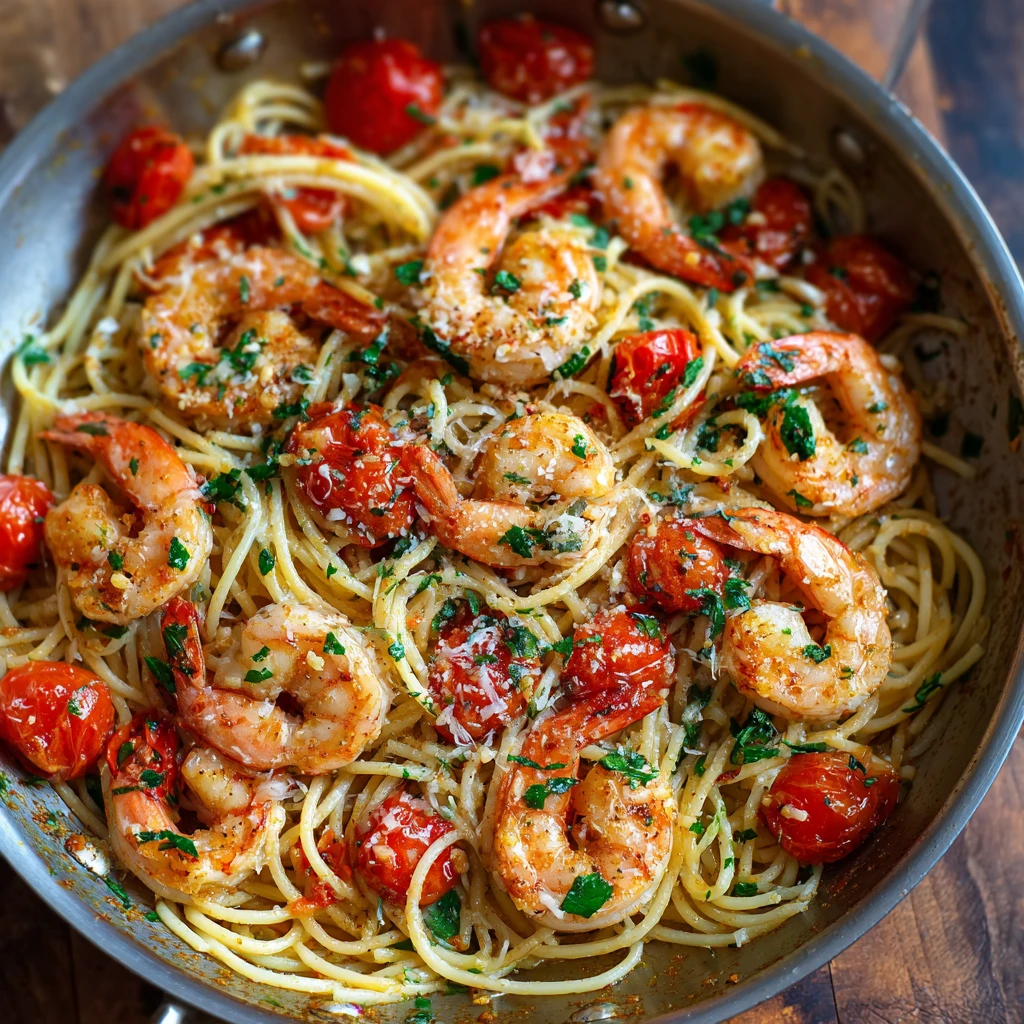
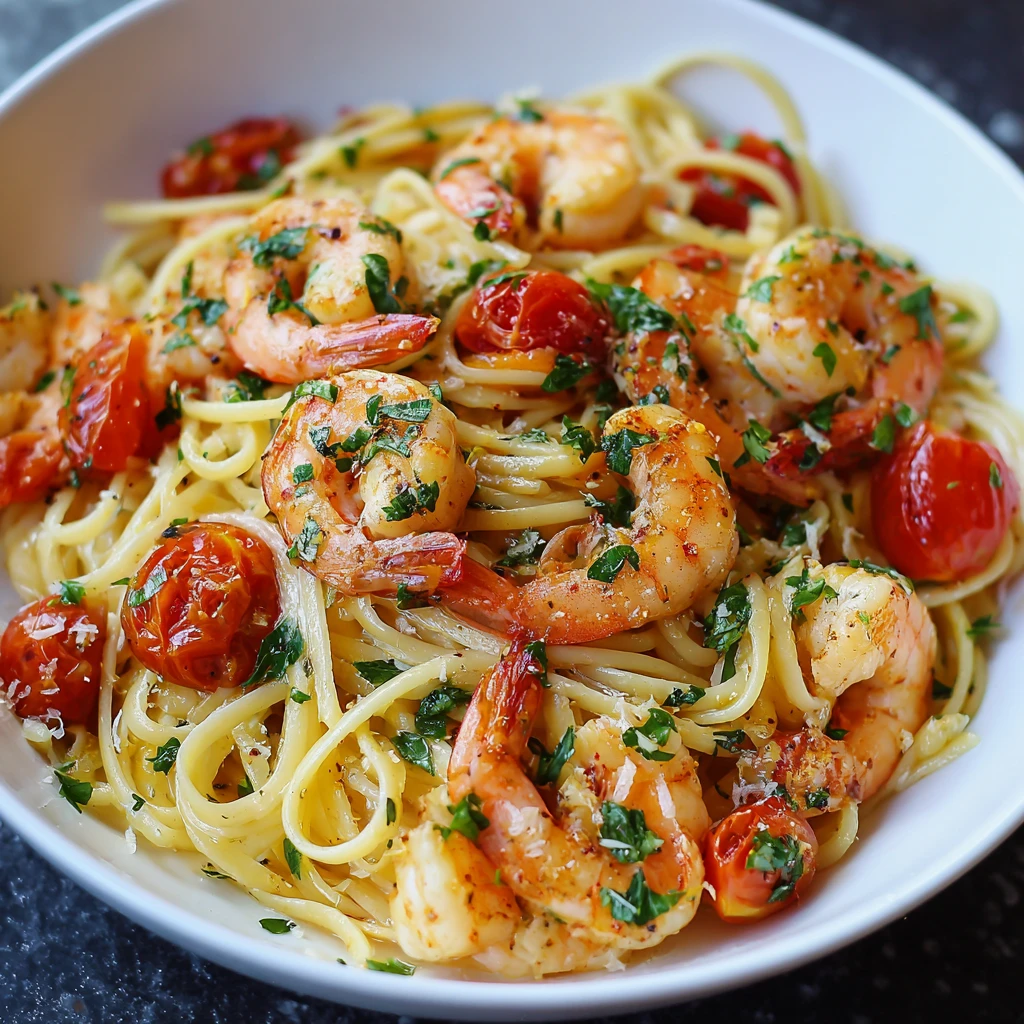
Mediterranean Garlic Shrimp Spaghetti
Ingredients
- 1 pound spaghetti or linguine
- 1.5 pounds large shrimp, peeled and deveined, tails on or off
- 6 tablespoons extra virgin olive oil, divided
- 1 large onion, finely chopped
- 6 cloves garlic, minced
- 1 pint cherry tomatoes, halved
- 1/2 cup dry white wine (like Sauvignon Blanc or Pinot Grigio)
- 1/2 cup reserved pasta water
- 1/4 cup fresh parsley, chopped, plus more for garnish
- 1/4 cup fresh basil, chopped
- 2 tablespoons fresh lemon juice
- 1 teaspoon red pepper flakes (optional, for heat)
- Salt and freshly ground black pepper to taste
- Parmesan cheese, grated (for serving, optional)
Step-by-Step
1. Cook the Pasta: Bring a large pot of salted water to a rolling boil. Add the spaghetti and cook according to package directions until al dente. Before draining, reserve about 1 cup of the starchy pasta water. Drain the pasta and set aside.
2. Prepare the Shrimp: While the pasta cooks, pat the shrimp dry with paper towels. Season them generously with salt, black pepper, and half of the red pepper flakes (if using).
3. Sauté Aromatics: In a large skillet or Dutch oven, heat 3 tablespoons of olive oil over medium heat. Add the chopped onion and cook for 5-7 minutes, or until softened and translucent.
4. Add Garlic and Tomatoes: Stir in the minced garlic and the remaining red pepper flakes. Cook for 1 minute until fragrant, being careful not to burn the garlic. Add the halved cherry tomatoes and cook for 5-7 minutes, stirring occasionally, until they begin to burst and soften.
5. Deglaze with Wine: Pour in the white wine and bring to a simmer, scraping up any browned bits from the bottom of the pan. Let it reduce by half, which should take about 3-5 minutes.
6. Cook the Shrimp: Push the tomato mixture to one side of the skillet. Add the remaining 3 tablespoons of olive oil to the empty side and increase the heat to medium-high. Add the seasoned shrimp in a single layer. Cook for 1-2 minutes per side until they turn pink and opaque. Do not overcook.
7. Combine and Finish: Add the cooked spaghetti directly to the skillet with the shrimp and sauce. Pour in about 1/2 cup of the reserved pasta water. Toss everything together, allowing the pasta to absorb the flavors and the sauce to emulsify. Add more pasta water a tablespoon at a time if the sauce is too thick.
8. Stir in Herbs and Lemon: Remove the skillet from the heat. Stir in the fresh parsley, fresh basil, and lemon juice. Taste and adjust seasoning with salt and pepper as needed.
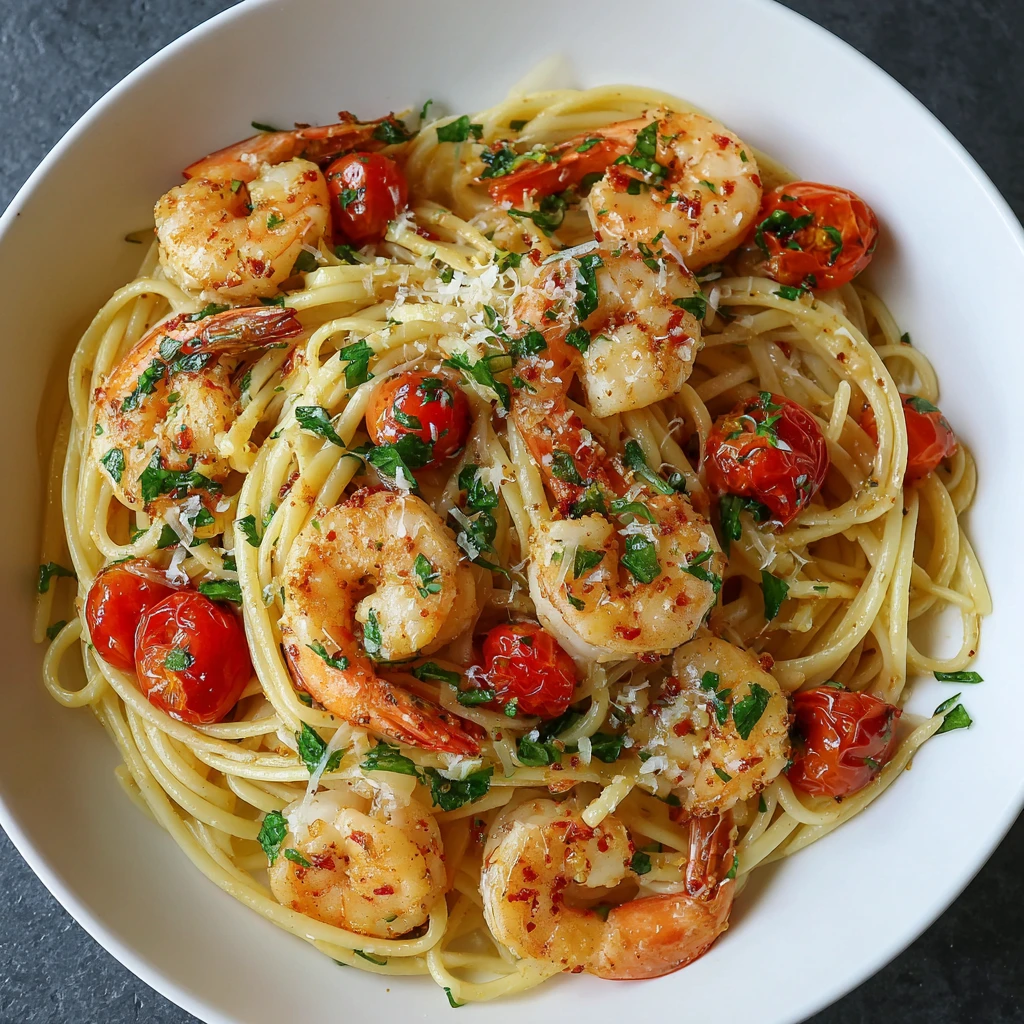
9. Serve: Divide the Mediterranean Garlic Shrimp Spaghetti among plates. Garnish with extra fresh parsley and a sprinkle of grated Parmesan cheese, if desired. Serve immediately and enjoy.
The Mediterranean Diet & Its Culinary Heartbeat
The Mediterranean diet is more than just a way of eating; it’s a lifestyle rooted in the traditional culinary practices of countries bordering the Mediterranean Sea. This flavorful cuisine emphasizes fresh, whole ingredients and simple preparation methods. It celebrates vegetables, fruits, whole grains, legumes, nuts, seeds, and olive oil.
Mediterranean Garlic Shrimp Spaghetti perfectly embodies the spirit of this diet. It combines lean protein, heart-healthy fats, complex carbohydrates, and vibrant produce. The focus is on natural flavors and wholesome goodness.
A Legacy of Flavor and Wellness
The Mediterranean approach to food has been praised globally for its unique combination of deliciousness and profound health benefits. It’s a culinary tradition passed down through generations. Dishes are often prepared with minimal processing, allowing the natural essence of each ingredient to shine.
This culinary legacy promotes not just physical health but also a joy for eating. It encourages shared meals and a slower pace of life. The experience of food is as important as its nutritional content.
Key Pillars of Mediterranean Eating
At its core, Mediterranean eating prioritizes plant-based foods. Olive oil is the primary source of fat, used extensively in cooking and dressings. Fish and seafood are common protein sources, consumed regularly.
Poultry, eggs, and dairy are enjoyed in moderation. Red meat is eaten infrequently, often reserved for special occasions. Herbs and spices replace salt as flavor enhancers.
The Health Benefits on Your Plate
Adopting a Mediterranean diet has been consistently linked to numerous health advantages. It supports cardiovascular health, reducing the risk of heart disease and stroke. It also helps manage blood sugar levels and can aid in weight management.
The abundance of antioxidants from fruits and vegetables combats inflammation. This diet may even contribute to improved cognitive function and a longer lifespan. Enjoying a dish like Mediterranean Garlic Shrimp Spaghetti is a delicious step towards a healthier lifestyle.
Elevating Your Mediterranean Garlic Shrimp Spaghetti
Achieving restaurant-quality results at home is entirely possible with a few key techniques and considerations. The magic lies not just in the recipe itself, but in how you approach each step. Attention to detail can transform a good dish into an extraordinary one.
From selecting your ingredients to the final toss, every choice contributes to the overall success. Mastering these nuances will make your Mediterranean Garlic Shrimp Spaghetti unforgettable.
Sourcing the Finest Ingredients
The quality of your ingredients directly impacts the final flavor. Opt for fresh, plump shrimp, ideally wild-caught if available. Look for bright, firm cherry tomatoes, preferably in season.
Choose a high-quality extra virgin olive oil; its fruity notes are essential to the Mediterranean profile. Fresh herbs, vibrant and aromatic, make a significant difference compared to dried alternatives. These foundational ingredients lay the groundwork for a superb dish.
Mastering the Shrimp Sauté
Shrimp cooks very quickly, and overcooked shrimp becomes tough and rubbery. The key is to cook them just until they turn pink and opaque. This typically takes only 1-2 minutes per side.
Ensure your skillet is hot enough before adding the shrimp. Cook them in a single layer to prevent steaming. Remove them from the heat immediately once done to retain their tender texture.
Infusing Aromatic Depth
Garlic and onion form the aromatic backbone of this dish. Take your time sautéing the onion until it’s translucent and sweet, not just browned. This builds a foundational layer of flavor.
Add minced garlic only for the last minute of cooking the onions to prevent it from burning. Burnt garlic tastes bitter and can ruin the entire dish. Red pepper flakes, if used, should also be gently bloomed in oil to release their warmth.
Achieving the Perfect Pasta Finish
Cooking spaghetti al dente is crucial; it means it’s still firm to the bite. This texture holds up well in the sauce and prevents it from becoming mushy. Always reserve some pasta water.
The starchy pasta water is your secret weapon for emulsifying the sauce. It helps the sauce cling beautifully to the spaghetti, creating a rich, glossy finish. Adding the pasta directly to the skillet allows it to absorb all the wonderful flavors.
Creative Twists and Dietary Adaptations
While the classic Mediterranean Garlic Shrimp Spaghetti is a triumph, its versatility allows for exciting variations. You can easily tailor this recipe to suit different tastes, dietary preferences, or simply to use what you have on hand. Don’t be afraid to experiment.
These adaptations can introduce new textures, deepen existing flavors, or make the dish accessible to everyone. The core elements of fresh ingredients and robust flavors remain intact.
Vegetable Enhancements
Boost the nutritional content and flavor by adding more vegetables. Sautéed spinach or kale wilts beautifully into the sauce, adding a vibrant green hue and earthy notes. Artichoke hearts, either canned or jarred, can provide a lovely tangy counterpoint.
Asparagus spears or zucchini ribbons can be added during the last few minutes of cooking. Bell peppers, especially red or yellow, offer sweetness and crunch. Sun-dried tomatoes (oil-packed) can also intensify the tomato flavor.
Protein Substitutions and Additions
If shrimp isn’t available or preferred, consider other lean proteins. Scallops cook similarly to shrimp and offer a delicate sweetness. Chicken breast, cut into bite-sized pieces, can be sautéed before the onions.
Firm white fish, such as cod or snapper, can be flaked into the sauce after cooking. For a heartier meal, add Italian sausage (mild or spicy) alongside the onions. A vegetarian option could swap shrimp for chickpeas or white beans.
Gluten-Free and Low-Carb Alternatives
For those avoiding gluten, simply swap traditional spaghetti for a gluten-free pasta alternative. Rice pasta, corn pasta, or lentil pasta all work well. Ensure they are cooked al dente to prevent them from breaking down.
To reduce carbohydrates, zucchini noodles (zoodles) are an excellent choice. Spiralize fresh zucchini and add it to the skillet at the very end, tossing just enough to warm through. Spaghetti squash, roasted and scraped, also makes a fantastic low-carb base.
Spice It Up or Tone It Down
The red pepper flakes provide a gentle warmth, but you can adjust this to your liking. For more heat, add an extra pinch or two of red pepper flakes. A dash of cayenne pepper can also amplify the spice.
If you prefer a milder flavor, simply omit the red pepper flakes entirely. Freshly cracked black pepper will still provide a pleasant bite without the heat. Consider adding a pinch of dried oregano or a bay leaf for a different aromatic profile.
Perfect Pairings and Serving Etiquette
Presenting your Mediterranean Garlic Shrimp Spaghetti goes beyond simply plating the food. Thoughtful pairings and elegant serving can transform a weeknight meal into a special occasion. Consider what complements the dish’s vibrant flavors.
The right accompaniments enhance the dining experience, creating a well-rounded and satisfying meal. From side dishes to beverages, every element contributes to the overall enjoyment.
Complementary Side Dishes
A simple green salad with a light vinaigrette is a perfect companion. Its freshness cuts through the richness of the pasta. Crusty artisan bread, especially a baguette or ciabatta, is ideal for soaking up every last drop of the delicious sauce.
Roasted vegetables like broccoli florets, asparagus, or cherry tomatoes can also be served alongside. A light bruschetta or a small bowl of marinated olives can be a delightful appetizer. Keep sides simple to let the main dish shine.
Wine and Beverage Recommendations
A crisp, dry white wine is the classic choice to pair with Mediterranean Garlic Shrimp Spaghetti. Sauvignon Blanc, Pinot Grigio, or a Vermentino will complement the lemon, garlic, and seafood flavors beautifully. Their acidity helps cleanse the palate.
For non-alcoholic options, sparkling water with a slice of lemon or cucumber is refreshing. A light, unsweetened iced tea or a homemade lemonade also works well. The goal is a beverage that balances the dish without overpowering it.
Elegant Presentation Tips
Garnishing your finished dish adds a professional touch. A generous sprinkle of fresh, chopped parsley or basil not only adds color but also enhances the aroma. A wedge of fresh lemon on the side allows diners to add more zest if desired.
A light dusting of freshly grated Parmesan or Pecorino Romano cheese adds a savory finish. Serve in warm, shallow bowls to keep the pasta warm and showcase the vibrant colors. A drizzle of your best extra virgin olive oil just before serving elevates the dish.
Making It a Complete Meal
While delicious on its own, adding a few strategic elements can create a more substantial and balanced meal. Starting with a light vegetable-based soup can be a lovely beginning. A small, fruit-based dessert like a bowl of fresh berries or grilled peaches can conclude the meal on a sweet note.
Consider the entire dining experience, from appetizer to dessert, to make it truly memorable. The beauty of Mediterranean cuisine is its emphasis on fresh ingredients and mindful enjoyment.
Storing, Reheating, and Meal Prep Savvy
Leftovers are often a delicious bonus, but knowing how to properly store and reheat your Mediterranean Garlic Shrimp Spaghetti is key to maintaining its quality. This dish, with a little planning, can also be a fantastic candidate for meal prepping. Maximizing its longevity ensures you can enjoy its flavors for days to come.
Proper handling preserves taste and texture, making subsequent meals just as enjoyable as the first. This section offers practical advice for making the most of your culinary efforts.
Optimal Storage Practices
Once cooled to room temperature, transfer any leftover Mediterranean Garlic Shrimp Spaghetti to an airtight container. Refrigerate promptly within two hours of cooking. This prevents bacterial growth and keeps the food fresh.
The dish will typically last for up to 2-3 days in the refrigerator. Store it separately from any raw ingredients to avoid cross-contamination. Labeling with the date cooked can be helpful for tracking freshness.
Reheating Without Compromise
The best way to reheat this dish is gently on the stovetop. Add a splash of water, chicken broth, or a bit more white wine to a skillet over medium-low heat. Add the pasta and shrimp mixture.
Stir gently and cook until just warmed through, about 5-7 minutes. Avoid high heat, which can toughen the shrimp and dry out the pasta. Microwaving is an option for convenience but can sometimes result in chewier shrimp.
A Meal Prep Champion
Mediterranean Garlic Shrimp Spaghetti lends itself well to meal prepping. Cook a larger batch of the pasta and the sauce separately. Store them in individual containers in the refrigerator.
When ready to eat, combine the desired portions of pasta and sauce in a skillet. Follow the gentle reheating instructions. This method prevents the pasta from getting soggy if stored directly in the sauce for too long.
Advanced Planning for Busy Weeks
Prepare the sauce component (onions, garlic, tomatoes, wine) ahead of time and store it in the fridge. When you’re ready to cook, simply boil the pasta and sauté the shrimp. Then, combine with the pre-made sauce.
This streamlines the cooking process significantly on a busy weeknight. Fresh herbs should ideally be added at the very end for maximum impact, even with pre-prepped components. Enjoy the convenience without sacrificing flavor.
Mediterranean Garlic Shrimp Spaghetti