
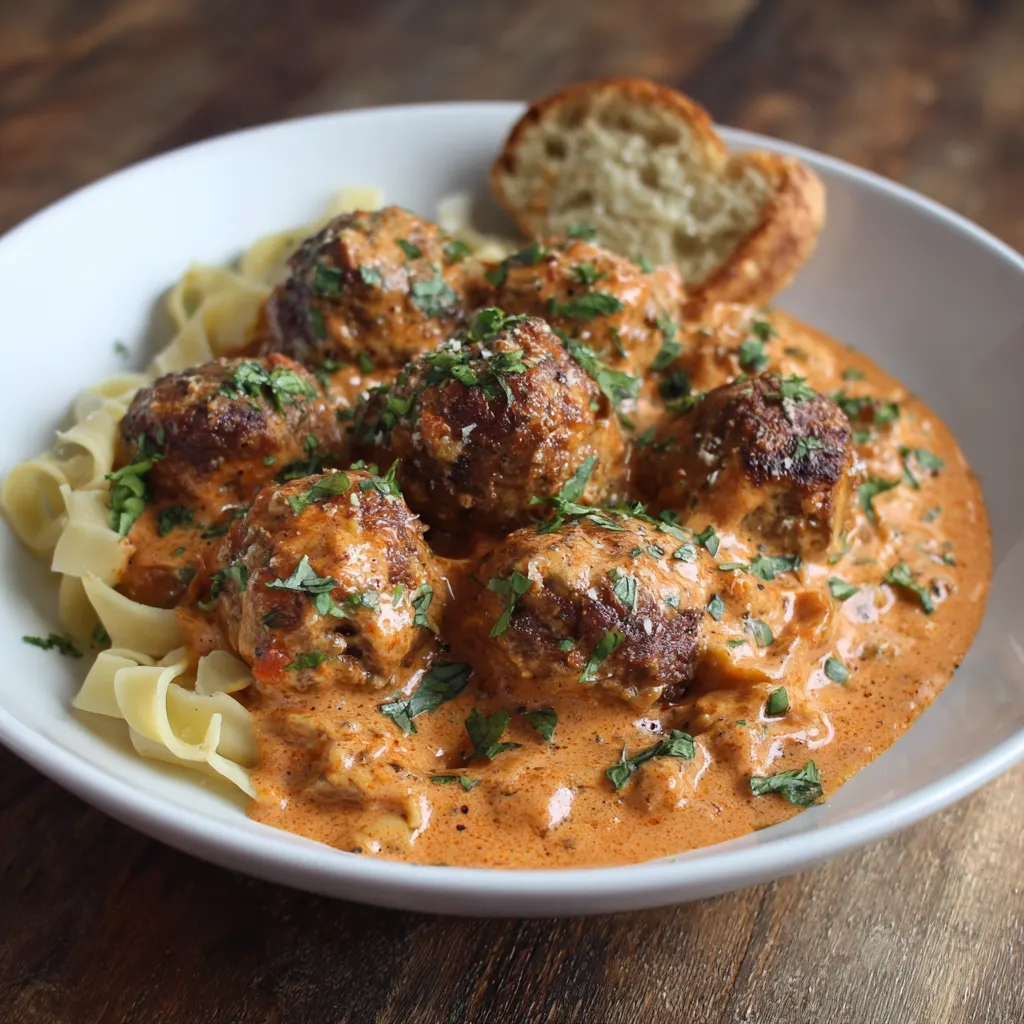
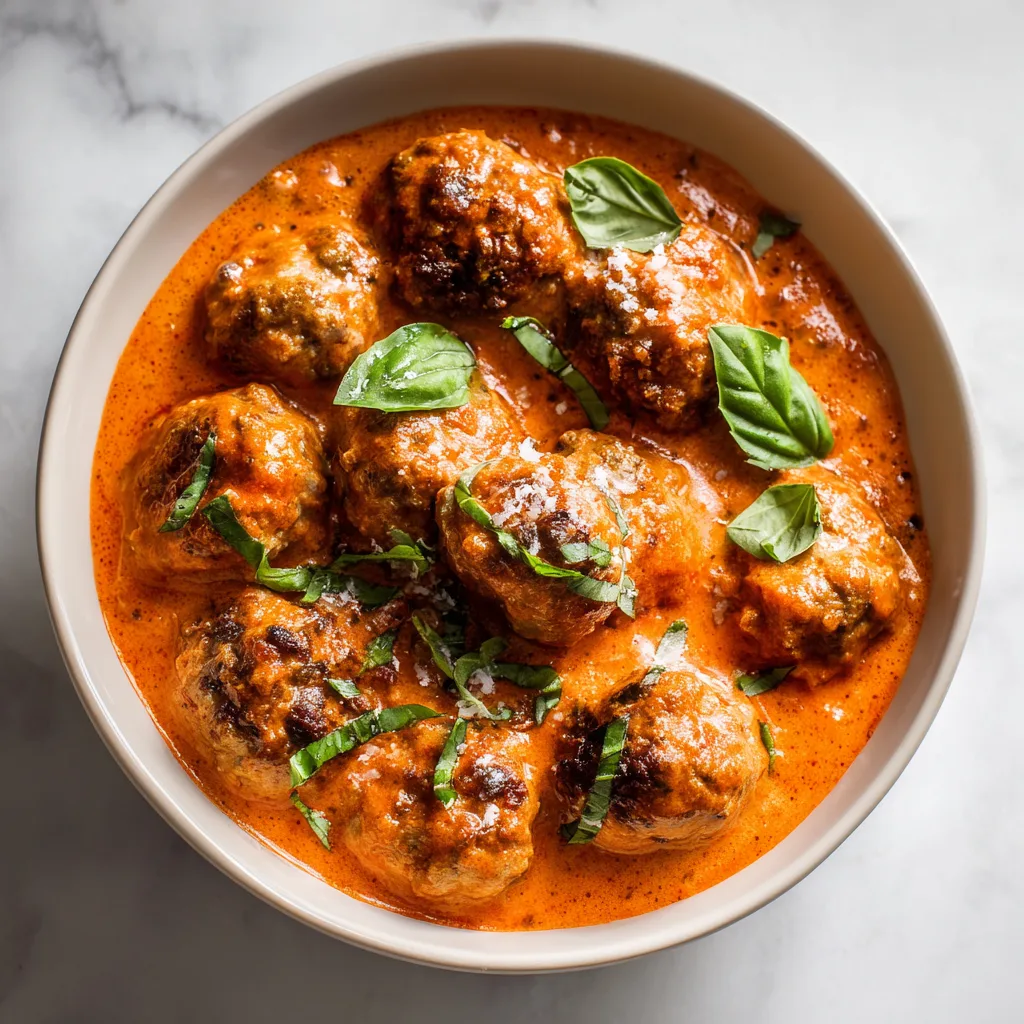
This recipe transforms a simple weeknight meal into an Italian-American masterpiece. Utilizing the set-it-and-forget-it convenience of the slow cooker, these meatballs simmer for hours in a rich, herby tomato sauce, absorbing layers of flavor until they become meltingly tender. The grand finale is the addition of fresh basil and a touch of heavy cream, creating a luscious, velvety sauce that is far more decadent than its easy preparation suggests. Whether served over a bed of spaghetti or enjoyed with crusty bread, these creamy, vibrant meatballs deliver deep, comforting flavor without the stovetop hassle.
Ingredients
For the Meatballs
-
1 pound ground beef (80/20 or 90/10 blend)
-
1 pound ground pork or Italian sausage (mild or hot)
-
1 cup plain breadcrumbs (or Panko breadcrumbs)
-
½ cup whole milk (or water/broth)
-
½ cup freshly grated Parmesan cheese
-
¼ cup finely minced yellow onion
-
4 cloves garlic, minced
-
¼ cup finely chopped fresh parsley
-
1 large egg, lightly beaten
-
1 teaspoon dried oregano
-
1 teaspoon kosher salt
-
½ teaspoon black pepper
For the Creamy Tomato Basil Sauce
-
1 (28 ounce) can crushed tomatoes
-
1 (15 ounce) can tomato sauce or tomato puree
-
1 small yellow onion, chopped
-
2 cloves garlic, minced
-
1 tablespoon Italian seasoning
-
1 teaspoon sugar (or honey), to balance acidity
-
½ teaspoon crushed red pepper flakes (optional, for heat)
-
1 teaspoon kosher salt
-
½ cup heavy cream or half-and-half
-
½ cup fresh basil leaves, chopped (divided)
Step-by-Step Instructions
1. Prepare the Slow Cooker Sauce Base In the base of a 6-quart slow cooker, combine the crushed tomatoes, tomato sauce/puree, chopped onion, minced garlic, Italian seasoning, sugar, crushed red pepper flakes (if using), and salt. Stir well to combine the sauce ingredients evenly.
2. Mix and Form the Meatballs In a large bowl, combine the breadcrumbs and milk, allowing them to soak for a few minutes until the breadcrumbs are softened. This process, known as creating a panade, is key to retaining moisture. Add the Parmesan cheese, minced onion, minced garlic, parsley, egg, oregano, salt, and pepper to the panade mixture. Mix gently until just combined. Next, add the ground beef and ground pork/sausage. Using your hands, mix the meat mixture until all ingredients are just incorporated. Avoid overmixing, as this can result in tough meatballs.
3. Arrange and Cook Using a small scoop or wet hands, roll the mixture into approximately 24–30 meatballs (about 1.5 inches in diameter). Gently place the meatballs directly into the prepared tomato sauce in the slow cooker. It is acceptable if they are not entirely submerged; they will settle into the sauce as they cook. Do not stir the sauce and meatballs at this stage to prevent the fragile, uncooked balls from breaking apart.
4. Slow Cook to Perfection Cover the slow cooker with the lid. Cook on Low for 6 to 8 hours or on High for 3 to 4 hours, or until the internal temperature of the meatballs reaches 165°F (74°C) and they are fork-tender.
5. Create the Creamy Finish About 15–20 minutes before serving, stir in the heavy cream and half of the chopped fresh basil into the sauce until the mixture is uniformly pink and creamy. Allow the sauce to simmer briefly to heat the cream through. Taste the sauce and adjust the salt and pepper as needed.
6. Serve Serve the Crockpot Creamy Tomato Basil Meatballs hot, garnished with the remaining fresh basil and an extra dusting of Parmesan cheese.
Achieving the Perfect Slow-Simmered Texture
The secret to truly fork-tender meatballs, the kind that melt in your mouth, lies in both the blend of meat and the slow-cooking method. Unlike pan-fried or baked meatballs, slow cooker versions are essentially braised in liquid, resulting in superior tenderness.
The Ideal Meat Blend
For the most flavorful and juicy meatballs, a combination of meats is highly recommended. The optimal balance is often a 50/50 split of:
-
Ground Beef (80/20): Provides essential beefy flavor and enough fat to keep the mixture moist during the long cooking time. While some recipes suggest leaner cuts like 93% beef, a slightly higher fat content prevents the meatballs from drying out, even if a little fat needs to be skimmed from the sauce later.
-
Ground Pork or Italian Sausage: Pork contributes a subtle sweetness and extra richness, while Italian sausage (mild or hot) introduces pre-seasoned fennel, garlic, and pepper, enhancing the classic Italian profile immediately.
The Panade Principle
The biggest risk when cooking meatballs for hours in a sauce is dryness or toughness. The inclusion of a panade—a mixture of soaked breadcrumbs or Panko and milk or liquid—is a fundamental Italian technique that acts as a moisture binder. The starch in the breadcrumbs soaks up the liquid, creating pockets of moisture within the meatball structure, preventing the meat proteins from contracting too tightly as they cook.
To Brown or Not to Brown
The majority of successful slow cooker recipes favor the “dump-and-go” method, requiring no pre-browning. While browning does create a richer, crusty exterior and deepens flavor (the Maillard reaction), it also means extra dishes and time. The slow, gentle simmering ensures the meatballs cook thoroughly while bathing in the herby tomato base, effectively skipping the need for searing without compromising the overall rich flavor profile. For the busiest cooks, skipping the browning step is a worthwhile trade-off for the convenience.
The Creamy-Basil Finish: Tips for a Restaurant-Quality Sauce
The elements of “Creamy Tomato Basil” are what elevate this dish beyond a standard marinara meatball. Precision in adding the cream and fresh herbs is vital for achieving that luscious, balanced finish.
Preventing Cream Curdling
The most critical step in making a creamy tomato sauce is temperature control. Cream (especially low-fat versions like whole milk or half-and-half) can curdle when added directly to a highly acidic, rapidly boiling sauce.
-
Add at the End: Always incorporate the cream after the long slow-cooking process is complete, and the cooker is no longer on a vigorous boil.
-
Use High-Fat Cream: Heavy whipping cream (36% fat content) is the most stable option and is highly resistant to curdling, ensuring a silky texture. Half-and-half is a good lighter substitute, but must be stirred in gently.
-
Temperature Match: For best results, allow the heavy cream to come to room temperature before adding it to the warm sauce.
For a deeper, savory creaminess, some chefs recommend incorporating a few ounces of softened cream cheese or mascarpone into the sauce about 30 minutes before serving, stirring until completely dissolved before adding any liquid cream.
Harnessing the Power of Fresh Basil
Basil is a delicate herb whose flavor diminishes significantly when cooked for long periods. The best way to use basil is to treat it as both an integral sauce component and a final garnish:
-
Cooked Basil: Add a small amount of dried basil to the initial sauce mixture to build a baseline herbal aroma during the cook time.
-
Fresh Finish: The majority of the fresh basil should be stirred in during the last 15 minutes of cooking or sprinkled heavily over the finished dish. This preserves the bright, slightly peppery, aromatic notes of the herb, making the “basil” component truly pop.
Adjusting Sauce Consistency
If, after the long simmer, the tomato sauce is too thin, there are two easy fixes:
-
Reduction: Remove the slow cooker lid and switch the setting to High for the last 30–60 minutes. This allows moisture to evaporate, naturally thickening the sauce.
-
Cornstarch Slurry: Whisk together 1 tablespoon of cornstarch with 2 tablespoons of water until smooth. Stir this slurry into the simmering sauce. The sauce will thicken within minutes.
Effortless Serving Suggestions and Perfect Pairings
While the classic pairing is always spaghetti, these Creamy Tomato Basil Meatballs are incredibly versatile and can anchor a variety of meals, from family dinners to casual entertaining.
Foundation Bases
The rich, creamy sauce is perfect for coating just about any starchy or vegetable base:
-
Classic Pasta: Linguine, fettuccine, pappardelle, or even short pastas like penne and rotini are excellent choices. Cook the pasta al dente and transfer it directly to the slow cooker to toss with the sauce before serving.
-
Low-Carb Options: Serve the meatballs over freshly spiralized zucchini noodles (zoodles) or spaghetti squash for a lighter, low-carb meal that still offers a satisfying texture.
-
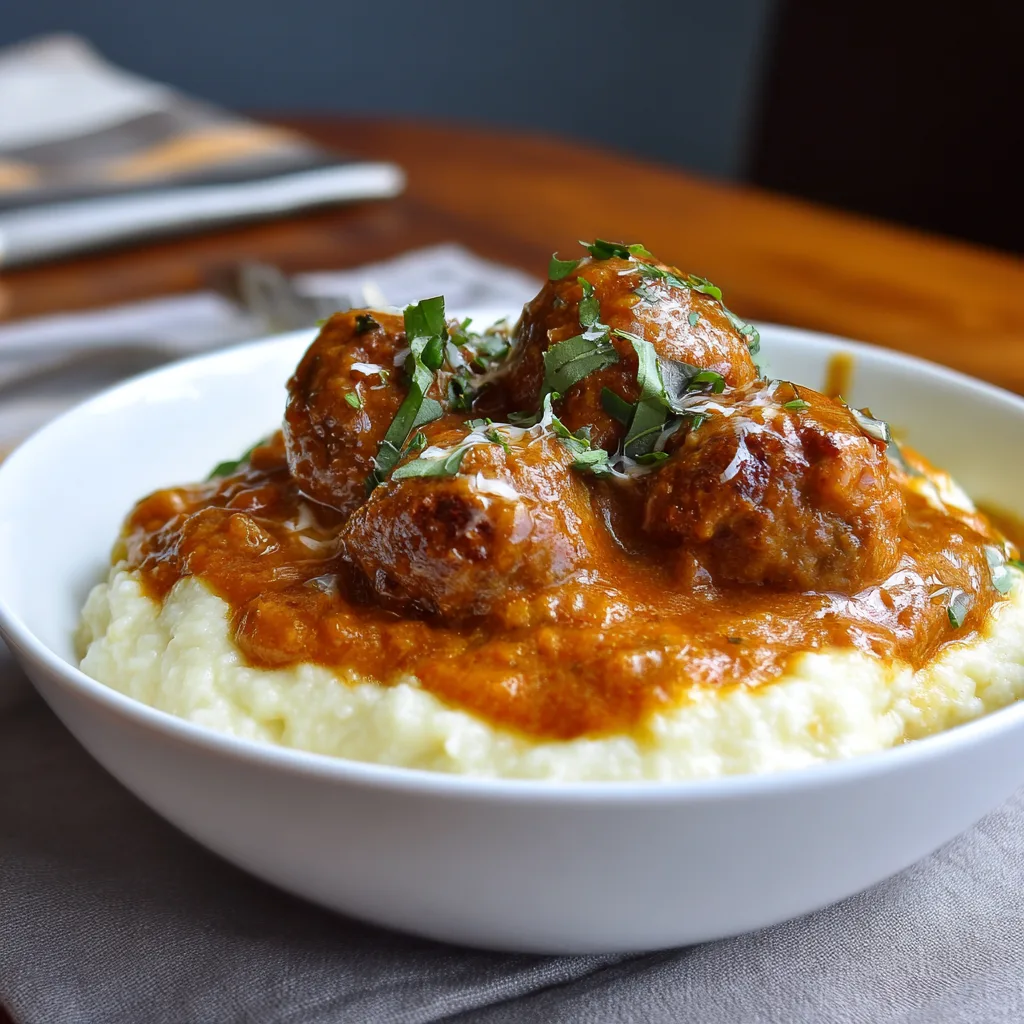
Hearty Alternatives: Creamy polenta or garlic-parmesan mashed potatoes are fantastic partners. The soft texture of the polenta or potatoes allows them to soak up every drop of the luxurious sauce.
Essential Side Dishes
To create a complete Italian meal, pair the meatballs with fresh, contrasting textures:
-
Crusty Bread: Essential for soaking up the remaining sauce (known as fare la scarpetta). Garlic knots, or a simple sliced Italian loaf brushed with butter and herbs, are ideal.
-
Fresh Salad: A simple side salad with crisp greens, thinly sliced red onion, and a light vinaigrette (oil and vinegar) provides a crucial acidic counterpoint to the richness of the cream sauce.
-
Roasted Vegetables: A side of oven-roasted broccoli, asparagus, or green beans provides a healthy, slightly charred texture contrast.
Perfect for Parties
Meatballs are the ultimate appetizer. Instead of rolling large balls, form them into 1-inch party-sized portions. Serve them directly from a smaller slow cooker on the “Keep Warm” setting, alongside toothpicks and a bowl for discard. They make an excellent, hands-off contribution to any gathering or potluck.
Meal Prep, Storage, and Quick-Change Variations
One of the great advantages of using the crockpot is its adaptability for meal preparation and its ease of storage, making this recipe a favourite for busy weeknights.
Freezing and Storage
These meatballs are highly freezer-friendly, both cooked and uncooked.
Uncooked Meatballs:
-
Form the raw meatballs and place them on a parchment-lined baking sheet.
-
Freeze for 1–2 hours until firm.
-
Transfer the semi-frozen meatballs to a freezer-safe zip-top bag or airtight container. They can be stored for up to 3 months.
-
When ready to cook, add them directly to the simmering tomato sauce in the crockpot. Note: Using frozen meatballs may add 1–2 hours to the cooking time on Low.
Cooked Meatballs and Sauce:
-
Cool the cooked meatballs and sauce completely.
-
Portion the mixture into freezer-safe containers or bags.
-
Freeze for up to 3 months.
-
To reheat, thaw overnight in the refrigerator, then warm gently on the stovetop over low heat or back in the slow cooker on High for about an hour. It is important to reheat slowly to prevent the creamy sauce from separating.
Quick-Change Recipe Variations
The base recipe is robust enough to handle simple ingredient swaps, allowing you to customize the dish quickly:
-
Spicy Italian: Double the amount of crushed red pepper flakes and use hot Italian sausage instead of mild pork. Add a pinch of cayenne pepper to the sauce for an extra kick.
-
Cheesy Surprise: Just before adding the cream, hollow out the center of a few meatballs and stuff a small cube of fresh mozzarella cheese inside. The cheese will melt beautifully during the final minutes of cooking, creating a gooey core.
-
Meat-Free Monday: Substitute high-quality frozen or homemade vegetarian meatballs. Reduce the slow cooker cooking time to the minimum required for the sauce to fully marry, since meatless balls only need to be heated through. Ensure the vegetarian balls are submerged in the sauce to prevent drying out.
-
Sun-Dried Tomato Depth: Stir in ½ cup of finely chopped, oil-packed sun-dried tomatoes (drained) into the sauce base before adding the meatballs for a richer, more concentrated tomato flavor profile.