
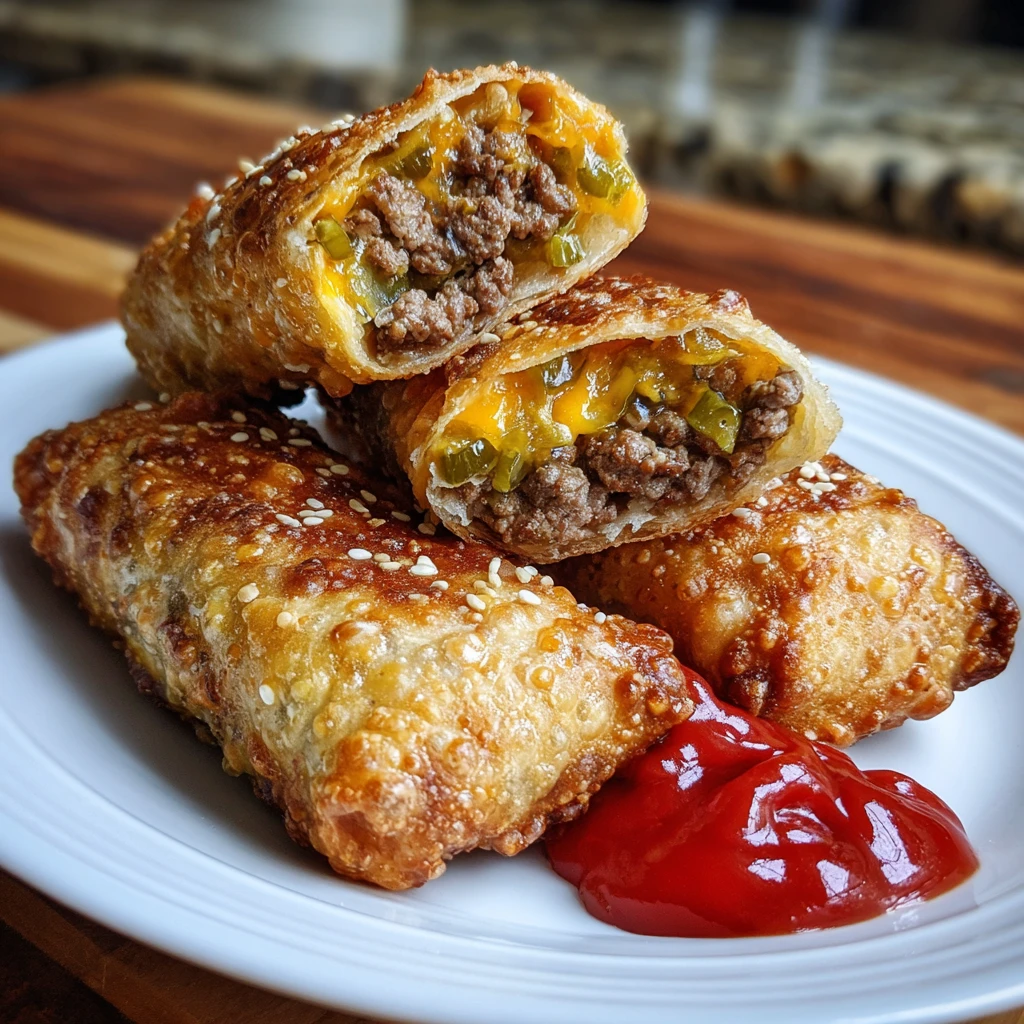
Ground Beef Cheeseburger Egg Rolls
Ingredients
- 1 pound ground beef
- 1 small onion, finely chopped
- 2 cloves garlic, minced
- 1 teaspoon salt
- 1/2 teaspoon black pepper
- 1/2 teaspoon garlic powder
- 1/4 teaspoon smoked paprika
- 8 ounces cheddar cheese, shredded
- 1/4 cup dill pickles, chopped
- 1/4 cup ketchup
- 2 tablespoons mustard
- 1 tablespoon Worcestershire sauce
- 1 package (about 20) egg roll wrappers
- Vegetable oil, for frying
- Optional: Sesame seeds, for garnish
Step-by-Step Instructions
1. In a large skillet, brown the ground beef over medium-high heat. Drain off any excess grease.
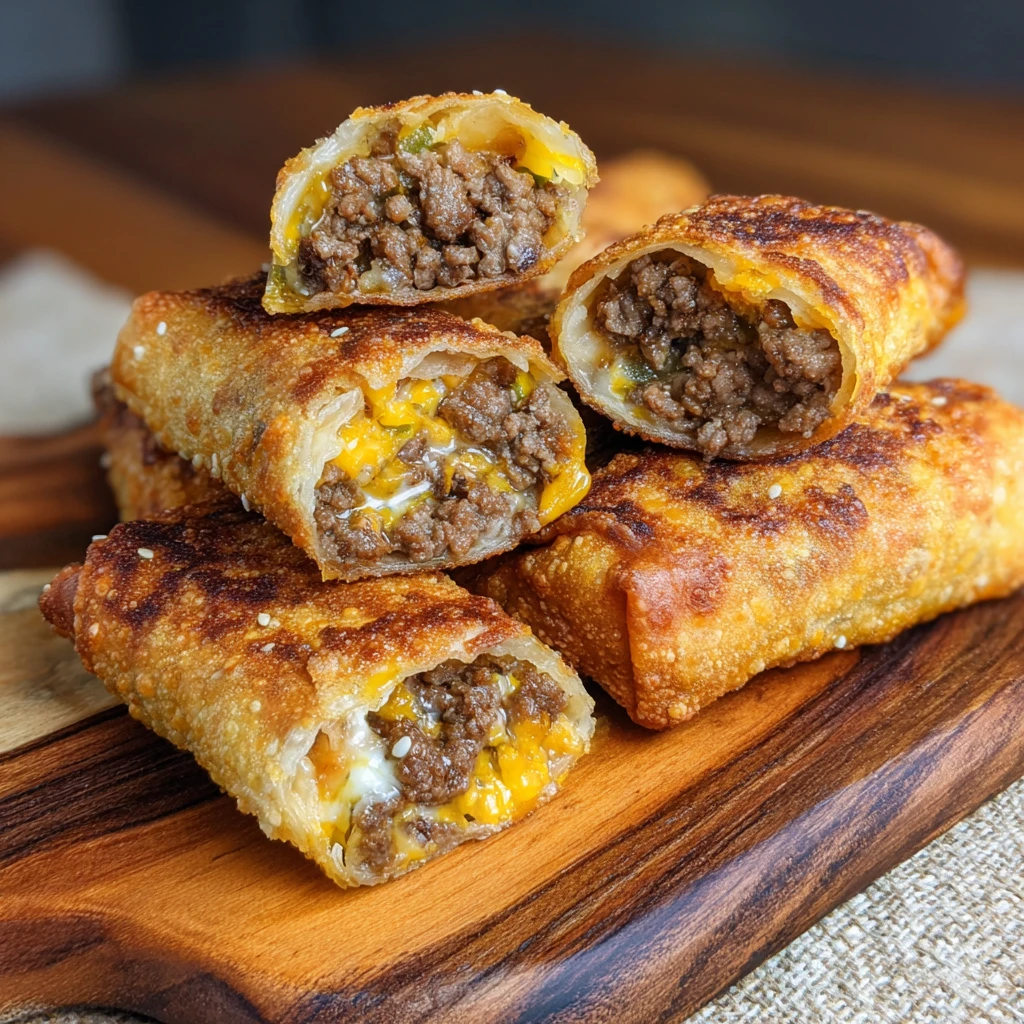
2. Add the chopped onion and minced garlic to the skillet. Cook until the onion is softened, about 3-5 minutes.
3. Season the ground beef mixture with salt, pepper, garlic powder, and smoked paprika. Stir to combine.
4. Remove the skillet from the heat and let it cool slightly.
5. Stir in the shredded cheddar cheese, chopped pickles, ketchup, mustard, and Worcestershire sauce. Mix well until everything is evenly distributed.
6. Lay an egg roll wrapper on a clean, flat surface.
7. Place about 2-3 tablespoons of the ground beef mixture in the center of the wrapper.
8. Fold the bottom corner of the wrapper over the filling.
9. Fold in the left and right sides of the wrapper towards the center.
10. Brush the top corner of the wrapper with a little water.
11. Roll the wrapper tightly to seal the egg roll.
12. Repeat steps 6-11 with the remaining egg roll wrappers and filling.
13. In a large pot or deep fryer, heat vegetable oil to 350°F (175°C).
14. Carefully add the egg rolls to the hot oil, a few at a time, being mindful to not overcrowd the pot.
15. Fry for 2-3 minutes per side, or until golden brown and crispy.
16. Remove the egg rolls from the oil and place them on a wire rack or paper towel-lined plate to drain excess oil.
17. Garnish with sesame seeds, if desired.
18. Serve immediately with your favorite dipping sauces, such as ketchup, mustard, or a creamy burger sauce.
Variations and Customizations
H3: Cheese Options
Cheddar cheese is a classic choice for cheeseburger egg rolls, but feel free to experiment with other cheeses. Monterey Jack, pepper jack, or a blend of cheeses can add different flavors and textures. Consider a cheese sauce for dipping as well.
A molten, gooey cheese pull adds excitement. Mixing in a small amount of cream cheese can create a creamier filling. This complements the savory meat.
H3: Meat Alternatives
While ground beef is the traditional choice, other ground meats can be used. Ground turkey or ground chicken are lighter alternatives. Plant-based ground meat substitutes can also be used for a vegetarian option.
Ensure any alternative ground meat is cooked thoroughly before adding it to the filling. Season accordingly. Consider adding a touch of liquid smoke to plant-based meats for a richer, beefier flavor.
H3: Sauce Enhancements
Ketchup and mustard are classic cheeseburger condiments, but don’t be afraid to get creative with the sauces. Thousand Island dressing, burger sauce, or even a spicy sriracha mayo can add a unique twist.
A homemade burger sauce is a great way to customize the flavor. Combine mayonnaise, ketchup, mustard, relish, and a touch of vinegar for a tangy dipping sauce. Experiment with different ratios to find your perfect blend.
Tips for Perfect Cheeseburger Egg Rolls
H3: Preventing Soggy Egg Rolls
One of the biggest challenges with egg rolls is preventing them from becoming soggy. Properly draining the ground beef after cooking is crucial. Excess grease will make the wrappers soggy.
Cooling the filling slightly before wrapping also helps. This prevents steam from forming inside the egg roll, which can soften the wrapper. Fry the egg rolls at the correct temperature (350°F/175°C) to ensure they cook quickly and evenly.
H3: Wrapping Techniques
Wrapping the egg rolls tightly is essential for preventing them from falling apart during frying. Use a small amount of water or an egg wash to seal the edges of the wrapper.
Avoid overfilling the egg rolls, as this can make them difficult to seal and prone to bursting. Practice makes perfect, so don’t be discouraged if your first few attempts aren’t perfect.
H3: Frying Considerations
Use a deep fryer or a large pot with enough oil to fully submerge the egg rolls. Maintain a consistent oil temperature of 350°F (175°C). Overcrowding the pot will lower the oil temperature and result in greasy egg rolls.
Fry the egg rolls in batches, allowing the oil temperature to recover between batches. Use a slotted spoon or tongs to carefully remove the egg rolls from the oil. Place them on a wire rack to drain excess oil.
Serving Suggestions and Pairings
H3: Dipping Sauces
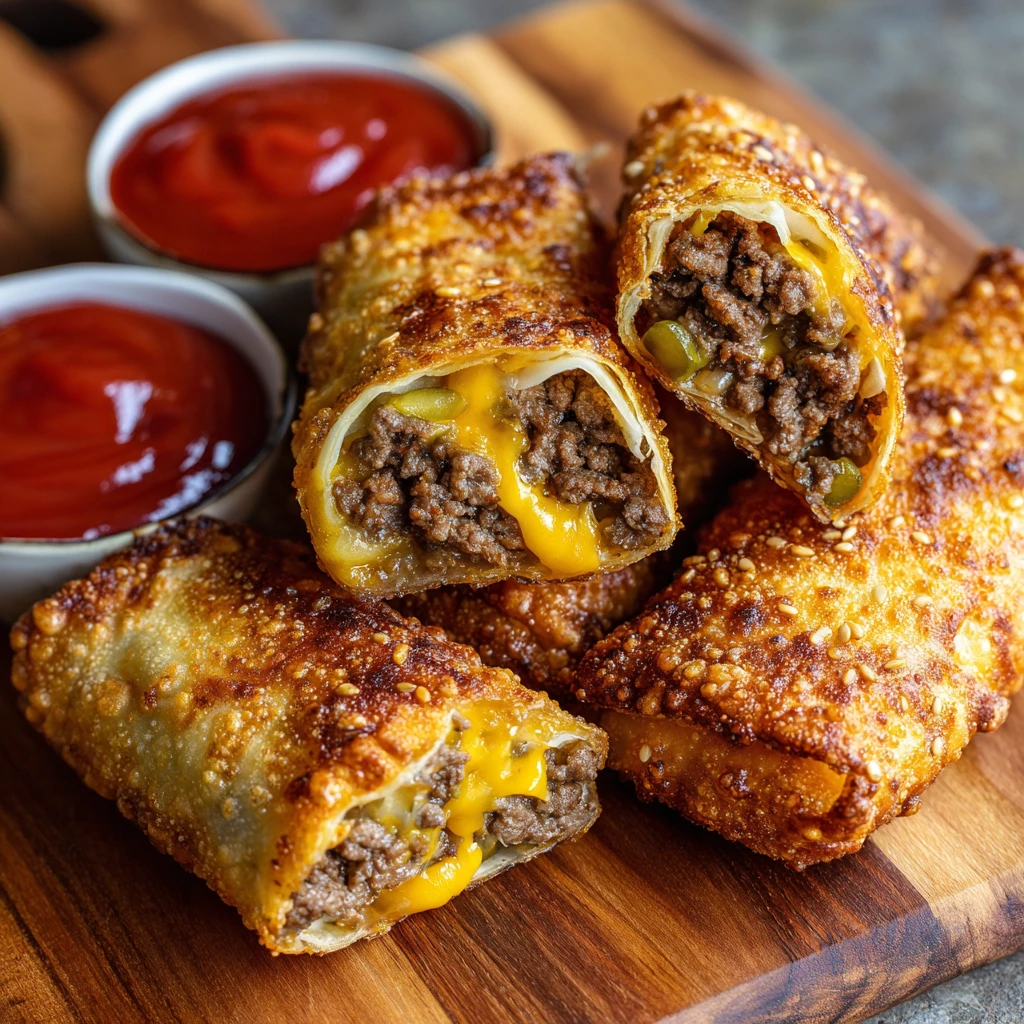
The dipping sauce can make or break your cheeseburger egg roll experience. Ketchup and mustard are classic choices, but consider offering a variety of options to cater to different tastes.
Burger sauce, ranch dressing, cheese sauce, or even a spicy sriracha mayo are all great choices. A creamy dill pickle dip would also complement the flavors of the filling perfectly.
H3: Side Dishes
Cheeseburger egg rolls are a great appetizer or snack, but they can also be served as a main course with a side dish. French fries, onion rings, or coleslaw are classic pairings.
A simple salad or a bowl of tomato soup would also complement the richness of the egg rolls. Consider serving them with a side of pickles for a complete cheeseburger experience.
H3: Garnishes and Presentation
Garnishing the egg rolls with sesame seeds adds a nice visual appeal and a subtle nutty flavor. Chopped green onions or parsley can also be used as a garnish.
Arrange the egg rolls on a platter with dipping sauces and side dishes for an attractive presentation. Consider serving them in mini paper food baskets for a fun, casual vibe.
Make-Ahead and Storage Instructions
H3: Preparing Ahead of Time
Cheeseburger egg rolls can be prepared ahead of time, making them a convenient option for parties or gatherings. Assemble the egg rolls and store them in the refrigerator for up to 24 hours before frying.
Wrap the assembled egg rolls tightly in plastic wrap to prevent them from drying out. Alternatively, you can freeze the assembled egg rolls for longer storage.
H3: Freezing Instructions
To freeze cheeseburger egg rolls, place them on a baking sheet lined with parchment paper and freeze for 1-2 hours, or until solid. Once frozen, transfer the egg rolls to a freezer bag or airtight container.
Frozen egg rolls can be stored in the freezer for up to 2-3 months. When ready to cook, thaw the egg rolls in the refrigerator overnight before frying.
H3: Reheating Instructions
Reheat cooked cheeseburger egg rolls in the oven, air fryer, or skillet. To reheat in the oven, preheat the oven to 350°F (175°C) and bake for 10-15 minutes, or until heated through.
To reheat in the air fryer, cook at 350°F (175°C) for 5-7 minutes, or until heated through. To reheat in a skillet, heat a small amount of oil over medium heat and cook for 2-3 minutes per side, or until heated through.
Nutritional Information (Approximate)
H3: Calorie Count
One cheeseburger egg roll contains approximately 250-350 calories, depending on the ingredients and portion size. This estimate is based on using a standard egg roll wrapper and a moderate amount of ground beef and cheese.
Frying the egg rolls adds additional calories from the oil. Baking or air frying them can reduce the calorie count.
H3: Macronutrient Breakdown
The macronutrient breakdown of a cheeseburger egg roll is approximately 40% fat, 30% carbohydrates, and 30% protein. This can vary depending on the ingredients used.
Using leaner ground beef and reduced-fat cheese can lower the fat content. Adding more vegetables to the filling can increase the carbohydrate content.
H3: Considerations
This nutritional information is an estimate only and may vary depending on the specific ingredients and preparation methods used. It’s always best to calculate the nutritional information based on your own recipe and ingredients for the most accurate results.
If you are concerned about the nutritional content of cheeseburger egg rolls, consider making healthier swaps, such as using leaner ground beef, reduced-fat cheese, and baking or air frying them instead of deep frying.
FAQ
H3: Can I bake these instead of frying?
Yes, you can bake cheeseburger egg rolls. Preheat your oven to 400°F (200°C). Place the egg rolls on a baking sheet lined with parchment paper and brush them with a light coating of oil. Bake for 15-20 minutes, or until golden brown and crispy, flipping halfway through.
H3: Can I use different types of meat?
Absolutely! Ground turkey, ground chicken, or even plant-based ground meat substitutes can be used. Adjust the seasonings as needed to complement the flavor of the meat.
H3: How do I prevent the egg rolls from bursting while frying?
Make sure to wrap the egg rolls tightly and seal the edges with water or an egg wash. Don’t overfill them, and maintain a consistent oil temperature of 350°F (175°C).
H3: What dipping sauces go well with cheeseburger egg rolls?
Ketchup, mustard, burger sauce, ranch dressing, and cheese sauce are all great options. Get creative and experiment with different flavors to find your favorite combination.
H3: How long do these last in the refrigerator?
Cooked cheeseburger egg rolls can be stored in the refrigerator for up to 3-4 days in an airtight container. Reheat them thoroughly before serving.